
 Chat with us now!
 Send Email!


Instant Delivery
.png) Get Free Invoice
-
 24 X 7 Customer Support
Georgia Paycheck Calculator
Generate paystubs with accurate Georgia State Tax Withholding Calculations.

GA Paycheck Calculator
In 2026, Georgia implements a progressive income tax structure with a flat rate of 5.19%. Consequently, residents in Georgia earning higher wages will burden themselves with paying more in taxes both federally and on state level. One important detail to consider is that Georgia doesn’t have any local income tax. This makes the process of tax estimation and earning reporting simpler by means of using a free paystub generator.
To gain a better understanding of your take-home income in Georgia, you may use Georgia paycheck calculator which takes into consideration taxes and federal withholdings. Besides, a trustworthy Georgia wage calculator will make the process of payroll calculation easier by breaking gross income down into net income.
Your salary number on paper is unlikely to be the same as your paycheck. This gap is caused by taxes, withholdings, and deductions. Using a GA paycheck calculator gives you the actual paycheck amount even before the money gets deposited into your bank account, helping you create a reasonable budget, plan your savings, and determine if a given job or raise caused any considerable changes in your monthly earnings.
TOTAL
YTD TOTAL
Earnings
$0.00
$0.00
Taxes
$0.00
$0.00
Take Home
$0.00
$0.00
How Does the Georgia Payroll Calculator Work?
In the U.S. state of Georgia, as well in any state of the country, employers are obliged to deduct both FICA tax and federal tax from the employees’ paychecks and remit them to the IRS. Federal taxes are used for payment of annual income taxes and FICA taxes are spent on social security and Medicare.
Your employer deducts 1.45% of your wages for Medicare taxes and 6.2% for Social Security taxes from each pay period. Additionally, your employer matches these deductions to cover the full FICA taxes, which amount to 2.9% and 12.4% of your wages for Medicare and Social Security, respectively. In 2026, the Social Security wage base is $184,500.
It’s important to note that individual taxpayers pay an extra 0.9% Medicare surtax on earnings exceeding $200,000. Employers do not match this surtax. Joint filers earning more than $250,000 and married individuals filing separately with income over $125,000 are also subject to this surtax.
The process through which an earner’s gross pay is determined begins with total earnings before deductions. For salaried employees, the gross salary remains the same every pay period. However, for hourly employees, gross pay varies based on the hours they work. It includes bonuses, overtime pay, and commissions.
The calculation of pay begins with the deduction of taxes, and more specifically with federal income tax withheld. This deduction depends on the income levels, the filing status, and the information provided in the W-4 form. Therefore, in order to estimate the correct amount of withheld federal income tax, one can go to IRS withholding estimator available on the IRS.
Georgia gives the amount of charge for state income taxes based on taxable income, the amount of deductions, and other information provided on Form G-4.
Important Note: The StubCreator provides a Georgia paycheck tax calculator designed to provide essential guidance to employers and salaried employees. This should not be relied upon to calculate taxes, payroll, or other financial data. You should seek a professional accountant regarding any particular requirement.
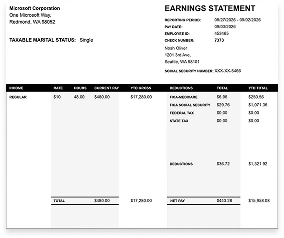
For users who want to preview how their earnings appear on a pay stub, StubCreator also offers free pay stub template options that display standard layouts and fields before finalizing documentation
Taxable Base Wage
The taxable wage in Georgia for 2026 is $9,500; it has not increased since 2021.
| Year | Georgia Taxable Base Wage |
| 2026 | $9,500 |
| 2025 | $9,500 |
| 2024 | $9,500 |
| 2023 | $9,500 |
| 2022 | $9,500 |
| 2021 | $9,500 |
SUTA Rates
The new employer rate for Georgia SUTA is 2.64% in 2026, while rates for 2026 vary from 0.04% to 8.10%. For the majority of employers, there is also an administrative assessment of 0.60%.
Additionally, you should be aware that new companies must pay 2.64%, while the SUI (state unemployment insurance) rate ranges from 0.04% to 8.10% in 2026.
| Year | Georgia SUTA Rate |
| 2026 | 0.04% – 8.10% |
| 2025 | 0.04% – 8.10% |
| 2024 | 0.04% – 8.10% |
| 2023 | 0.04% – 7.56% |
| 2022 | 0.04% – 8.10% |
FUTA Rates
For 2026, employers in Georgia will be required to pay 6% of the first $7,000 of each employee’s taxable income as Federal Unemployment Tax (FUTA).
However, if employers pay their state unemployment taxes in full and on schedule, they often receive a credit of up to 5.4% against their FUTA tax bill. For most employers, this means a net Federal Unemployment Tax rate of 0.6%.
A 0.6% fee is also imposed on the first $7,000 of wages to pay state unemployment benefits. Depending on the state’s unemployment rate, this levy could be withdrawn or lowered.
| Year | Georgia FUTA Rate |
| 2026 | 6% on first $7,000 |
| 2025 | 6% on first $7,000 |
| 2024 | 6% on first $7,000 |
| 2023 | 6% on first $7,000 |
| 2022 | 6% on first $7,000 |
FICA Taxes
Georgia’s FICA tax rates for 2026 are the same as they were in prior years:
- Medicare Tax: 1.45% of your income, with an additional medicare tax 1.45% from your employer.
- Social Security Tax: The Social Security tax is 6.2% of your pay, with your employer also paying 6.2% of the maximum taxable earnings base of $184,500
| Year | Georgia FICA Rates |
| 2026 | 7.65% |
| 2025 | 7.65% |
| 2024 | 7.65% |
| 2023 | 7.65% |
| 2022 | 7.65% |
GA Paycheck Tax Calculator
In the state of Georgia, if your annual gross pay is $61,497.00, your net pay (or take-home pay) will amount to $48,200 after tax deductions of 21.62% (or $13,297.18). These deductions include a federal income tax of 8.78% (or $5,400.00), a state income tax of 5.19% (or $3,192.66), a social security tax of 6.20% (or $3,812.81), and a Medicare tax of 1.45% (or $891.71).
Use hourly paycheck calculator Georgia to estimate your take-home pay accurately based on your hourly wages.
How to Choose a Reliable Georgia Paycheck Calculator
There are several online calculators available on the market. You have to find an online calculator that uses current tax information and understands state-specific rules such as G-4 allowances, the state’s income tax rate, and the fact that Georgia does not have a local income tax.
How to Use a Georgia Paycheck Calculator: Step by Step
- Gather your details. Have your gross pay, pay schedule, filing status, and any pre-tax deductions ready, so the estimate isn’t based on guesses.
- Enter gross pay. For hourly work, multiply your rate by the hours in the pay period. For salary, enter the amount for that period.
- Pick your pay frequency. Weekly, biweekly, semi-monthly, and monthly schedules divide income differently, so choose the one that matches how you are paid.
- Set filing status and allowances. These should mirror what’s on your Form G-4, since they shape how much tax is withheld each pay period.
- Add pre-tax deductions. Include items like 401(k) contributions, health insurance premiums, or FSA deposits. Because they lower your taxable income, they can reduce the tax withheld and raise your take-home pay.
- Analyze the amount taken from your pay. Take the federal tax, Georgia tax, Social Security tax, and Medicare tax amounts the calculator gives and any other deductions into account.
- Compare this with a real paycheck. Your amount of net pay should be similar to your actual paycheck. If it is not, check the figures again.
- Utilize the results from your calculation to create a budget. Aim to set aside money for living expenses, savings, and discretionary spending from your net income.
Common Georgia Paycheck Deductions
- Retirement payments. The amount you contribute to your traditional 401(k) plan comes out before taxes are deducted from income; thus, it decreases your taxable income for both the federal and state levels. Roth 401(k) contributions are made after income taxes; thus, it does not affect the current taxable income, but withdrawals that can be made later during retirement will not be taxed.
- Health insurance premiums. Employer-based health insurance is usually deducted from your payroll. The key difference between pre-tax and post-tax premium payments is the structure of the plan, which determines the taxable income.
- All other expenses done on pre-tax basis. Most often these would be deposits to HSA and FSA accounts.
How to Keep Your Georgia Withholding Accurate?
In terms of taxation, regulations and rates fluctuate periodically. It is therefore prudent to keep checking the IRS website and that of the Georgia Department of Revenue for the latest updates. You should also reconsider your W-4 and G-4 forms whenever there are changes in circumstances, whether as a result of marriage or childbirth or changes in your income. Using pre-tax payments like a retirement plan, FSA, or HSA can lower your income, which may be a good thing. At least once a year, reevaluate your withholding to avoid problems at the time of your tax return.
Georgia Payroll Tax Calculator
Below are the details of Georgia:
- Georgia employees are required to complete Form G-4 to initiate payroll taxes. This crucial information aids in calculating the appropriate amount that needs to be withheld.
- Employees are required to revise this form in the event of any life occurrences (such as marriage, divorce, the birth or adoption of a child, etc.) that could potentially affect their tax obligations.
- The Georgia income tax rate is 4.99%.
Create Your Professional Paystub Online and Download It in Just a Few Clicks.
Accurate state tax calculations for all 50 states — no spreadsheets needed.
Why choose Stubcreator?

Get your 1st default stub free*
Or Get $4.99 OFF on your first order
Instant delivery by email and download
Get Free Corrections
24/7 customer support
Seamless automated calculations
100% secure payment with paypal
Resolution of query in 24 hours
Questionnaires:
- How is Georgia's state income tax calculated?
Georgia implements an income tax system with a flat tax rate of 4.99%. The tax is based on your taxable income after various deductions. Georgia's income tax is calculated after deducting certain exemptions and credits, such as the standard deduction or itemized deductions
- What deductions are typically withheld from a Georgia paycheck?
In addition to federal, state, and local income tax, deductions are commonly withheld from Georgia paychecks. That includes federal income tax, Social Security tax, Medicare tax, and possibly local taxes if applicable. To calculate paycheck Georgia, other deductions may include contributions to retirement plans, health insurance premiums, and voluntary tax withholdings like charitable contributions.
- Is there a minimum wage in Georgia, and how does it affect paychecks?
Georgia's minimum wage follows the federal minimum wage of 7.25 per hour by 2026. Nevertheless, a few cities or towns may have higher minimum wages. The minimum wage is crucial for hourly workers as it guarantees the payment they will get for their hours worked. To find out more, you may check Georgia's hourly paycheck calculator.
- What information do I need to use a Georgia paycheck calculator?
Be sure to prepare your gross earnings, frequency of payment, your residency status, and any other deductions, including pensions or health premiums, before proceeding.
- Does the calculator include Georgia state tax automatically?
That’s correct! Georgia tax is included in the bill as soon as you enter your pay and residency status.
- How can I estimate my net pay in Georgia?
Start with your gross earnings, and deduct any federal income tax, Georgia state tax, Social Security, Medicare, and other deductions. The paycheck calculator does this for free, and it provides accurate results based on current rates.
- Is a Georgia paycheck calculator helpful for budgeting?
Yes! Once you have your take-home pay number, it is possible for you to have a more precise financial plan for your bills, savings, or investment purposes.
- Are there local income taxes in Georgia that affect my paycheck?
No. Georgia does not apply local income tax, which means payroll withholding is limited to federal and state income tax and FICA. Other taxes, for instance, property tax or sales tax, are not withheld from your paycheck.
Still Have a Questions? Get Support Now!


Download Now & Get Free Paystub