
 Chat with us now!
 Send Email!

Instant Delivery
.png) Get Free Invoice
Get Free Invoice-
 24 X 7 Customer Support
Illinois Paycheck Calculator
Generate paystubs with accurate IllinoisState Tax Withholding Calculations.

Illinois Paycheck Calculator
Illinois law requires employers to withhold state income tax from every paycheck, and the rate is flat: 4.95% for all Illinois residents. There’s no local income tax layered on top either, so employers don’t have to juggle different rates for different cities.
This Illinois paycheck calculator takes that flat rate and runs it against your actual paycheck details such as gross pay, basic allowances, Illinois tax filing status, and any pre-tax deductions you’ve got, to show what you’ll actually take home. It also checks your pay against Illinois’ minimum wage, so you can confirm you’re being paid correctly before taxes even come into the picture. If you need to create a professional pay stub based on your calculated earnings and you can also use a paystub generator.
Understanding how much gets deposited into your bank account during your pay cycle helps a lot with budgeting, saving and planning for big expenses. This investment tool computes your net income for each pay period free of charge after deducting taxes and other deductions.
TOTAL
YTD TOTAL
Earnings
$0.00
$0.00
Taxes
$0.00
$0.00
Take Home
$0.00
$0.00
How Does the Illinois Salary Calculator Work?
Our Illinois salary take home calculator starts with your gross pay and works through every withholding your employer is required to make under Illinois law before landing on your take home pay. Every pay period, Illinois employers withhold federal taxes along with Social Security and Medicare; together these are FICA, and employers pay a matching share on top of what’s taken from an employee’s wages.
An extra 0.9% Medicare tax applies once single filers pass $200,000, joint filers pass $250,000, or married employees filing separately pass $125,000, and this portion isn’t matched by the employer. On the state side, Illinois taxes are simple: a flat 4.95% income tax rate applies to all residents, with no local income taxes added on top, though reciprocal agreements may change things if you live and work in different states.
The paycheck tax calculator also factors in details specific to how you’re paid ; your filing status, federal allowances or additional allowances claimed, and your pay frequency; whether you’re among hourly employees, salaried employees, or tipped employees.
Illinois paycheck calculator is a free online tool created according to the tax regulations of Illinois state so that the calculated net pay indicates what an employee receives in Illinois as opposed to a general estimate valid for the U.S. Additionally, the program features voluntary deductions like pension payments and medical insurance costs, as well as extra sums deducted by the employer according to the user’s request.
Beyond wage withholdings, Illinois employers also pay state unemployment insurance, which funds unemployment taxes without reducing what shows up in your paycheck.
How to Use the Illinois Paycheck Calculator
With the calculator, It won’t take long to have it filled out. The following are the steps involved in the process:
- Step 1: Begin by inputting gross income. Gross income is every dollar of income before deductions or payments. This includes salary and wages.
- Step 2: Choose payment frequency. You may select one of the following options: weekly, bi-weekly, semi-monthly, or monthly. The frequency of payment determines the amount deducted per paycheck and needs to be entered to allow for accuracy.
- Step 3: Insert deductions and taxes. Every deduction must be entered, including any voluntary deductions that you wish to make, like 401(k) contributions and health insurance premium payments.
- Step 4: Include further information. To complete the application, include filing status, allowances claimed on the form IL-W-4, as well as any additional amounts you would like to have deducted from every paycheck.
- Step 5: Check to ensure everything is okay. The calculator should show you income amounts against deduction amounts you have entered during the process.
Illinois Salary Paycheck Calculator
If you earn $70,000.00 per year in Illinois, your net pay, which is the amount you take home, will be approximately $53,850 after deducting taxes at a rate of about 23.07%. These additional withholdings deductions consist of approximately 10.47% ($7,329.00) for federal income tax, 4.95% ($3,465.00) for state income tax, 6.20% ($4,340.00) for Social Security tax, and 1.45% ($1,015.00) for Medicare. Before finalizing your document, you can also review a professional free pay stub template to preview how your paystub will look and ensure all details are accurate before creating it.
Important Note: The StubCreator provides a paycheck calculator designed to provide essential guidance. This should not be relied upon to calculate exact taxes, payroll, or other financial data. You should seek a professional accountant regarding any particular requirement.
Tips for Maximizing Your Take-Home Pay
Once you understand the numerical values, these methods are very useful in obtaining a larger share of your salary:
- Modify tax withholdings: If you continually owe taxes at the time of filing or always receive a high refund, your withholdings are likely inaccurate. Try using a tax calculator to calculate the appropriate allowance and withholdings, and adjust your IL-W-4 as necessary.
- Use the tax credits and deductions offered by the State of Illinois: Illinois begins with your federal income, then uses an exemption allowance. Illinois tax credits, including those for property and education, can be deducted from your tax bill. Make sure to check with a tax advisor before filing your taxes.
- Put money into retirement funds: The allocation of money into 401(k) or IRA accounts can aid in lowering your taxable income in the present while also getting you money for use in the future, as it lowers the amount of tax you owe and bolsters your future financial standing.
- Scrutinize your benefits package: You can minimize your costs in health care by benefiting from health care insurance policies and flexible spending account plans, and also by making tax-free contributions toward a health care scheme.
- Keep abreast of changes in tax laws: Federal and Illinois taxation rules change occasionally, so make sure that you verify your income tax deductions whenever any of the rates, brackets, or changes to personal circumstances occur.
Taxable Base Wage
Taxable base wages for Illinois are as follows:
| Year | Illinois Taxable Base Wage |
| 2026 | $13,590 |
| 2025 | $13,916 |
| 2024 | $13,590 |
| 2023 | $13,271 |
| 2022 | $12,960 |
| 2021 | $12,740 |
SUTA Rates
In order to help maintain a sustainable Unemployment Insurance Trust Fund, this rate is included in the contribution rate calculation and is stipulated under the Illinois Unemployment Insurance Act. For 2026, the minimum contribution rate remains 0.850%, which is calculated as 0.2% × 126% plus the Fund Building Rate of 0.55%.
| Year | Illinois SUTA Rate |
| 2026 | 0.850% |
| 2025 | 0.850% |
| 2024 | 0.850% |
| 2023 | 0.850% |
| 2022 | 0.725% |
FUTA Rates
In 2024, the highest possible contribution rate is 8.650% (6.400% x 126% plus the Fund Building Rate of 0.55%). NOTE: Contributions are paid at 5.400% in a quarter by an experience-rated employer whose total quarterly salaries are less than $50,000 and whose contribution rate is greater than 5.400%.
| Year | Illinois FUTA Rates |
| 2026 | 0.550% |
| 2025 | 0.550% |
| 2024 | 0.550% |
| 2023 | 0.550% |
| 2022 | 0.525% |
FICA Rates
In Illinois, the FICA tax rates for 2026 are as follows:
For Employees and Employers:
- Social Security Tax: 6.2%
- Medicare Tax: 1.45%
Additional Medicare Taxes
- Employees: 0.90%
| Year | Illinois FICA Rates |
| 2026 | 4.95% |
| 2025 | 4.95% |
| 2024 | 4.95% |
| 2023 | 4.95% |
| 2022 | 7.65% |
Other Taxes
The individual income tax rate in Illinois is a steady 4.95 percent. The corporate income tax rate in Illinois is 9.5%. Additionally, the average combined state and local sales tax rate in Illinois is 8.86 percent, with a state sales tax rate of 6.25 percent.
- In Illinois, the ETT Rate for 2024 is 0.85–8.65%
Illinois does not have an SDI (State Disability Insurance) program, so there is no SDI withholding rate for employees in Illinois.
Paycheck Estimator Illinois
Your Illinois withholding exemption is part of what our Illinois paycheck estimator, that takes into account: the amount of your pay that your employer does not withhold Illinois income tax on.
That figure is determined by the number of allowances you claim on Form IL-W-4, Employee’s and Other Payees’ Illinois Withholding Allowance Certificate, which you fill out when you start a job or whenever your circumstances change. If you claim more allowances than you’re entitled to, less tax is withheld from each paycheck so this number is important when estimating Illinois employee pay.
Paycheck Calculator for Illinois
Below are the details to consider Illinois take home pay calculator:
- Illinois payroll taxes commence with employees completing the IL-W-4 form. This crucial information aids in calculating the appropriate amount to be withheld from their wages.
- If the employee does not submit this form, it will be incumbent upon you to deduct taxes as if no exemptions had been claimed.
- Employees should update Form IL-W-4 solely in the event of life-changing occurrences, such as marriage, divorce, the arrival of a new child through birth or adoption, and other similar situations that might impact their tax liabilities.
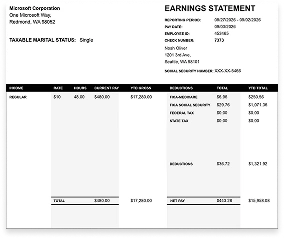
Create Your Professional Paystub Online and Download It in Just a Few Clicks.
Accurate state tax calculations for all 50 states — no spreadsheets needed.
Why choose Stubcreator?

Get your 1st default stub free*
Or Get $4.99 OFF on your first order
Instant delivery by email and download
Get Free Corrections
24/7 customer support
Seamless automated calculations
100% secure payment with paypal
Resolution of query in 24 hours
Questionnaires:
- How is Illinois state income tax calculated?
Illinois has a flat income tax rate, meaning everyone pays the same percentage of their income as state income tax. The Illinois Income Tax rate is applied to your taxable income after federal deductions. Make sure to account for estimated take home pay and any pre-tax deductions accurately for a more precise calculation.
- How does the Illinois paycheck calculator work?
In order to calculate your net pay, all the variables related to your work, tax status, exemptions, and deductions are added to find out what is the applicable tax rate for your income as implied by your gross pay.
- Is the calculator suitable for all Illinois workers?
Certainly yes. The online calculator is available for anyone in the state working, regardless of whether they are a wage earner or they get a salary and tips along with them.
- Can I rely on the calculator for exact figures?
Yes. The calculator generates approximate figures, while your specific case and tax laws could change the actual figures. However, you have the option to refer to a tax consultant who may help you.
- Is the calculator easy to use?
Definitely yes. You can use the calculator immediately, and it will provide all the required details.
Still Have a Questions? Get Support Now!


Download Now & Get Free Paystub