
 Chat with us now!
 Send Email!

Instant Delivery
.png) Get Free Invoice
Get Free Invoice-
 24 X 7 Customer Support
Texas Paycheck Calculator
Generate paystubs with accurate Texas State Tax Withholding Calculations.

Texas Salary Calculator
One of the benefits of residing and working in Texas is the absence of a state income tax. Consequently, only federal income taxes apply to your salary in this state. Additionally, it is important to mention that no cities within Texas enforce any local income tax.
However, you can count deductions and wages by using Texas Paycheck Calculator.
To better understand how your earnings break down after deductions, many employees and employers rely on payroll tools such as a pay stub generator to view clear paycheck summaries and withholding details.
TOTAL
YTD TOTAL
Earnings
$0.00
$0.00
Taxes
$0.00
$0.00
Take Home
$0.00
$0.00
How Does the Texas Paycheck Calculator Work?
As far as your paycheck is concerned, the Texas Paycheck Calculator gives you a rough estimate of your take-home pay in the same way the payroll system will do.
Since Texas does not have any state income taxes, you only need to provide us with the gross amount of your earnings, the frequency of your payment, your current filing status, and any other deductions you may be entitled to. Then the tool will factor in the federal income tax withholdings, deduct the amount of FICA taxes of 6.2% Social Security and 1.45% Medicare, and add your other deductions if there are any.
Does Texas Have State Income Tax?
The Texas state tax does not impose a personal state income tax, eliminating any deductions for state taxes from your paycheck. Furthermore, this implies that there is no local income tax imposed anywhere in Texas. The standard deductions made from your paycheck are federal tax and FICA taxes (Social Security and Medicare); there are no state taxes.
Federal Income Tax in Texas
Even though people living in Texas do not have to pay state taxes, federal income tax stands out as the most costly tax deducted from one’s salary. The amount of income taxed by the federal government will depend on a taxpayer’s income and their filing status. Taxpayers who have to deal with federal income tax can choose various filing status options, including single, married file jointly, married filing separately and head of household categories. Federal taxation is conducted through the progressive tax brackets.
Paycheck Calculator Texas for Accurate Take-Home Pay
If you live in Texas and you make $58,146.00 a year (we’ve made some assumptions ), then after tax, you will have about $48,900.86 per year ($4,075.07 per month) available to spend on anything you want or need. Your average tax rate is 15.85%, and your marginal tax rate is 22%.
Your estimated deductions may include the current tax rates:
- Federal Income Tax: approximately $4,450.00 (7.65%)
- Social Security Tax: around $3,606.05 (6.20%)
- State Income Tax: $0.00, Texas does not charge state income tax
- Medicare Tax: approximately $843.12 (1.45%)
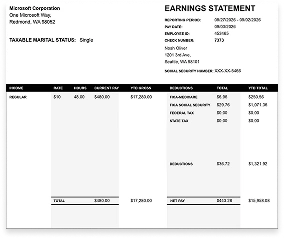
To actually see how these deductions show up on a pay stub, observing an example of some paystub sample templates can give you a shot to check out exactly how earnings, taxes, and net pay are presented on checks.
Important Note: The StubCreator provides a paycheck tax calculator Texas designed to provide essential guidance. This should not be relied upon to calculate exact taxes, payroll, or other financial data. You should seek a professional accountant regarding any particular requirement.
Examples Of Texas Pay
Texas Biweekly Paycheck Example
Every year you make $58,146, with the pay being bi-weekly (which tells us that there are about 26 pay periods in a year), you will earn about $2,236 as the gross pay per pay period. Once you deduct FICA, federal and state tax (roughly 15.85% of your paycheck amount), your bi-weekly net income would be approximately $1,800.
Texas Monthly Paycheck Example
If your yearly income is the same and you receive paychecks every month, you can expect to earn approximately $4,846 each month. Using similar estimated tax and other deductions as in the previous example, you should receive a gross paycheck of approximately $4,075.
Texas Hourly Paycheck Example
If you are compensated monthly using the same annual salary, the gross salary per month will be about $4,846. With the same deductions calculated, the approximate amount in hand would be around $4,075.
Texas Overtime Pay
The Fair Labor Standards Act offers residents in Texas the opportunity to earn additional money for working more than 40 hours in a week; however, it is not applicable to everyone. For instance, if a worker makes $25 per hour and works 45 hours for the week, he would be compensated at the regular rate for 40 hours of work and at $37.50 for overtime hours. As a result, his gross earnings for that week will total $1,187.50.
Payroll Calculator Texas: Taxable Wage Base
For employers using a Texas wage calculator, the taxable wage base has remained at $9,000 for 2026. This means employers only pay state unemployment taxes on the first $9,000.
| Year | Texas Taxable Base Wage |
| 2026 | $9,000 |
| 2025 | $9,000 |
| 2024 | $9,000 |
| 2023 | $9,000 |
| 2022 | $9,000 |
Texas Payroll Tax Calculator: SUTA Rates
State Unemployment Tax Act (SUTA) rates in Texas were announced in January 2026 and changed slightly compared to previous years.
| Year | Texas SUTA Rates |
| 2026 | 0.32% to 6.32% |
| 2025 | 0.31% to 6.31% |
| 2024 | 0.25% to 6.25% |
| 2023 | 0.23% to 6.23% |
| 2022 | 0.31% to 6.23% |
Texas Payroll Calculator: FUTA Rates
For businesses using a Texas payroll calculator, the FUTA wage base remains $7,000 for 2026. Employers pay 6% on the first $7,000 of each employee’s wages. However, most employers qualify for a 5.4% state tax credit.
| Year | FUTA Rates |
| 2026 | 6% on first $7000 |
| 2025 | 6% on first $7000 |
| 2024 | 6% on first $7000 |
| 2023 | 6% on first $7000 |
| 2022 | 6% on first $7000 |
FICA Taxes
In Texas, the FICA tax rates for 2026 are as follows. You can easily calculate that with the Texas paycheck tax calculator.
For Employees and Employers:
- Social Security Tax: 6.2%
- Medicare Tax: 1.45%
Additional Medicare Taxes
- Employees earning over $200,000 (single filers) or $250,000 (married filing jointly) are subject to an additional 0.9% Medicare surtax. Employers do not match this additional amount.
| Year | Texas FICA Rates |
| 2026 | 7.65% |
| 2025 | 7.65% |
| 2024 | 7.65% |
| 2023 | 7.65% |
| 2022 | 7.65% |
Take Home Pay Calculator Texas
The only payroll tax that is mandated at the state level in Texas is the unemployment insurance tax. The tax is part of a national program that the U.S. Department of Labor operates. Employers or employees won’t have to pay income tax in Texas.
Payroll Tax Calculator Texas for W-4 Withholding
- The filling out of Form W-4 is the first important step to get started on Texas payroll taxes. Note that the IRS redesigned the W-4 form; employees hired after 2020 use the updated version, which no longer uses allowances.
- The state does not have an individual income tax rate.
- Employees should make sure to revise their Form W-4 when they experience certain life events such as getting married, divorced, having a baby (or adopting a child), and others. That is important because these events could have tax implications.
- Tools and instruments can be used to understand a paycheck in a forthright manner with simple guidance.
Create Your Professional Paystub Online and Download It in Just a Few Clicks.
Accurate state tax calculations for all 50 states — no spreadsheets needed.
Why choose Stubcreator?

Get your 1st default stub free*
Or Get $4.99 OFF on your first order
Instant delivery by email and download
Get Free Corrections
24/7 customer support
Seamless automated calculations
100% secure payment with paypal
Resolution of query in 24 hours
Questionnaires:
- How does the Texas paycheck calculator determine my net pay?
The net pay calculator Texas considers the factors such as your gross wages, tax withholdings, deductions, exemptions, and other applicable contributions. It factors in federal unemployment tax, FICA (Social Security and Medicare taxes), and any additional deductions or contributions.
- What information is needed to use the Texas paycheck calculator?
To effectively utilize the Salary calculator Texas, you'll need details such as your gross wages, pay frequency, filing status, allowances, and any additional deductions you want to include.
- How accurate are the results from the Texas paycheck calculator?
While the Texas paycheck calculator aims to provide accurate estimates, it's essential to recognize that it offers approximations. Variations in tax laws, personal circumstances, or other factors may affect your actual paycheck.
- Does Texas have a state income tax?
No, Texas doesn't have state income tax. This means your take-home pay is higher compared to most other states. When you calculate taxes, only federal income tax, FICA taxes,, and any additional federal withholding apply.
- What is FICA tax and how does it affect my Texas paycheck?
FICA taxes are mandatory federal deductions for Social Security and Medicare combined tax. Social Security tax is 6.2% of your gross pay, and Medicare taxes are 1.45%.
- How do I calculate my net pay in Texas?
To calculate your net pay, start with your gross pay and subtract federal income tax withholding, Social Security tax, Medicare taxes, any additional federal withholding, and deductions like health insurance premiums.
- What is the minimum wage in Texas?
Texas continues to follow the federal minimum wage of $7.25 per hour. Use our Texas hourly paycheck calculator to see your estimated take-home pay at any wage rate.
- What are the federal income tax brackets I should know about?
Federal income tax is calculated based on your taxable income, and the 2026 IRS tax brackets.
- Does Texas have local taxes on paychecks?
No. Texas does not impose any local taxes on wages. There are county-level income taxes, so federal state and local tax calculations in Texas only involve federal obligations.
- What is Texas unemployment tax and who pays it?
Unemployment tax is paid entirely by Texas employers. For 2026, the Texas SUTA rate ranges from 0.32% to 6.32% on the first $9,000 of employee wages. It funds unemployment benefits for workers who lose their jobs.
- How does my pay period affect my paycheck calculation?
Your pay period (weekly, bi-weekly, semi-monthly, or monthly) determines how your annual salary is divided. Our Texas salary calculator adjusts all calculations based on your selected pay period.
- What does "employee exempt" mean for federal withholding?
An employee exempt from federal withholding claims exemption on their updated W-4 form, meaning no federal income tax is withheld from their paycheck. To qualify, you must have had no tax liability the prior year and expect none in the current year.
- How is overtime pay calculated for hourly employees in Texas?
Under federal law, hourly employees in Texas must be paid 1.5x their regular hourly rate for any hours worked over 40 in a workweek.
- How much is take-home pay on $60,000 a year in Texas?
Assuming you earn $60,000 and do not take into account federal taxes or FICA taxes (which together amount to 15-17% depending on which taxes you are subject to), you can expect your total annual income after taxes to be between $50,000 and $51,000, which is equal to about $4,170 to $4,250 monthly.
- Is Texas a good state for take-home pay?
Yes. Given that Texas does not impose a state income tax, employees get to pocket more money as compared to other states with state tax.
- Do Texas employers withhold anything besides federal tax and FICA?
In general, the answer is no. Texas employers do not need to subtract state or local taxes from their employees’ paychecks aside from federal taxes and FICA. Some employees can choose to make voluntary deductions from their incomes.
Still Have a Questions? Get Support Now!


Download Now & Get Free Paystub