.png)


 Chat with us now!
 Send Email!
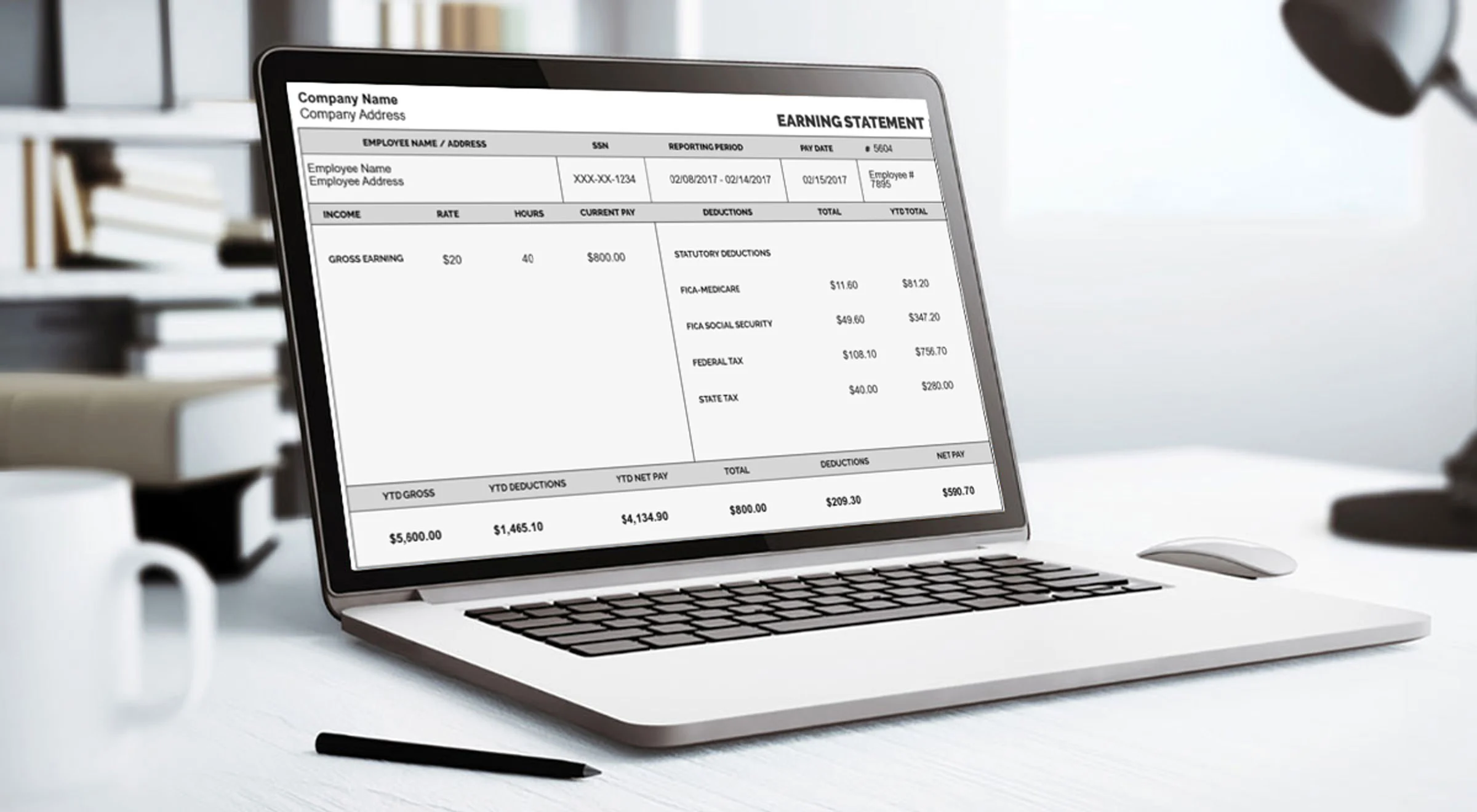

If you’ve ever asked yourself how a semi monthly pay schedule works, you’re in good company. It is very important to know your pay frequency if you want to be good at money management, payroll processing, and the avoidance of common paycheck errors. So whether you are an employee who needs to arrange the monthly budget or an employer who wants to pick the payroll schedule, knowledge of basic pay frequency can be really helpful for time-saving and confusion prevention.
Whether you are an employee trying to predict your next paycheck or a business owner building a payroll system from scratch, understanding semi monthly pay can save you from serious confusion and even costly errors. Every accurate paycheck starts with accurate documentation, making a reliable pay stub generator an essential business tool.
In this comprehensive 2026 guide, we will walk through the concept of a semi monthly meaning, how it’s different from other pay frequencies, its pros and cons, and accurate payroll calculations. Ultimately, you will know exactly if a semi monthly pay schedule is suitable for your payroll or personal financial planning.
What is Semi Monthly Pay?
The word semi is a Latin-origin word that means half. So, semi monthly, meaning is quite straightforward, it is something happening twice in a month, or once every half a month. When it is related to payroll, the meaning of semi monthly is that the employees are paid their salaries twice within one calendar month, usually on fixed, pre-determined days.
Bi-monthly is a totally different thing. It can be quite confusingly mean either twice a month or once every two months, given the context. Semi monthly, however, is unambiguous: it only signifies twice per calendar month, and nothing else.
In the context of compensation:
- Semi monthly pay refers to a pay arrangement where an employer distributes wages on two specific dates per month, most commonly the 1st and 15th, or the 15th and the last day of the month.
- The pay dates remain consistent and calendar-anchored, regardless of what day of the week they fall on.
- If the designated pay date lands on a weekend or public holiday, the employer typically pays on the preceding business day.
Semi monthly salary payments are most of all popular among salaried employees because they are generally more geared toward the monthly budget, rent, and mortgage payments schedule. They receive half of their salary twice a month instead of waiting until the full month to receive it.
How Does Semi Monthly Pay Work?
Here we break down how the semi monthly payments work!
Basic Structure
In a semi monthly pay arrangement, the employer selects two fixed pay dates per month. The most commonly used combinations in 2026 are:
- 1st and 15th of each month
- 15th and last day of each month
An employee who earns an annual salary of, say, $72,000 would receive $3,000 per paycheck on a semi monthly schedule because their annual salary is divided by 24.
| Formula: Semi Monthly Gross Pay = Annual Salary ÷ 24 |
With regard to hourly workers, the method of calculation changes slightly. Since the number of hours in each semi monthly period can vary (some pay periods cover 15 days, others 16), employers must carefully track actual hours worked and apply the applicable hourly rate.
Pay Period vs Pay Date For Semi Monthly
- The pay period is the window of time during which work is performed, and pay is earned, for example, between 1st June and 15th June.
- The pay date is when the actual payment is issued to the worker, which should be several days after the closest pay period to allow for processing.
What Happens on Weekends and Holidays?
It is a common practice among employers to pay their employees ahead of schedule and release their wages on the last business day before the weekend or holiday (usually a Friday) in cases when a semi monthly pay date lands on a Saturday, Sunday, or a federal holiday. This way, employees are not kept waiting for their pay over a weekend when they have already worked for it.
This is particularly important for businesses operating across multiple states, as some state labor laws have specific requirements about how promptly wages must be disbursed.
Taxes and Deductions
For payroll administrators, getting paid twice a month means that the federal income tax withholding tables fall under a 24-period schedule. IRS Publication 15-T issues specific withholding tables tailored to a semi monthly pay frequency. Benefit deductions, like health insurance premiums or 401(k) contributions, are equally divided and deducted from 24 paychecks made throughout the year.
What is a $5,500 Semi-Monthly Paycheck Yearly?
A $5,500 semi-monthly paycheck means you receive $5,500 twice each month, for a total of 24 paychecks per year.
Calculation:
- Semi-monthly paycheck: $5,500
- Paychecks per year: 24
- Annual salary: $5,500 × 24 = $132,000
Answer: A $5,500 semi-monthly paycheck equals an annual salary of $132,000 (before taxes and deductions).
Is Semi Monthly Twice a Month?
Yes, and this is probably the single most searched clarification on this topic: Is semi monthly twice a month?
The answer is an unequivocal yes. Semi monthly pay always occurs exactly twice per calendar month, resulting in 24 paychecks per year (12 months × 2 payments per month = 24).
| Features | Semi-Monthly | Bi-Weekly |
| Frequency | Twice per calendar month | Once every two weeks |
| Pay Periods per year | 24 | 26 |
| Pay dates | Fixed | Floating |
| Annual pay days | Always 24 | Always 26 |
| Salary divisor | / 24 | / 26 |
| Best for | Salaried employees | Hourly employees |
What is Semi Monthly Payroll?
Semi monthly payroll is the whole system of procedures, timelines, calculations, and compliance steps an organization follows to pay its employees twice per month on fixed calendar dates.
Components of a Semi Monthly Payroll
Pay Period
Each of the 24 annual pay periods covers a specific date range. February has 28 days, some months have 30 days, and some have 31 days. This means that the second pay period does not always have the same length. This changing length is one of the reasons why semi-monthly payroll needs more attention than biweekly for hourly workers.
Payroll Processing Deadlines
Most payroll departments require 3–5 enterprise days to process payroll runs before the actual pay date. This way, timesheets, cost reimbursements, and any changes to deductions or direct deposit statistics should be submitted well in advance of the pay date.
Tax Withholding
Employers normally base the federal income tax they withhold on the IRS semi-monthly withholding tables per the rules. These tables for 2026 are available in IRS Publication 15-T and show the revised tax brackets and updated standard withholding allowances as per the Tax Cuts and Jobs Act setup, plus any other legislative changes.
State Payroll Compliance
Each state has its own payroll frequency requirements and regulations. Several states, including California, New York, and Texas, expressly allow half-month payroll reporting. However, employers must verify that their chosen pay date complies with the minimum pay frequency required by state regulations for that worker classification.
Benefits and Deductions
Health insurance premiums, retirement contributions, HSA/FSA deductions, wage garnishments, and other withholdings are all distributed over 24 paychecks. This results in employees having a predictable, smaller deduction per paycheck instead of a monthly deduction.
How Many Semi Monthly Pay Periods in a Year?
The equation is pretty simple: 12 months × 2 pay periods per month = 24 semi monthly pay periods per year.
Biweekly schedules create 26 pay periods annually, and weekly schedules create 52, but a semi-monthly schedule produces exactly 24 pay periods every year, whether it is a normal year or a leap year.
This consistency is one of the primary reasons why employers, especially in larger corporations with large salaried workforces, want semi-monthly payrolls. Budgeting with 24 salary intervals is simple:
- Monthly payroll cost = Annual payroll cost ÷ 12, or equivalently, 2× the per-paycheck cost
- Quarterly payroll = 6 paychecks per quarter
- Annual reconciliation is simple and clean
What is Semi Monthly Pay Schedule?
A semi monthly pay schedule is a formal payroll calendar that defines all 24 pay dates for a given year, and the corresponding pay period start and end dates and any adjusted dates for holidays or weekends.
Standard Semi Monthly Pay Dates
The two most common semi monthly pay dates are:
Option A:
1- 1st-15th: Paid on the 15th
2- 16th: End of Month: Paid on the 1st of the following month
Option B:
1- 1st-15th: Paid on the 15th
2- 16th: Last Day: Paid on the last day of the month
How to Create a Semi-Monthly Pay Schedule?
Below is a simple process for creating a semi-monthly pay schedule:
- Select your two recurring pay dates.
- Map out each date across all 12 months of the calendar year.
- Identify weekend and holiday conflicts and determine the adjusted business day pay dates.
- Define the pay period boundaries, which are the exact starting and ending dates for each of the 24 periods.
- Set internal process deadlines for when timesheets and approvals are due and when payroll must be submitted to banks for direct deposit.
- Distribute the published calendar to all employees so they know exactly when to expect each paycheck.
Conclusion
With a semi monthly pay schedule, employees first need to understand that the payroll calendar is organized around fixed pay dates that occur twice each month. So, employees will receive a consistent and predictable earnings pattern throughout the year.
Learning about the mechanics of semi-monthly pay, its implications on deductions, as well as figuring out your pay, is a smart way to ensure financial security. For instance, if you require a very accurate proof of income or if you want to create beautifully formatted paycheck stubs that perfectly align with your pay schedule, then the use of a trustworthy online free pay stub generator can help you!
FAQs
1) What does semi-monthly pay mean?
Semi-month-to-month pay is a payroll program where employees are paid exactly twice a month, resulting in a year. This is not unusual for salaried employees, who typically receive half of their gross pay each month on their designated payday.
2) Is semi-monthly 24 or 26 pay periods?
Employers who choose this schedule can pay their employees on either the first or the 15th day of the month or the closing day on the 16th of the month. Semi-monthly pay has 24 pay periods and is often used with salaried employees.
3) Why is semi-monthly pay 86.67 hours?
Full-time semi-monthly employees are paid for 86.67 hours each pay period through their paychecks. The variation in the hourly rate comes from the difference in the number of paychecks employees get. In the case of a biweekly employee, the annual work hours 2,080, should be divided by 26 pay periods (every two weeks).
4) How to calculate semi-monthly salary?
A semi-monthly pay schedule pays employees twice a month on fixed dates, resulting in 24 paychecks per year and supporting financial stability. Calculating semi-monthly pay involves dividing the annual salary by 24, helping both employers with payroll processing and employees with financial planning.
5) Does semi-monthly mean twice a month?
Yes, getting paid semi-monthly means you are paid twice a month.
6) Is 26 pay periods every 2 weeks?
Biweekly payroll covers 26 pay periods a year.
7) Is 2026 a 27 paycheck year?
Calendar years typically have 26 biweekly paychecks. Calendar year 2026 will have 27 paychecks paid within the calendar year.
8) Is semi-monthly 24 or 26?
Semi-monthly has 24 pay periods; bi-weekly has 26 and always falls on the same weekday.
9) What is a 26 pay period cycle?
Most employers, regardless of the size and industry, are doing payroll on a biweekly basis. Given that there are 52 weeks in a year, that means 26 pay periods in total.
10) Is it good to get paid semi-monthly?
Semi monthly pay schedules help simplify budgeting as people get exactly two paychecks a month, so it’s easy for them to plan their rent, mortgage payments, and other monthly fixed expenses.
Also Read:
UnitedHealthcare Login Guide: Step-by-Step Guide to Get Paystub
What Is A Floating Holiday? Meaning, Examples & How It Works
Wegmans Login Guide: How to Get Your Wegmans Paystub
What is Deferred Compensation? A Complete Guide to How It Works
Progressive Employee Login Guide: How to View and Download Your Paystub