.png)


 Chat with us now!
 Send Email!

Planning for retirement can feel confusing at first, especially when terms like “401K” come up in conversations about jobs and finances. If you’ve ever wondered -what is a 401K?, how it works?, and why it’s important?, You’re at the right place. This beginner‑friendly guide will break everything down in simple terms so you can understand how this popular nationwide retirement savings plan helps you build financial security over time.
In fact, the Internal Revenue Service (IRS) recently increased the 401K limits, giving savers more room to grow their retirement assets each year.
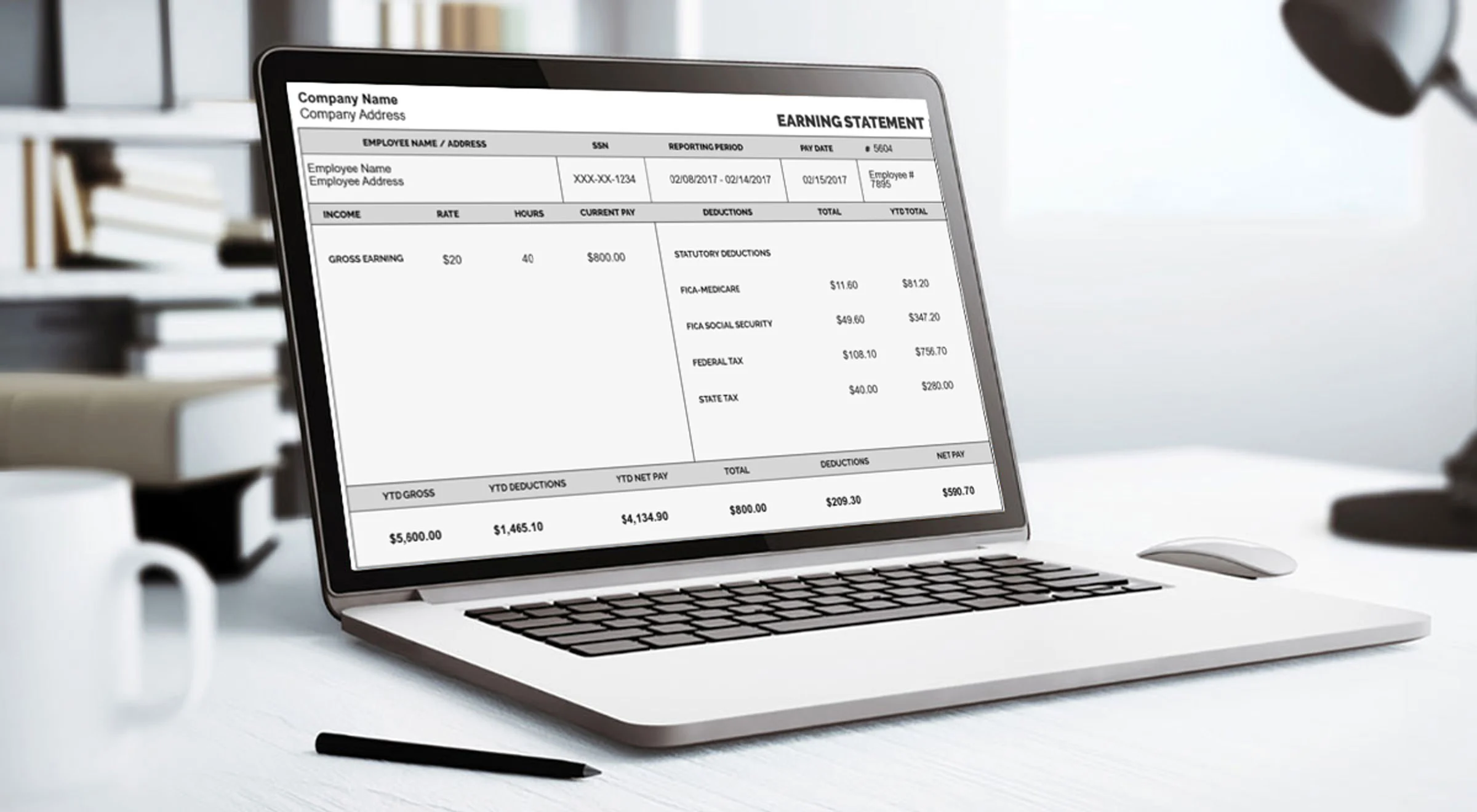
So as you take a look at your income, deductions, and savings contributions, it’s also worth knowing how your earnings are organized. With the help of the best free paystub generator tool, you can see what your paycheck will look like, how much money is for your 401K, and other deductions.
In this guide, we’ll walk you through what is 401k, how it works, its benefits, what is max 401k contribution, even if you’re just getting started.
What is A 401K Plan?
A 401K plan is a retirement savings account offered by employers that enables employees to save a portion of their salary for future use. Since contributions are typically taken directly from your check stubs, it’s a straightforward and regular method to build long-term savings.
401K plans are investments, and they can appreciate in value over time, which allows individuals to build a steady income source during retirement. The reason it is so widely used is its simplicity, automatic contributions, and long-term financial benefits.
How Does A 401K Work?
A 401K retirement plan works by allowing employees to contribute a portion of their salary directly from their paycheck into a retirement account. These contributions are generally made automatically, making saving easy and convenient. When you deposit the money, it gets invested in options provided by your employer, such as index funds, mutual funds, or target-date funds, depending on the plan.
Your contributions can compound, which means that your earnings create more earnings. Most employers even provide matching contributions, which means they contribute additional funds to your account based on your contribution amounts; this can give you a huge boost in savings. You can typically monitor your account through a nationwide 401K login, adjust your contribution rate, and choose how your money is invested.
Despite being a great savings plan, the 401K is meant to be used over the long term. This means that withdrawals are generally restricted until you reach retirement age, and early withdrawals can incur penalties. In short, it allows you to systematically and efficiently accumulate retirement savings over the years.
What Are the Different Types of 401Ks?
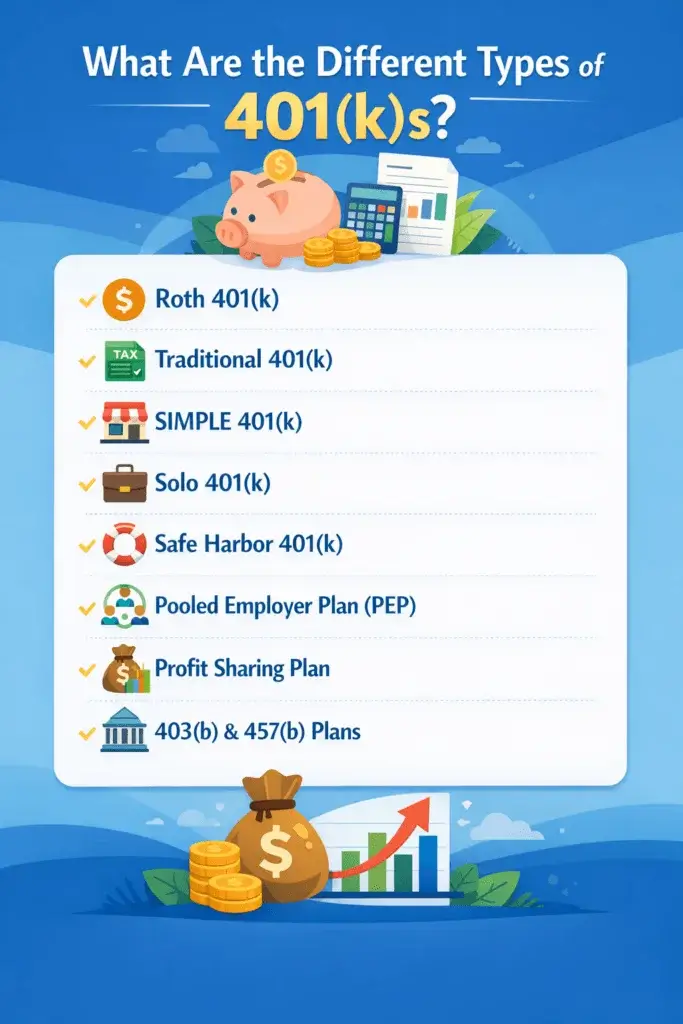
While all 401K plans follow IRS rules, there are several types designed for different needs:
- Roth 401K: There are no immediate tax benefits in Roth 401K because contributions are made with the after-tax income. In retirement, though, qualified withdrawals are entirely tax-free. This after tax 401K is the best for people who think taxes will be higher in the future.
- Traditional 401K: Contributions are made with pre-tax income and can reduce your taxable income for the year. The funds grow tax-deferred, and you pay taxes upon making withdrawals in retirement. It’s often the preferred option for people seeking to reduce current taxes.
- SIMPLE 401K: Designed for small businesses with 100 employees or fewer. It has fewer rules but less flexibility for contributions compared to traditional plans.
- Solo 401K: This retirement plan is designed for self-employed people or small business owners without employees. It offers greater contribution flexibility than many other retirement plans.
- Safe Harbor 401K: This plan usually requires employers to contribute to employees’ accounts. In exchange, it avoids complicated IRS testing rules and simplifies management.
- Pooled Employer Plan (PEP): This plan enables multiple businesses to join a single 401K plan regulated by a service provider. This saves employers money and administrative headaches.
- Profit Sharing Plan: Employer deposits funds into employee accounts based on company profits. In this type of plan, employees generally do not contribute.
- 403(b) and 457(b): They are like 401K plans that are offered to nonprofit and government employees. They offer similar tax benefits and investment choices.
What Is the Contribution Limit for 401Ks?
Each year, the IRS provides an annual 401K contribution limit to define how much individuals can contribute to their retirement accounts. These 401K limits are reviewed and adjusted annually for inflation, which means savers can slowly increase their max 401k contribution over time.
401K max contribution is essential for building a strong retirement plan. It assists you with deciding how much to contribute directly from your salary and ways that you can maximize employer matching contributions without violating IRS guideline 401k.
401K Contribution Limits by Year
| Year | Employee Contribution Limit | Catch-Up (Age 50+) | Catch-Up (Age 60–63) | Total Contribution Limit |
| 401K Contribution Limits 2024 | $23,000 | $7,500 | — | $69,000 |
| 401K Contribution Limits 2025 | $23,500 | $7,500 | $11,250 | $70,000 |
| 401K Contribution Limits 2026 | $24,500 | $8,000 | $11,250 | $72,000 |
The 401K 2026 contribution limit has increased to $24,500, giving individuals more room to grow their retirement savings. These yearly increases make a significant difference over time, especially when combined with long-term investing.
Rules of a 401K: Contributions and Limits (2026)
The IRS also enforces rules around the max 401k contribution to make sure these tax-advantaged plans are used properly. These limits apply not only to employee contributions but also to the total amount contributed, including employer matching.
2026 401K Contribution Limits (Detailed)
| Plan Type | Annual Limit |
| SIMPLE 401K | $17,000 |
| Traditional & Safe Harbor 401K | $24,500 |
| Solo 401K contribution limits | $24,500 |
| Roth 401K contribution limits | $24,500 |
These are the maximum amounts employees can contribute directly from their salaries in 2026.
Total Contribution Limits (Employee + Employer)
| Category | Total Limit |
| All Employees | $72,000 |
| Age 50+ | $80,000 |
| Age 60–63 | $83,250 |
These 401K limits apply to both employee contributions as well as any matching or profit-sharing contributions from the employer.
2026 Contribution Breakdown by Age
| Age Group | Employee Contribution | Total Contribution Limit |
| Under 50 years old | $24,500 | $72,000 |
| Aged 50–59 or 64+ | $32,500 ($24,500 + $8,000) | $80,000 |
| Aged 60–63 | $35,750 ($24,500 + $11,250) | $83,250 |
This breakdown helps to illustrate how contribution limits rise as you get older. People who are nearer retirement have the benefit of bigger limits, and that helps them boost their savings substantially in those last working years.
401K Rules: Withdrawals and Transfers
A 401K is meant to grow your money over the long haul in preparation for retirement, which means there are strict rules governing when and how you can take a withdrawal from 401K plans. In most cases, you can begin taking withdrawals without facing penalties when you hit age 59½. Withdraw earlier than that, and you’ll usually incur a 10% early withdrawal penalty on top of the regular income tax due on the amount.
However, there are exceptions where early withdrawals without penalty may be allowed. These are things like financial difficulty (high medical bills, for example), carriage of permanent disability, certain qualified disasters, or if you leave your job at age 55 or older. Even then, you may still owe some taxes depending on the type of withdrawal.
401K Loans
Some employers will even let you take a loan out of your 401K instead of withdrawing money. That means you can get funds without paying taxes or penalties right away, but the loan has to be paid back through payroll deductions. Although this can be beneficial in times of crisis, it does shrink your pay and hinder your money for investment growth. If you do not pay the loan back, it will be treated as a withdrawal and therefore taxable with penalties.
Transfers and Rollovers
When you leave an employer, or if you wish to move your retirement funds to another qualified account, the 401K balance can be transferred. The most secure option is a rollover, which enables you to transfer money into another 401K, an IRA, or equivalent retirement account on the back of taxes and penalties.
Withdrawing your 401K early, on the other hand, will result in taxes and penalties, which makes it less attractive. Keeping your funds within a qualified retirement account preserves your savings and keeps the tax benefits intact.
When Can You Withdraw Without Penalty?
In certain situations, you may qualify for a penalty-free 401K withdrawal:
- Once you reach age 59½
- Qualified disaster distributions (up to $100,000) for certain FEMA-declared disasters
- If you are a beneficiary, an individual with permanent disability, or a qualified reservist
- For Roth 401K, the account must be open for at least 5 years, and eligibility conditions.
Even in these cases, income taxes may still apply depending on the withdrawal type.
Guideline 401K: Required Minimum Distributions (RMDs)
Required minimum distributions (RMDs) are the least you must take out of your 401K each calendar year after you turn age 73 per IRS guidelines. Your first RMD needs to be taken by April 1 of the year following your 73rd birthday, and future withdrawals must occur by December 31 each year.
The amount you must take out is based on your total retirement account balance as of Dec. 31 of the previous year and your life expectancy calculated using IRS tables. Because the calculation can be complicated, many people use online calculators or work with a finance professional to get it right.
Key RMD Rules to Know
- RMDs are required on traditional 401K and similar retirement accounts
- You can delay RMDs if you’re still working, unless you own 5% or more of the company
- As of 2026, the Roth 401K is not subject to RMDs during the life of the account holder.
- Failure to withdraw an RMD can incur a penalty up to 25%, though the penalty may be reduced to 10% if the withdrawal is made in a timely manner.
How to Start a 401K?
Starting a 401K is typically easy, especially if your employer has a plan. Here’s how you can begin:
- Check availability from an employer: Confirm with your HR team to see if they provide a 401K plan and whether you meet the requirements to participate.
- Enroll in the plan: Register via your employer’s benefits portal or fill out a paper enrollment form. Some companies may automatically enroll you.
- Choose your contribution amount: Determine how much you would like to save from your paychecks. You could begin with something small and build it up over time.
- Choose investment options: Depending on your goals and risk appetite, choose from available options like mutual funds or target-date funds.
- Take advantage of employer matching: If your employer provides it, contribute enough to get the full match.
- Review and adjust regularly: Keep track of your account and modify contributions or investments as income and financial aspirations change.
Advantages and Disadvantages of a 401K
A 401K comes with both advantages and limitations you should consider.
Advantages:
- Tax advantages: Contributions are tax-deferred (traditional) or tax-free upon withdrawal (Roth).
- Higher contribution limits: Let you save more than many other retirement accounts.
- Set automatic payroll deductions: Make saving automatic and effort-free.
- Employer match: A lot of employers also offer to match contributions, which incentivizes you to save.
- The catch-up contributions: Individuals who are 50 or older are allowed to contribute more to shore up savings.
Disadvantages:
- Limited investment options: You’re limited to the funds available in your employer’s plan.
- Administrative fees: Some plans have a fee that can affect longer-term growth.
- Early withdrawal penalties: Money taken out before age 59½ can result in taxes and penalties.
- Required minimum distributions (RMDs): Withdrawals must begin at age 73 (for most plans).
How Do You Invest in a 401K?
Investing in a 401K is about deciding how your contributions get distributed among the investment options of your plan. Standard options are mutual funds, ETFs, and target-date funds. Simply spreading your investments among stocks, bonds, and cash helps mitigate risk. Also, make sure to periodically review your portfolio and adjust allocations as needed to remain in sync with your retirement goals.
Why Is My Employer Offering a 401K?
401K plans are provided by employers to encourage retirement saving and financial security. In addition to being a benefit, 401Ks also help employers draw and keep talent, provide tax advantages, and boost employee satisfaction. Additionally, many employers offer matching contributions that further boost your retirement savings momentum.
Final Thought
Ultimately, a 401K is a plan that will systematically allow you to save for retirement with before-tax contributions. This is why it is important to know exactly how the plan works, be aware of contribution limits, and go for an investment strategy that will maximize your savings and lead to a secure financial future. No matter which type of 401K you prefer, as long as you’re contributing regularly and making informed choices, your retirement dreams are within reach.
Curious Mind Also Ask
1) How much should I contribute to my 401k?
This will depend on your retirement goals and income, but a good place to start is contributing at least enough to get the full employer match. Experts suggest saving approximately 10–15% of your salary.
2) How much can I contribute to my 401k?
For 2026, you can contribute a maximum of $24,500 a year. If you’re 50 or older, you can contribute an additional $8,000 in catch-up contributions, and those aged 60–63 can add another $11,250.
3) What’s a 401k?
A 401K is an employer-sponsored retirement savings plan that allows you to contribute a portion of your paycheck pre-tax and invest those funds for growth over the long term.
4) How much to contribute to 401k?
You would want to contribute as much as you are comfortable with, but at a minimum to whatever your employer matches you on, and increase it over time.
5) How much do I need in my 401k to get $1000 a month?
To net around $1,000 a month, you will have to save approximately $300K if you want to withdraw about 4% a year.
6) What is a 401k plan and how does it work?
A 401K automatically deducts contributions from your paycheck and invests them in selected funds, enabling savings to compound over the years.
7) What happens to my 401k if I quit?
If you leave a job, you can leave your 401K with your employer, roll it over to a new plan or IRA, or cash out (likely incurring taxes and penalties).
8) Does a 401k give you money?
A 401K doesn’t provide you with cash in hand, but it allows your savings to flourish so you can take money out during retirement.
9) What is the maximum limit you can contribute to a 401k?
For 2026, the maximum employee contribution is $24,500 with age-based catch-up contributions available.
10) Has the IRS announced 2026 401k limits?
Yes, the IRS has released the 2026 limits, raising the annual contribution limit to $24,500.
11) How many Americans have $1,000,000 in their 401k?
The number of people who have $1,000,000 in their 401K is a tiny portion and generally thought to be less than 5%.
12) Is there a limit to how much you can have in a 401k?
There’s no limit on the total amount you can have in a 401K, but there are limits to how much you can contribute each year.
13) What is the maximum you can contribute to a 401k every year?
In 2026, the maximum annual contribution is $24,500 — higher for catch-up eligible individuals.
14) Can I retire at 62 with $400,000 in 401k?
Perhaps, but it depends on your way of life, expenditures, and other income streams. Careful planning is required.
15) How many Americans have $1,000,000 in their 401k?
High earners still tend to max out at the contribution limit of $24,500, but total contributions (contractor and employer) can be up to $72,000, plus catch-ups.
Also Check:
What is WFH (Work From Home)? A Complete Guide to Remote Work