.png)


 Chat with us now!
 Send Email!


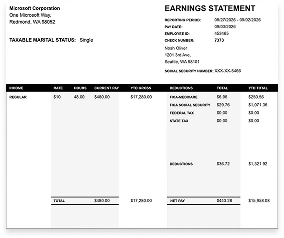
Even if your yearly income is stated to be $72,000, that figure is unlikely to be received in your account. The amount that actually shows up in your account, known as your net salary, is the result of a complicated set of taxes, benefits, and deductions. Here is how to figure out that amount accurately in 2026.
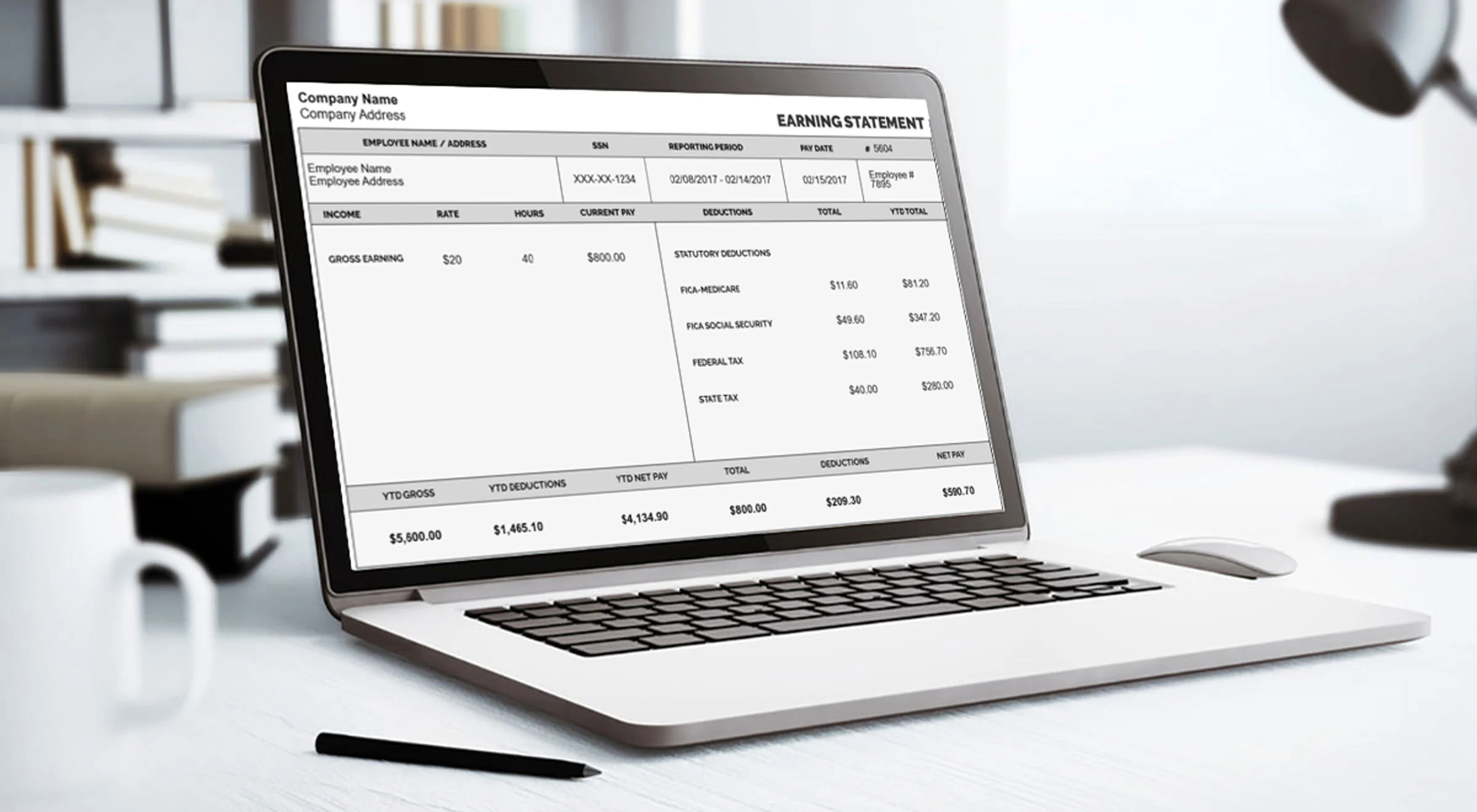
You can check everything in your check stubs, and know what is your net pay, gross pay, deductions etc!
What Is Net Payment and Why Does It Matter Right Now?
Net pay, or payment or salary, is considered the total income you receive after mandatory and voluntary deductions such as federal, state, and local taxes. The including deductions are Social Security and Medicare, health insurance premiums, and retirement fund contributions, have been deducted. It is the amount of money deposited in your bank account at the end of each pay period, for example, on your paycheck of 03/13/2026 or 03/27/2026.
Net income is the amount you get paid before taxes. The net income is the amount that is available for use.
Gross pay, on the other hand, relates to the entire amount promised by the employer before settling any unpaid amount.
Most employees are surprised to find out the difference between their gross pay and net pay when they receive their first paycheck.
Net monthly income matters when it comes to planning your finances and budgeting. Rent, payment for the car, student loans, and other personal finances can be done only based on the amount of money a person receives.
It is very important to understand the concept of net salary because when an individual is saving money for a major purchase in late 2026, he or she will need a precise plan for budgeting.
Net Salary vs. Gross Salary: Key Differences
Two headline figures can commonly be found in every pay stub, and the mistake of mixing them is the most frequent explanation for the expression “my paycheck is less than the amount agreed at the hiring.” To know more about that you can read our blog: Gross pay vs Net pay!
- Gross salary provides total earnings prior to taxes and deductions, which include hourly pay multiplied by the time worked, bonuses, overtime, as well as additional compensation for working late hours.
- Net pay is calculated after taking into account all deductions related to federal paycheck tax, FICA taxes, state payroll taxes, as well as other deductions. Different deductions can be mentioned, namely costs for Social Security, pre-and post- tax benefits.
For example, annual gross pay for an average worker is $5,000; accordingly, net pay ranges from $3,600 to $3,800.
Net pay can differ considerably across people with the same gross salary, which leads to misunderstandings in the process of calculating the paycheck amount each worker receives. Lenders and landlords should base their calculations on net salary. Contractual agreements and job openings provide salary in gross terms.
StubCreator paystubs enable their users to view gross and net pay amounts in a single document.
How to Calculate Gross Pay Before Deductions
You need to determine gross income accurately to calculate net pay. Gross salary means the amount you earn before any deductions have been made, and every other calculation is based on that number.
- For salaried employees: To calculate gross salary, you can divide the annual salary by the number of paydays in the year. This can be 52 paydays for a weekly salary; 26 for a bi-weekly salary, and 12 for a monthly salary. Moving forward, bi-weekly periods for the year 2026 will also equal 26. Example: $72,000 divided by 26 equals $2,769.23 gross per paycheck.
- For hourly employees: Calculate net income by multiplying the hourly rate by the total number of hours worked, and if overtime is done, add that as well. For example, $23 for 40 hours worked equals $920, and 10 hours of overtime with the overtime pay $34.50 results in $345; thus, the total gross payment for the period of pay would be $920 + $345 = $1,265.
From Gross to Net: Taxes, Benefits, and Other Deductions
Payroll processing converts gross pay into net pay by applying deductions in a particular order. To illustrate the process in brief, net income is after taxes!
- Federal deductions: Federal income tax is based on tax brackets that vary based on filing status, which means there are 7 income tax rates ranging from 10% to 37% in 2026. FICA tax is 6.2% for Social Security (for earnings up to $184,500) and 1.45% for Medicare, which is taxed on all employee wages. Also, for a single taxpayer, an additional Medicare tax rate of 0.9% is assessed against earnings above $200,000. These tax withholdings, together with FICA tax, are one of the categories of mandatory deductions.
- State and local taxes: Since every location has its own state and local income tax regulations, there can be either flat or progressive tax rates. For example, California and New York impose the tax with the highest possible rate of 10%; on the other hand, Texas and Florida do not impose any income tax whatsoever.
- Pre-tax deductions: It consists of health insurance premiums (1,672annualaverageforsingleemployee(7,471 annually for family employee in accordance with data published by KFF 2026), 401(k) or 403(b) retirement or charitable contributions, health savings accounts, and flexible spending accounts. Pre-tax contributions lead to a reduction of an employee’s taxable income before state income taxes.
- Post-tax deductions: They consist of contributions into a Roth 401(k), wage garnishment, union dues, insurance premiums, and charitable donations. Post-tax deductions do not lessen taxable income, but they reduce an employee’s net income.
Voluntary deductions include employees’ choices of health insurance and retirement contributions at the discretion of employees surpassing mandatory minimums.
Step-by-Step: How to Calculate Net Salary Manually
Although software is the simplest option, it is advisable for small business owners and employees to understand how to compute net pay.
Formula:
| Net Salary = Gross Salary – (Federal Tax + State and Local Tax + FICA + Pre-Tax Deductions + Post-Tax Deductions) |
For Example:
- Step 1: Gross Salary = $72,000 per annum ÷ 26 = $2,769.23.
- Step 2: Calculate federal tax using W-4 information and the employee’s tax bracket = $310.
- Step 3: Determine FICA = Social Security taxes at 6.2% ($171.69) + Medicare taxes at 1.45% ($40.15) = $211.84.
- Step 4: Calculate state taxes = assume 5% of taxable income = approximately $116.
- Step 5: Subtract pre-tax deductions such as 401(k) (5% = $138.46) and health insurance ($69).
- Step 6: Subtract post-tax deductions such as Roth contribution ($50).
- Step 7: Final calculation gives net salary = $2,769.23 – $310 – $211.84 – $116 – $138.46 – $69 – $50 = $1,873.93.
Use StubCreator to Check Your Net Salary
Computations based on hand-made mathematical formulas frequently attract mistakes. Online paycheck calculators have made it easier to calculate an employee’s gross pay and actual income with regard to the relevant taxes and deductions.
A paycheck calculator transforms gross annual earnings into net wage after deducting mandatory payroll deductions. To calculate net earnings, the gross salary, along with any deductions, needs to be input into the system. While calculating the salary, the taxes imposed at the federal, state, and local levels are also taken into account.
It is also possible to simulate some scenarios by either increasing the rate of contribution to the 401(k) account, introducing extra dependents, or modifying W-4 form instructions.
StubCreator’s free paycheck calculator uses up-to-date 2026 rules for the federal, local, and state jurisdictions. It helps move from gross salary to net salary for both salaried and hourly employees. Using the calculator, one can get pay stubs in PDF format carrying the detailed breakdown of taxes.
Freelancers, contractors, and small groups can use the service to get pay stubs within minutes instead of paying for a full-blown payroll service if they are paying only for themselves or smaller groups of employees.
Final Thoughts
When you have a good idea about the flow of dollars, you can stop wondering and begin to organize your finances. StubCreator will give you your first paycheck stub free of charge, so you can find out how much money a worker takes home after federal and state deductions and expenditures.
FAQ's
Can net salary change month-to-month?
+
Yes. Overtime wages, bonuses, commission increases, benefit enrollment changes, changes in federal and state taxes, and introduction of new local taxes can make a difference in your employee's take-home pay from one pay period to another.
Is net salary the same for salaried vs. hourly employees?
+
The idea is the same (take-home pay after deductions), but hourly employees tend to experience more fluctuations due to changes in hours worked and overtime. A salary paycheck calculator estimates net pay after deductions irrespective of the type of payment.
How does changing my W-4 or benefits affect net pay?
+
Moreover, receiving extra tax credits or dependents reduces withheld federal taxes, which raises current net pay, but may decrease future tax refund. Higher contributions to pension and health savings accounts also increase net pay due to a decreased amount of taxable income.
What about freelancers and independent contractors?
+
The payments received are gross payments without taxes deducted. The vendors need to deduct the taxes on their own and set aside funds for any federal, state, and self-employment taxes, which will allow them to identify what their actual net income is and to avoid the risk of underpayment at tax time.
How do I verify my net salary is correct?
+
Verify pay stub totals with a payroll calculator and compare the year-to-date information to your expected annual income. StubCreator takes care to model every aspect of the pay stub as a single compliant document.