.png)


 Chat with us now!
 Send Email!
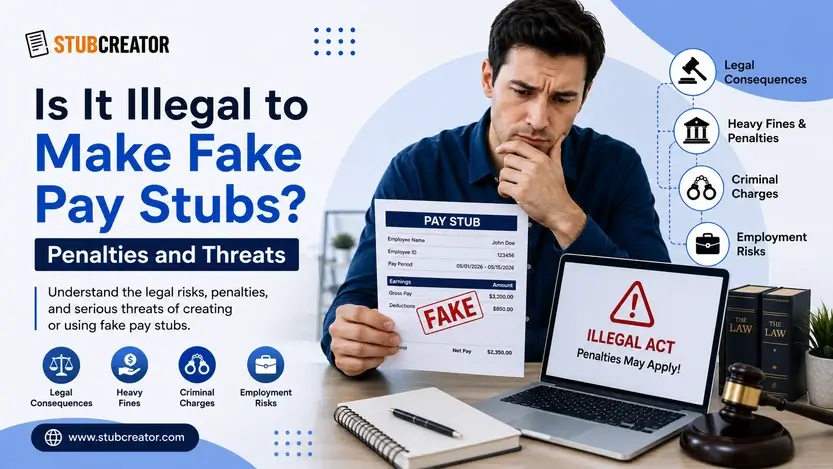
Yes. In the United States, the production, modification, or presentation of a fake pay stub to a financial institution, housing provider or employer is against the law.
Depending on the way it is applied, it may be charged as bank fraud, wire fraud, forgery or loan fraud, with the applicable penalties ranging from denying the loan application or civil litigation to federal penalties and lengthy time in prison under laws. The only legitimate way to generate a pay stub without a payroll system is to generate a pay stub based on legitimate earning information using a pay stub generator.
This guide explains in detail why fake pay stubs are illegal, what the actual consequences are, how to identify a fake pay stub without taking too much time, and how to create a pay stub correctly.
What is a Fake Pay Stub?
A fake pay stub is one that displays misleading information about an individual’s actual earnings, employer, deductions, and employment status. Examples of fake pay stubs include the following:
- A real pay stub that has been altered digitally to change the information contained therein, such as altering income or changing dates
- A pay stub made up of completely bogus data from a nonexistent company
- A stub that may come from a legitimate employer but with fake details of the employee’s earnings
- A stub used to say that someone is working for a company that he or she actually is not working for
It is important to note that using a fake pay stub generator in itself is not a crime. People such as accountants and freelancers use them every day to generate accurate documents when they do not have in-house payroll systems.
Is It Illegal to Make Fake Pay Stubs?
Yes. In the USA, knowingly generating or using a fabricated or fake pay stub for the purpose of gaining money, credit, an apartment, or other benefits is a type of fraud that can result in criminal and civil liability. What kind of fraud it is depends on how one uses the pay stub.
| How the fake stub is used | Likely legal exposure |
| Submitted fake stub to a bank | Bank fraud under 18 U.S.C. § 1344; fines up to $1,000,000 and up to 30 years in prison |
| Used in an auto loan or personal loan application | Loan/application fraud, potential wire fraud if submitted electronically |
| Used to secure an apartment lease | Fraud/forgery under state law; grounds for eviction and civil suit |
| Used to claim unemployment or disability benefits | Federal or state benefits fraud |
| Created and sold to others | Conspiracy to commit fraud, forgery, or running a fraudulent “fake employer” scheme |
Having no knowledge of an error is treated differently from deliberate falsification. Courts normally examine the knowledge and intention of the person responsible for creating the document.
What Are the Real Consequences of Using a Fake Pay Stub?
Generating fake pay stubs poses threats within 3 intertwined categories:
Legal threats
- Civil action from banks, landlords, or employers who depended on the document
- Charges of criminal conduct such as fraud or forgery
- Fines that increase or decrease in accordance with the extent of the fraud
Monetary threats
- Instant rejection of loans, leases, or credit
- Repossession of cars or other possessions if fraud is uncovered after approval
- Freezing of bank accounts or getting banned from the services of banks
Personal threats
- Being fired by your employer in case they realise you have cheated them
- Being put on a blacklist by landlords or property management companies
- Being deprived of the trust of banks and financial institutions in relation to future applications
How to Spot a Fake Pay Stub?
Whether you’re a property owner, HR personnel, or just creating and reviewing your own pay stub documentation, learn how to recognize signs of fraudulent or modified pay stubs:
Too rounded or perfect numbers.
Real pay stubs are based on thorough calculations of gross pay, tax withholdings, and net pay. The existence of exactly the same numbers on pay stubs is a red flag.
The same deductions have been made every pay period.
Deductions like tax, benefits, and overtime usually differ from pay to pay. If the pay stub shows the same deduction every time, it may be imaginary.
Mistakes in calculations.
Gross pay must equal net pay when deductions are subtracted. If the difference is not equal to zero, it is a good sign the stub is not legitimate.
Standard deductions are missing.
A real pay stub also shows tax deductions for employment, Social Security, and Medicare taxes (if applicable). It is extremely rare for a real pay stub not to show such deductions.
Formatting discrepancies.
Fonts that do not match with each other, smudged logos, improperly formed columns, and typos mean that the stub is created manually. Choose the perfect paystub template to get proper output of the paystub.
How Do Lenders and Landlords Verify a Pay Stub?
More than just confirming visually, verification entails one or more of these:
- Contacting the employer directly to verify employment, job title, and salary
- Cross-checking the required documents such as W-2 forms, recent bank statements, tax returns (Form 4506), or employment verification letters, etc.
- Taking help from third-party verification services that can take payroll data directly from employer systems
- Asking for consecutive stubs to check for consistency of formats, amounts of deductions, and pay days
That is exactly the reason why it is important to use real and accurate information on any pay stub you make.
What Details Should I Look for in a Legitimate Paycheck Stub?
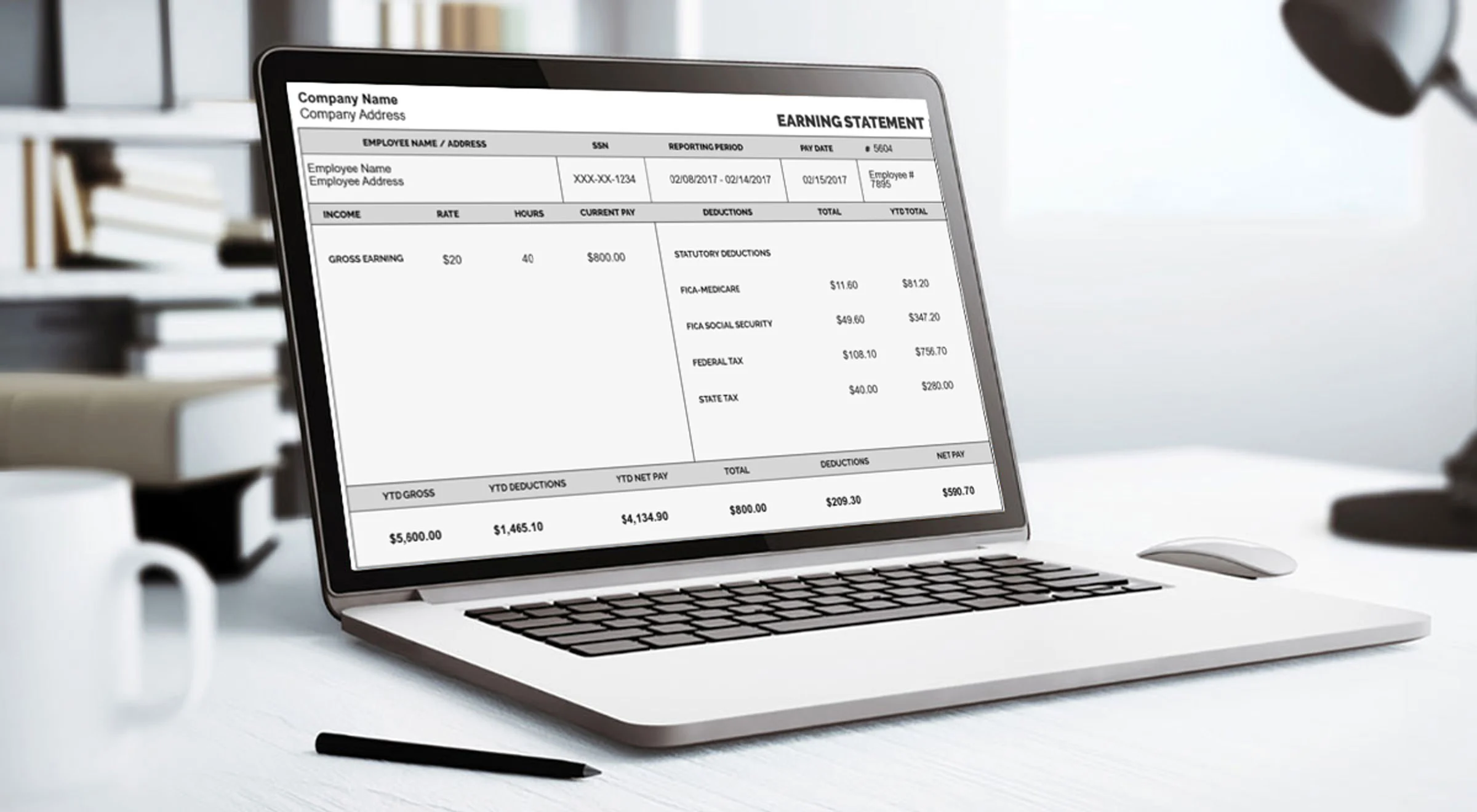
Typically, a valid pay stub should consistently have:
- Correct data of the employee: their full name, which must include the last four digits of either their Social Security number or employee number.
- Correct data of the employer: their company name, their registered office address, and their contact details.
- Details about payment period and date: there should be clearly defined date ranges for payments and the exact date of payment.
- Total pay: amount to be paid without deductions, covering the remaining number of hours worked.
- Details about deductions: this information must also reference the income tax level.
- Net amount: any payout must result from calculating the total payment.
- YTD amounts: total amount of payments made so far this year.
- Same format: the pay stub must contain the same fonts and the same logo of the employer.
In case any information is missing or it causes doubts, be careful while treating it.
The Legitimate Way to Get a Pay Stub
For those who do not possess standard payroll software, due to their status as self-employed, owning small enterprises, or pursuing freelance/activity work, the road to compliance is easy.
- First, employ an established paystub creator. Input accurate salary and employment data along with tax information.
- Second, do a careful verification to ensure gross wages, deductions, and net take-home wages are calculated correctly and consistently from year to year.
- Third, match pay stubs against the bank deposits and tax returns, as sometimes banks and landlords may demand this.
- Last, check if the pay stub needs to be certified or supported by documents like a W-2 or bank statement.
A pay stub produced this way is not a “fake” but rather a real income-generating document based on truthful information.
People May Ask
1) Is it illegal to make fake pay stubs?
Indeed, creating a fake pay stub and using it to secure loans, a place to stay, or a job is against the law in the United States. The individual risks facing charges for fraud or forgery, being fined, or being sentenced to prison.
2) Are there reliable websites to check the legitimacy of pay stubs?
Unfortunately, there is no central registry to check pay stubs against. The best way to verify the pay stub’s authenticity is to get in touch with the employer directly and to ask for relevant documents such as tax transcripts or a W-2.
3) What details should I look for in a legitimate paycheck stub?
Make sure to check employee and employer information, pay period and payment date, total earnings, and types of deductions (e.g., Social Security, Medicare, or taxes). The final sum should also match gross income minus other deductions and year-to-date sums.
4) Can I trust reviews on sites like Trustpilot and ScamAdviser for paystub services?
The services offer some insight but are still unable to guarantee genuine information. The first one rates the level of satisfaction among users, whereas the second one evaluates its trustworthiness using automated technology and, therefore, may fail to indicate real importance for new businesses.
5) Can fake pay stubs be detected?
Lenders, landlords, and employers frequently detect fake pay stubs automatically, using a number of usual practices such as contacting the payroll department for verification.
Also Read:
How to Verify the Authenticity of a Pay Stub Online?
Adobe Login Guide: Access Adobe Paystub Online
What is EFTPS? A Simple Guide to Paying Federal Taxes Online