.png)


 Chat with us now!
 Send Email!


“How many hours is full time?” is one of the most common questions employees and job seekers ask in 2026.
While people believe a standard full time job is 40 hours per week, the reality is slightly different.
There is no official federal law in the United States that provides a defined number of full time working hours for every employer (in general). That said, however, most companies view employees working between 35 and 40 hours a week as full-time workers.
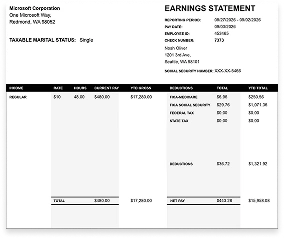
A traditional full-time schedule usually follows a Monday-to-Friday routine, often from 9 a.m. to 5 p.m. These working hours are commonly reflected on payroll records and pay stubs generated through a pay stub generator. Still, full time hours can vary depending on the company, industry, state laws, and employee benefits policies.
In this complete guide, you’ll learn how many hours are full time jobs in 2026, how employers define full-time employment, the difference between part-time and full-time work, and the benefits that often come with full-time jobs.
What Is Full Time Work Hours?
Full-time hours refer to the number of hours that an employee regularly works each week, according to company policies or industry standards.
There is no specific number that constitutes full-time employment in the United States; unlike many other countries, there is no federal law defining it. But the U.S. Bureau of Labor Statistics (BLS) generally classifies workers with appointments of 35 hours per week or more as full-time.
However, this definition is not legally binding for employers. In most workplaces, full time employees typically work between 35 and 40 hours per week, depending on the company’s schedule and requirements. A typical full time schedule is commonly where you work 8 hours a day for 5 days of the week, known as 40 hours a week.
How Many Hour for Full Time Job?
Full-time hours typically range between 35 and 40 hours per week, depending on the employer, industry, and company policy.
The Fair Labor Standards Act (FLSA) does not actually define full-time hours for an employee. Rather, the employers set their own full time work rules. For the majority of companies, 35 to 40 hours a week is viewed as full-time work.
A typical full-time schedule usually includes:
- 40 hours per week
- 8 hours per day
- Around 160–176 hours per month
- Approximately 2,080 hours per year
Yet full time hours can differ from organization to organization and sector to sector. As an example, under the Affordable Care Act (ACA), full time employees are defined as those who work at least 30 hours per week for health insurance purposes. This is crucial for knowing the way your employer defines full time hours, which has implications in terms of overtime pay, healthcare coverage, paid time off and other employee benefits.
Benefits of Full Time Hours Per Week
Full time jobs usually have several benefits that part-time employment may not. One of the ways full time jobs are more secure than part time jobs is benefits, which vary depending on the employer. At many companies, these benefits kick in for employees who work 30–40 hours a week.
Employee Benefits of Full Time Hours:
Health Insurance
The biggest benefit of full time employment is health insurance. Most full time employees receive medical, dental, and vision insurance at a discounted price. This can substantially reduce the monthly costs of healthcare relative to buying private insurance on your own.
Paid Time Off (PTO)
Paid vacation days, sick leave, and personal time off are commonly offered to full-time employees. Workers receive 10–20 paid days off per year, depending on the employer. PTO enables workers to take time off for personal reasons without a reduction in pay.
Retirement Plans
Full-time employees at many businesses receive retirement benefits in the form of 401(k) plans or pension programs. Through employer-matching contributions, workers are assisted in building a longer-term financial foundation for retirement.
Healthcare Benefits
The ACA requires employers with at least 50 full-time employees to provide health insurance to all employees who work an average of at least 30 hours per week. This gives special importance to full-time status for health care eligibility.
Paid Sick Leave
Employees are given more paid sick leave if they work full-time instead of part-time. There is no federal requirement for sick leave, but private employers must either provide more time off or pay employees accordingly if they work extra hours, and this can include sick days.
Paid Parental Leave
Many skill employers now offer paid maternity, paternity, or family leave. The advantage of it allows labourers to retain the income during leave span and maintain a firm equilibrium in taking care of the family.
Employee Discounts and Stipends
Some full time workers are offered additional incentives like employee discounts, remote-work stipends, wellness reimbursements, or technology reimbursements. These additional benefits enhance an overall compensation package.
Tuition Assistance and Training
This benefits some organizations to promote career development of full-time employees through tuition reimbursement, certifications, training courses, or professional development opportunities. Such programs are complemented by employee training to enhance skill sets and career advancement.
Although full time benefits are not guaranteed by law in every situation, employers typically offer them to attract and retain long-term employees. This is one reason why many workers prefer full time positions over part time roles.
Employer Benefits of Full Time Hours
Full time can even be a huge benefit to employers. With consistent scheduling practices, it is easier to keep full time equivalent employees in line. You will also build more institutional knowledge.
You have full time salaried employees working there, so they always have the time really to get to know one another and help grow your business culture. They spend more time collaborating and aligning efforts, making each other (and your company) more productive.
In general, the ACA requires big companies with 50 or more full-time employees to provide health insurance. Smaller businesses can define what to offer; on the other hand. And it could mean a full-time job that has awesome benefits and pay on one hand, but another that gives you little more than your paycheck.
Disadvantages of Hiring Employees for Full Time Hours
Working a full-time job has its pros and cons, benefiting both employees and employers in different ways. By understanding how these disadvantages can affect individuals, businesses, and workers can better make choices regarding employment.
Employee Disadvantages of Full-Time Hours:
Work-Life Balance Challenges
Holding regular 35–40-hour workweeks can be tough, especially for students, parents, or caregivers. Balancing family and personal commitments with work responsibilities can lead to stress, fatigue, and no time for yourself.
Limited Flexibility
The biggest disadvantage of working full time is not having the freedom to decide your own schedule. However, many full-time employees follow a timetable of fixed working hours, which sometimes becomes challenging to manage personal responsibilities or pursue studies or a side project.
Higher Risk of Burnout
Burnout can sometimes occur as a result of excessive working hours, tight deadlines, and continuous workloads. If they do not get enough rest or no support for the work-life balance from their employer, employees can be mentally and physically tired.
Employer Disadvantages of Full-Time Hours:
Higher Employment Costs
There are costs in hiring permanent employees than arranging part time employees. Employers traditionally pay wages, health insurance, paid absences from work such as vacations or sick leave, retirement contributions, and payroll taxes, as well as a wide range of fringe benefits.
Reduced Workforce Flexibility
By requiring businesses to keep their full-time employees during low seasons or economic downturns, it becomes difficult for the owner to react in the same way. Because employers are bound to pay salaries year-round, labor costs may not fall in line with workloads.
Administrative Responsibilities
This requires more HR and administrative work, too, for staffing. Companies must manage payroll processing, employee benefits, compliance requirements, and performance management over the course of the year.
Increased Long-Term Commitments
Employers put more energy and effort into recruiting, training, and retaining full time employees. This can increase stability, but may limit a company’s responsiveness to changing business needs.
What is Full Time Job Hours in Different States?
Federal employment laws do not define full-time hours, and most U.S. states simply follow this guideline; they are not legally bound to a specific number of hours to considered full time employment. For most organisations, 35–40 hours per week is still the norm of full-time employment. Still, there are states with their own labor laws that may change overtime rules, employee benefits, and work-hour classifications.
Here are a few examples of how full-time employment rules can vary by state:
Nevada
Nevada stiffens overtime rules with an exception for some workers. Also, in some cases, you become eligible for overtime wages after working over 8-hours in a given day (within a 24-hour period) even if the weekly limit does not amount to 40.
Hawaii
In Hawaii, an employer must provide temporary disability insurance to any employee who works 20 or more hours a week for four consecutive weeks.
California
California has the most favorable overtime laws in the country for employees. Employees who are not exempt are entitled to overtime pay for hours worked over:
- 40 hours in a workweek
- 8 hours in a single workday
Full-Time vs. Part-Time: Strategic Breakdown
Here we mentioned, how many hours for part time work and full time work, lets check beakdown.
| Category | Part-Time | Full-Time |
| Eligibility for Benefits | Rare | Yes |
| Hours/Week | Usually <30 | 35–40 (varies ) |
| Exemption Status | Typically non-exempt | Can be exempt or non-exempt |
| HR Use Cases | Seasonal, transitional, or flexible coverage | Long-term, committed hires |
| Classification Risk | Lower, but must be documented | Medium to high |
Full-Time Work in 2026: The Rise of Flexible Careers
Full time work, in 2026, so much has changed since you began! Most organizations are now advocates for performance, productivity, and employee well-being rather than just fixed schedules and long office hours.
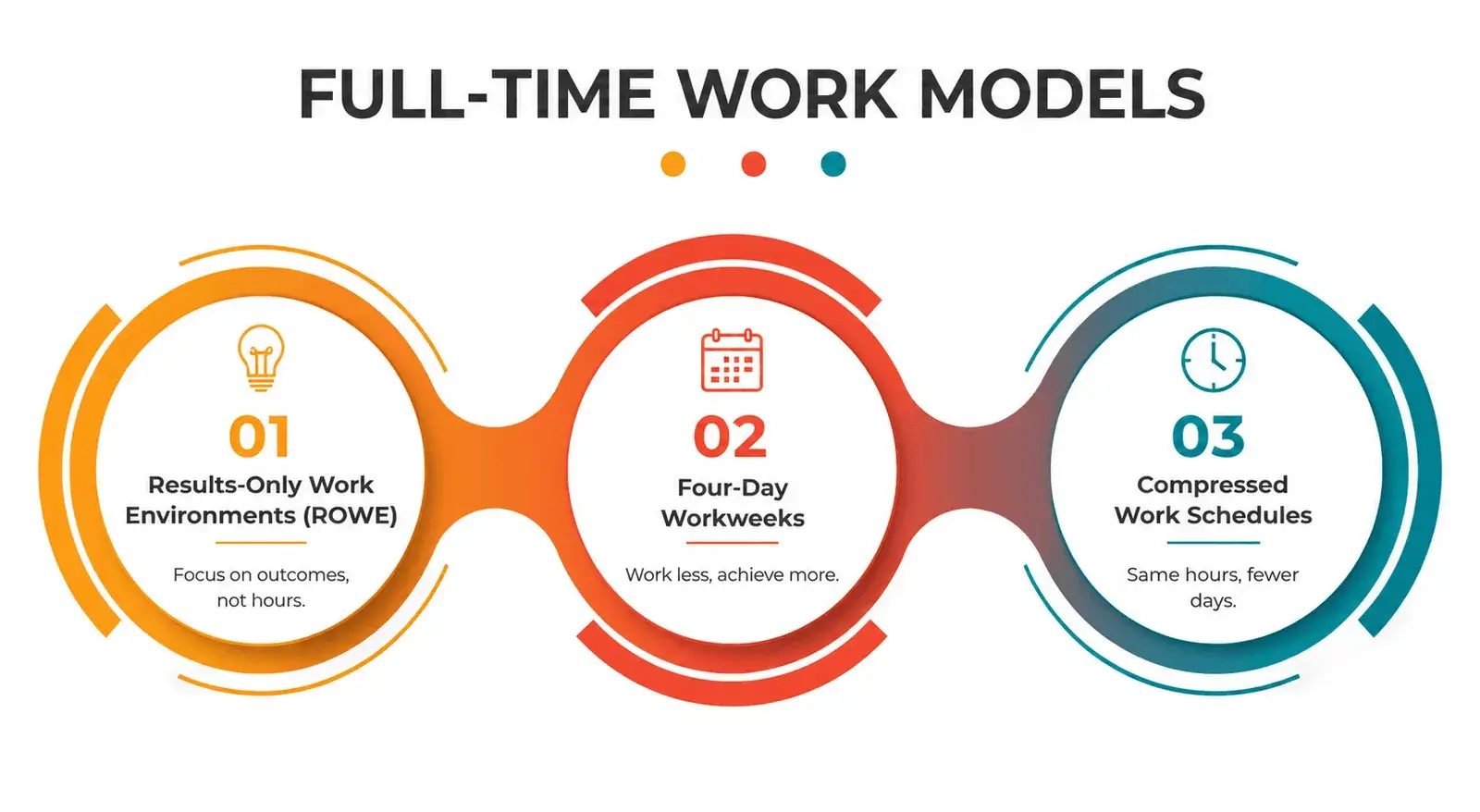
This brings us to some of the most popular modern full-time work models:
- Results-Only Work Environments (ROWE): Employees are assessed based on their performance and the completion of tasks, rather than hours logged.
- Four-Day Workweeks: Employees are paid a full-time wage for working approximately 32 hours per week.
- Compressed work schedules: Employees work full-time hours in less than 5 days, like four 10-hour shifts or three 12-hour shifts.
Many companies now use free paystub template to simplify payroll management, track employee earnings, and maintain accurate salary records.
How Many Hours a Week For Full Time for Exempt and Non-Exempt Workers?
The number of hours considered full-time can vary depending on whether an employee is classified as exempt or non-exempt.
Salaried Employees (Exempt Workers)
Salaried employees, also known as exempt workers, are typically paid a fixed annual salary rather than hourly wages. Exempt employees usually do not qualify for overtime pay when they work more than 40 hours per week.
For exempt employees, being full-time generally means following the company’s regular work schedule and completing assigned responsibilities. In many professional roles, employees may work 45, 50, or even 60 hours a week while still remaining classified as full time employees without additional overtime compensation.
Hourly Employees (Non-Exempt Workers)
Federal and state overtime laws cover hourly employees, known as non-exempt workers. However, for hourly workers, 40 hours per week is pretty much regarded as the standard full-time schedule.
The FLSA generally requires that overtime be paid at 1.5 times the regular hourly rate for all hours worked over 40 in a workweek.
For example:
- If an employee earns $10 per hour and works 40 hours, they earn $400 weekly.
- If the same employee works 45 hours, the extra 5 hours are typically paid at $15 per hour.
Even with overtime hours, the employee’s status remains full-time.
Wrapping Up
By 2026, how many hours are full-time? The truth is it all depends on your employer, how things are done in the industry you work in, what your state laws are regarding this and exactly what the employee benefits policies say.
Although the majority of organizations base full-time on 35 to 40 hours every week, there is not a solitary government regulation that governs all workplaces. Knowledge of full-time hours will improve employees understanding of pay structure, overtime access, healthcare benefits and daily work expectations.
For simple calculations on earnings, hours worked and payroll record keeping try our free paystub generator to create professional pay stubs in no time at all!
People May Also Ask
1) What are full time hours?
Full time hours usually range between 35 and 40 hours per week. However, it depends on the company policy.
2) Is 12 hours still considered full-time?
Working 12 hours in a single day is not automatically considered full time. Mostly full time status depends on weekly hours worked.
3) Is a full work week 32 hours?
In some companies, 32 hours can qualify as full-time, especially under flexible or four-day workweek policies.
4) Is 35 considered full-time?
Yes, many employers consider 35 hours per week as full-time employment.
5) Is 7 hours of work full-time?
Working 7 hours a day can be considered full-time if it adds up to the company’s required weekly full-time hours.
6) Is full-time 8 or 9 hours?
A full time workday is commonly 8 hours, but some jobs may require 9 hours, including breaks.
7) How many hours is usually a full-time job?
A full-time job usually requires employees to work around 35 to 40 hours per week.
8) Is 12 hours still considered full-time?
A 12-hour shift may be part of a full-time schedule if the total weekly hours meet employer requirements.
9) Is 40 hours every 2 weeks considered full-time?
No, 40 hours every two weeks is generally considered part-time, since full-time employees usually work 70–80 hours biweekly.
10) Is working 36 hours a week considered full-time?
Yes, many companies classify 36 hours per week as full-time employment.
11) Is 72 hours in 2 weeks considered full-time?
Yes, 72 hours over two weeks may be considered full-time in some workplaces, especially shift-based jobs.
12) Is working 25 hours a week full-time?
No, 25 hours per week is generally considered part-time employment.
FAQ's
Is working 34 hours a week full-time?
+
Some employers consider 34 hours full-time, but many companies set the minimum at 35 hours weekly.
What is the 9-9-6 rule?
+
The 9-9-6 rule refers to working from 9 a.m. to 9 p.m., 6 days a week, commonly associated with demanding work cultures.
Is a 9 to 5 a full-time job?
+
Yes, a traditional 9-to-5 schedule is typically considered a full-time job.
Is 35 considered full-time?
+
Yes, 35 hours per week is commonly recognized as full-time employment by many employers.
Is a 9 to 5 a full-time job?
+
Yes, working 9 a.m. to 5 p.m. generally qualifies as a full-time work schedule.