.png)


 Chat with us now!
 Send Email!



The main difference between an independent contractor and an employee is control. An employee works under the control of a company, while the independent contractor has a business of his/her own to manage or work alone on projects. Your pay would be influenced by the answer to that one question regarding taxes and laws that apply to you.
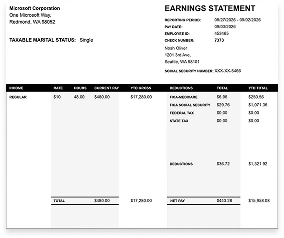
Whether you are an employee or an independent contractor, having pay records is very important. A paystub creator can help you generate pay stubs in a matter of minutes if you require any income proof.
What Is Independent Contractor?
An independent contractor is a self-employed individual who works for clients based on a contractual agreement. They set their own business hours and use their own equipment, often serving multiple clients.
As no tax is deducted from their invoices by a company, they are responsible for their own income and self-employment taxes. For those wondering what independent contractor work entails, it basically means that there is a specific project involved and that the contractor needs to fulfill the contract conditions and provide the documentation afterwards.
Independent Contractor Examples
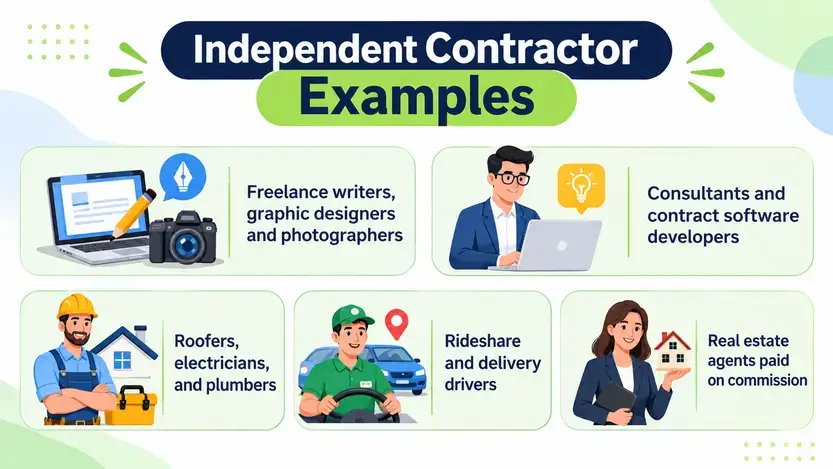
This designation refers to many different jobs, including some of these well-known independent contractor roles:
- Freelance writers, photographers and graphic designers
- Contract software developers and consultants
- Electricians, roofers and plumbers who operate their own companies
- Delivery drivers and rideshare workers
- Commissioned agents in real estate
What all these vocations have in common is not the industry they are in or their specialized skills. It is that the worker has control over the method of work and the risk of profit or loss. Becoming a contractor means you are running a small business, at least when it comes to your business model.
What is W2 Employee?
The term ‘W2 employee’ refers to one who receives their wages through the company’s payroll system, not from a business relationship. The employer is responsible for determining the schedule and method of payment, deducting federal employment taxes from every paycheck, and providing the employee with the Form W2 at the end of the year to report the income earned.
There are some characteristics that differentiate a W2 employee from other workers:
- The employee fills out a W4 when starting a new job, which enables the employer to calculate the amount of federal taxes that should be deducted from every paycheck.
- The employee receives pay stubs that reflect gross pay, deductions, and the final paycheck amount.
- The employer has to pay employment taxes such as FICA- Medicare and Social Security taxes for the W2 employee.
- The employee enjoys the protection of overtime, vacation pay, workers’ compensation laws, and minimum wage regulations and may receive additional benefits.
- The W2 status does not depend on being full-time since both part-time and seasonal employees are also categorized as W2 workers.
Unlike the W2 employee, the 1099 contractor gets paid in gross amount and has to take care of all the tax obligations independently.
Independent Contractor Versus Employee: Key Differences
If you are an employee, you’re told when and where to work. On the other hand, if you use your own tools, define your own working hours, and are paid for the job done, then you are an independent contractor. The difference between contractor and employee is sought after by many people in everyday life, because the differences are often vaguer than in theory.
| Factor | Employee | Independent contractor |
| Control | Company sets hours, methods, and rules | Worker decides how, when, and where to work |
| Tools | Usually supplied by the company | Worker brings their own equipment or tools |
| Pay | Wages paid on a regular schedule | Per project, hourly rate or retainer, by invoice |
| Tax withholding | Employer withholds income tax, Social Security and Medicare | Nothing withheld; worker pays estimated taxes |
| Tax forms | W-4 at hire, W-2 each January | W-9 at the start, 1099-NEC each January |
| Benefits | Often health insurance, retirement plan, paid time off (paid vacation, paid sick leave, etc) | None from the client |
| Legal protections | Minimum wage, overtime pay, unemployment, workers’ compensation | Mostly contract law |
| Clients | Usually one employer | Often several clients at once |
No single row decides it. Agencies look at the whole working employer employee relationship or independent contractor relationship, and a signed agreement or a job title does not settle the question on its own.
What is the Difference Between Employee and Employer?
People often search for the difference of employee and employer, and it is simpler than the contractor question. In fact, the definition of an employer and employee is simple.
| Employer | Employee | |
| Definition | An employer is the person or company that employs, compensates, and manages employees. | An Employee is the individual who does the job under the supervision of the employer. |
| Work | The employer is responsible for paying taxes, contributing its share to Social Security and Medicare, obtaining workers’ compensation insurance, and paying unemployment tax with employer controls. | An employee, on the contrary, works, follows common law rules, and gets a salary and benefits |
The difference between employee and employer thus lies in the fact who has the power of authority and liability respectively.
The majority of people working in the private sector belong to this group: they are employed by a company that pays them, gives them W-2 forms, and deducts taxes from their salaries.
However, an independent contractor exists outside of this system. One can say that a contractor is the one who hires himself, as he is the owner of the business that provides a certain service.
IRS Employee vs Contractor: How the IRS Decides
For filing taxes as per federal law, the Internal Revenue Service assesses the nature of the worker and the business based on three categories of facts.
- Behavioral Control: Does the employer prescribe how the work must be done? In the case of clear instructions, extensive training, and a set schedule, they classify worker as an employee, not as an independent contractor. Independent contractors know what the goal is but can choose how to achieve it.
- Financial Control: The employer pays for the tools and costs incurred, which results in profits or losses related to the work being done. Independent contractors spend money for their own tools and take on the risk of losing money if the project is unsuccessful.
- Nature of Relationship: Are the activities continuous and vital to gainful occupation? Do the individuals involved benefit from health insurance, pension plan, or retirement fund plans? These elements favor the employment relationship.
The IRS also looks behind the written record. Simply labeling an arrangement an independent contractor relationship will not help if the person adheres to the company’s timetable, uses company equipment, and wears a company uniform. If either side is unsure, it can file Form SS-8 and receive a determination from the IRS.
Independent Contractor Laws: DOL and State Tests
The IRS is not the final authority since the federal labor laws regarding independent contractors arise from several distinct sources that rely on different tests, thereby qualifying a worker as an independent contractor for one purpose and as an employee for another.
1. The Department of Labor economic reality test
Regarding the wage and overtime laws of the Fair Labor Standards Act, the DOL asks if the worker is truly in business for himself and considers six points: opportunity for profit and loss, labor force and capital investment made by the worker and employer, relationship durability, control, significance of work to the business, and various skills required from the worker.
The DOL is working on some new versions of the rule, so it is necessary to check the latest data on the DOL website.
2. The ABC test
Some states, such as California, Massachusetts, and New Jersey, have stricter rules. A worker is considered to be an employee unless the employer demonstrates three points:
- The worker carries out the task without the company’s direction.
- The particular task does not fall under the normal category of activities for the company.
- The worker is known to have a trade or business.
If one of the conditions is not met, the worker is taken as being an employee. California implemented this standard as a result of Assembly Bill No. 5, issued in 2020, based on the 2018 California Supreme Court’s ruling in Dynamex. The specifics may differ from one state to another; you should research either the local state labor office or the respective federal office.
Subcontractor vs Employee: What Is The Difference?
A subcontractor is an independent worker or contractor who has been hired by another contractor instead of a direct client.
For example, a contractor constructing a house may employ an electrician after construction is complete, thus making the electrician a subcontractor in this case.
The question arising is whether the electrician is to be regarded as a subcontractor or an employee. If they can decide how their work should be done, use their own tools, bill directly to the contractor, and work for other people as well, they cannot be considered employed.
If the work is controlled by the contractor in terms of time and equipment, the subcontractor’s independent status will not be upheld, and the contractor will be liable for payroll taxes and workers’ compensation coverage.
Independent Contractor vs Employee: Taxes and Forms
Taxes are where the gap shows up in your bank account. Here is the 2026 math on $60,000 of earnings.
| Employee | Independent contractor | |
| Social Security + Medicare rate | 7.65% (6.2% + 1.45%) | 15.3%, applied to 92.35% of net earnings |
| What the worker pays | $4,590 | About $8,478 |
| What the employer pays | $4,590 | $0 |
| Deduction available | None for FICA | Half of self-employment tax is deductible |
Social Security is set on the first $184,500 of earned income as per FICA. Also, contractors pay estimated taxes quarterly as per a written contract because no one withholds their taxes.
One practical catch is that employees are able to give their landlord or lender their pay stub as proof of income, while contractors are usually obliged to rely on their 1099s, bank statements and tax returns. Some freelancers even create their own pay stubs from true invoices and deposits.
StubCreator can help you keep those records tidy, as long as the figures match actual payments.
1099 Employee Rights and 1099 Laws
There isn’t a term called “1099 employee” in actuality. All workers are independent contractors or employees. However, people are interested in discovering what exactly 1099 employees are entitled to, i.e., contractors’ rights.
Contractors’ rights include:
- The right to receive payment according to contract terms, with the law serving as a precaution against delays in their payments from clients
- Receipt of Form 1099-NEC from their clients who pay more than the threshold
- The right to work with multiple clients and avoid projects they disagree with
- The right to deduct business-related expenses, including travel, insurance, and equipment
- The right to challenge their classification if they are misclassified as independent contractors
Contractors will typically not receive the minimum wage, employee benefits, or overtime pay under the Fair Labor Standards Act, unemployment compensation, workers’ comp benefits, employer-subsidized health insurance, or paid holidays.
Most federal labor laws are applicable only to employees, and thus contractors have fewer protections. This includes protections against discrimination in the workplace as set forth by the Civil Rights Act and the right to organize or be a union member in accordance with the National Labor Relations Act.
In short, the 1099 law operates as follows. In business, you require a W-9 form before making your initial payment and fill out the 1099 exemption form for your payments. Corporations generally do not come under this rule. On behalf of your worker, you will report all income, pay tax on your income, and make quarterly payments. State rules apply, so comply with those as well. Contractors receiving $2,000 or more get Form 1099-NEC for income reporting.
What Happens If a Worker Is Misclassified?
Referring to a worker as a contractor in order to save costs can be a dangerous move. If either the IRS or another government agency believes the worker was actually an employee, the company would be responsible for paying back taxes, penalties, and interest.
Additionally, the worker can sue the company for any unpaid overtime, benefits, or workers’ compensation, and some states impose additional penalties.
The worker is also negatively impacted. Due to the misclassification, the worker is now responsible for paying both halves of Social Security and Medicare and is unable to receive overtime, unemployment compensation, or any employer-related benefits. Misclassified workers can file claims for unpaid wages, as Employees must be paid at least $7.25 per hour.
Companies that realize they have made a mistake can refer to the Voluntary Classification Settlement Program (VCSP) of the IRS, which permits companies to classify workers properly in the future while paying a reduced amount for previous periods. The VCSP does not apply to companies currently undergoing an audit with the IRS. Whenever a position changes, companies should continuously check to see if the classification is still accurate instead of treating the classification as a decision for eternity.
Wrapping Up
The independent contractor vs employee question comes down to control, not job titles or contracts. Employees get withholding, benefits, and legal protections. Contractors get freedom and take on their own taxes and records. Whichever side you are on, keep clear payment records, and treat classification as something to revisit when the work changes.
FAQ's