.png)


 Chat with us now!
 Send Email!

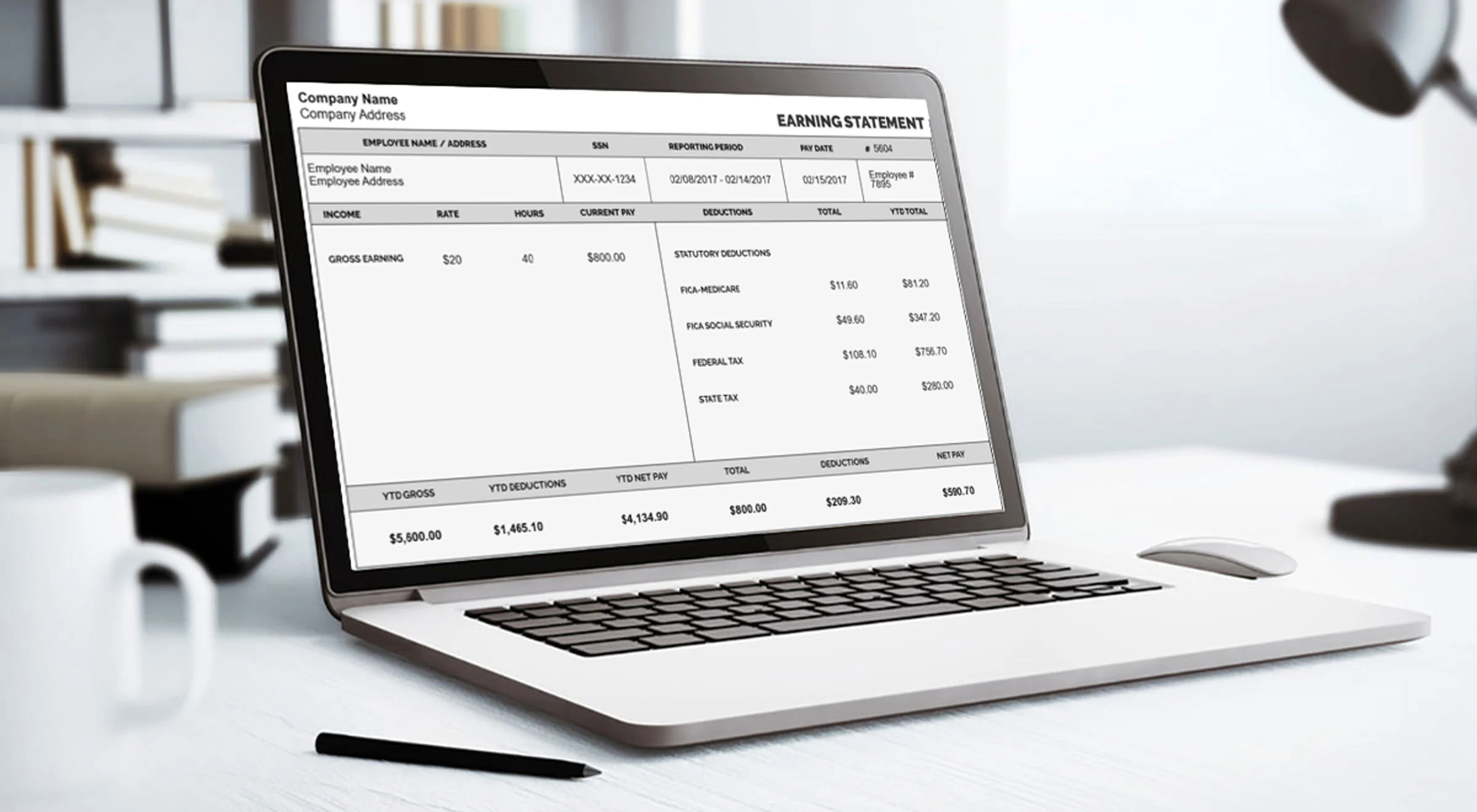

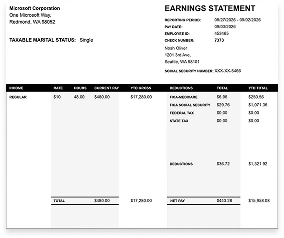
At some point in time, either freelancers or independent contractors will face this realisation: there are no pay stubs handed to you since clients just pay their invoices and forget about them. But then there might come a real situation when a landlord, bank, or client requests proof of income. The solution to this problem is a 1099 pay stub. Not only are the details of this earnings information document created based on actual payments made by you, but you are also able to make it yourself using a free paystub maker.
In this guide, we will explain all you need to know about the pay stub 1099, such as its definition, components, templates, and how to generate pay stubs for independent contractors.
What Is a 1099 Pay Stub?
A 1099 pay stub refers to an independent contractor’s record of earnings.
The contractor pay stub indicates who paid the contractor, what period or project the payment relates to, and how much the contractor earned. Employees receive paystubs from the employer’s payroll, while contractors do not because clients pay them using invoices, not payroll.
It can also be referred to as the independent contractor pay stub; nonetheless, it implies the same thing as used for income verification. No law makes the client provide a 1099 paystub; besides, there is no standardized federal income tax form. All that matters is accuracy in stating the amounts received.
An interesting fact to note is that for 1099 work, gross pay is usually equal to net pay. The client deducts nothing, meaning tax deductions are the responsibility of the contractor.
Why Independent Contractors Need a Pay Stub?
- Tax season: Having a detailed record of every payment you receive simplifies the quarterly estimates and your annual income tax withholdings.
- Proof of income: Landlords, car loan companies, and mortgage lenders frequently request up-to-date paycheck stub. A 1099 indicates your annual income, while the pay stub indicates your current earnings.
- 1099-NEC comparison: The total amount you earned from clients should ideally match what they have reported to the IRS.
- Your bookkeeping: You can track profits per client, as well as earnings per month without checking your bank account statements.
Here’s how the three documents people mix up compare:
| 1099 pay stub | (W2) employee pay stub | Form 1099-NEC | |
| Who makes it | You, the contractor | The employer’s payroll | The client who paid you |
| How often | Each payment or pay period | Each pay period | Once a year |
| Taxes withheld | None (except tax withholding) | Income tax, Social Security, Medicare | Only if backup or state tax was withheld |
| What it shows | One payment or period | One paycheck | Yearly total from one client |
What to Include on a Pay Stub for 1099 Income?
Although there is no specific way to do this, lenders and landlords need to see the same information on this document each time:
- Your and your company’s names, just like they were written on tax returns.
- Your EIN or the last four digits of the Social Security number, which will save you from revealing your entire Social Security number.
- Clients’ names and addresses.
- Pay periods and pay dates. Make sure to take the real dates of deposits, not just the invoice date.
- Gross pay, which can be calculated as the total of hours multiplied by the hourly rate or as a fixed amount if you were paid for a project in its entirety.
- Methods of payment (ACH, check, payment app, etc.).
- Year-to-date gross income, which is the first figure the reviewers usually check and which is often forgotten.
- Net income, which is usually the same as gross income.
- Optional memo line regarding self-employment tax estimate that you are putting aside and labeled as an estimate, which is not a withholding tax.
1099 Pay Stub Example: A Filled-In Sample You Can Copy
Imagine a situation where a freelance web designer completes restoring a website that takes him 50 hours with 80 dollars charged per hour. The names presented below are dummy. However, the layout used is what one would normally expect from a real stub, and you can create pay stubs.
| Field | Entry |
| Contractor | Jordan Lee, Lee Web Studio (EIN ending 4821) |
| Client | Brightline Dental, Austin, TX |
| Pay period | Oct 1 to Oct 31, 2026 |
| Pay date | Nov 2, 2026 |
| Payment method | Check |
| Earnings | Website redesign, 50 hrs x $80.00 |
| Gross pay | $4,000.00 |
| Withholding | $0.00 |
| Net pay | $4,000.00 |
| YTD gross | $38,000.00 |
| Memo (estimate only) | Self-employment tax about $565; set aside roughly $1,000 to $1,200 (25-30%) for all federal taxes |
Free 1099 Pay Stub Template for Independent Contractor Payroll
Looking for a 1099 pay stub template free of charge? Copy this layout into a spreadsheet or document and fill in every field from a real invoice and bank deposit.
| Section | What to enter |
| Header | Contractor or business name, EIN or last four of SSN, address |
| Payer | Client name and address |
| Specific pay period | Start date, end date, pay date, payment method |
| Earnings | Description of work, rate x hours (or flat fee), gross pay |
| Totals | Current gross, current net, year-to-date gross, year-to-date net |
| Notes | Invoice number, optional estimated tax set-aside |
Save the first pay stub per payment as a PDF and name the files by client and month, so you can find any of them in seconds.
How to Make a 1099 Pay Stub
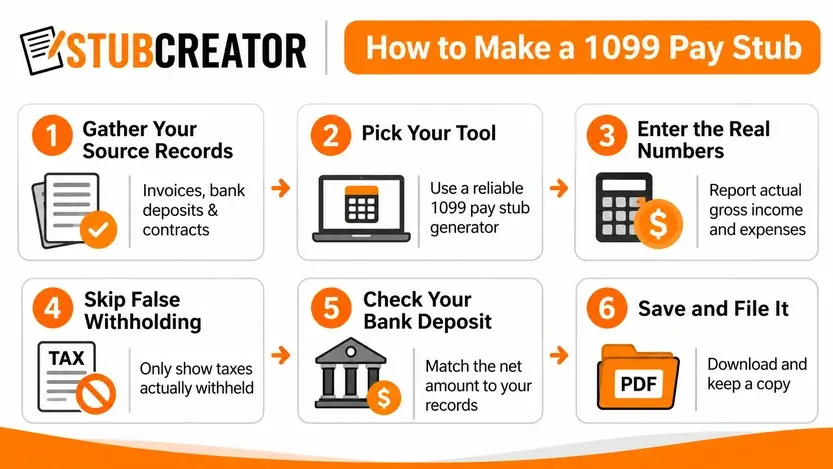
- Collect your source documents. Gather the invoice, the deposit, or the app payment record for the payment you’re processing.
- Choose your tool or platform. Using a spreadsheet will suffice; it will take longer than a special pay stub generator, which has an Employer Identification Number field and calculates the yearly total for you.
- Input the accurate figures. Always use exactly the stated pay period, hours, or amounts.
- Do not take into account withholding that never happened. If nothing has been subcontracted by clients, put zero in the box.
- Compare the account summary. The net amount earned must equal the amount deposited.
- Create and save your records electronically.
Taxes on 1099 Income: What Your Paystub Should and Shouldn’t Show
- Quarterly estimates: Contractors need to make quarterly tax payments because their clients aren’t responsible for tax filings. Estimated payments should be made using Form 1040-ES four times a year.
- Self-employment tax: Self employed workers have the obligation to pay 15.3% of their net earnings, which consists of 12.4% for Social Security taxes and 2.9% for Medicare. For Social Security in 2026, the taxable wage base is set at $184,500. Meanwhile, Medicare taxes will continue to be deducted starting from $200,000 for people who file on their own.
- Saving funds: It is common practice for contractors to set aside about 25-30% from every payment to account for federal taxes. However, this percentage can differ because it depends on the tax bracket and deductions of the contractor.
- Backup withholding:If a contractor doesn’t provide their tax identification number to a client, the latter will withhold 24% of their earnings. This is the only case when the 1099 pay stub indicates the actual withholding amount.
- 1099-NEC threshold: In 2026, clients must file a 1099-NEC form for payment amounts that exceed $2,000. So, the threshold was increased from $600 to $2,000. However, regardless of the threshold, all earnings remain taxable, and therefore the contractor must keep track of their income even without receiving a 1099-NEC form.
Note: This is general information, so check your own numbers with a tax professional.
How to Pay an Independent Contractor?
While the term ‘1099 employee’ is popularly used, it is essential to note that, from a legal perspective, a worker could only be termed as an employee or a contractor. Hence, when inquiring about how to pay a 1099 employee, the technical answer is to treat them as a contractor instead. The details of paying a ‘1099 employee’ correctly are as follows:
- Make sure they are indeed a contractor. The IRS asks certain questions regarding behavioral controls, financial controls, and the relationship, so ensuring correct classification of workers is imperative, as misclassification could lead to payment of tax reporting, penalties, etc.
- First, get a written contract and a W-9. A W-9 will verify the name, address, and the Taxpayer ID.
- Payment would happen according to the invoice or as per the deal agreed to between the parties. Payment can be made through ACH, check, or payment platforms. No tax withholding should take place unless backup withholding is applicable.
- Maintain records of each payment, which include the payment date and amount.
- When necessary, file the 1099-NEC form. If contractors receive $2,000 or more in payments, send your copy to them and electronically file it with the IRS before January 31.
- Give a payment statement to contractors; they often require this for loans and apartments, and some accounting systems do not prepare it.
Subcontractor 1099: Same Rules, One More Layer
A subcontractor can be defined as a contractor hired by the general contractor to do part of a job. Structurally, a subcontractor 1099 arrangement would appear to be similar to another arrangement: an independent contractor who is issued a 1099-NEC when they receive $2,000 or more in the year 2026 and is responsible for paying taxes.
In particular, individual detailed pay stubs must be issued for payments with good records of differentiating them by the general contractor, allowing year-to-date totals that perfectly match what each payer reports.
How to Become a 1099 Contractor
Getting started for question how to become a 1099 independent contractor requires little more than paperwork.
- Select the services you want to provide, such as freelance writer, gig workers etc., and decide how much you will charge.
- Choose a business type. A sole proprietorship is the default choice; an LLC is an option.
- Request an EIN. This is a free number from the IRS that allows you to avoid putting your SSN on forms sent to clients.
- Know what licenses are necessary. Licensing requirements vary by state and by occupation.
- Open a separate business account. This will keep your income separate from your personal spending.
- Provide each client a W-9 before the payment.
- Maintain accurate pay stubs and make sure to set aside money for quarterly estimated payments.
- Make self employed pay stubs for every payment; they provide a record of income when needed.
Mistakes You Do To Get a 1099 Pay Stub
- You will always receive the same number next period. Freelance revenue fluctuates.
- No total year-to-date.
- No employer identification number.
- Salient falsely created lines. If a contracting stub has made-up deductions in it, it leaves behind more questions than it solves.
- The figures don’t add up to your bank deposits or to your 1099-NEC.
- Most importantly, a pay stub should be the record of money earned. Making up numbers to get the money from the lender is an offense no matter what avenue you resort to.
Conclusion
Creating a 1099 pay stub is a quick process, which might save you a headache when asked for proof of income. All you have to do is collect your receipts from an invoice and a payment record, provide the necessary information in the fields above, and double-check the entered data before finalizing everything. Once you do that, you can move on to creating professional stubs with StubCreator and storing it for future reference.
FAQ's
Do 1099 contractors get pay stubs?
+
Independent contractors differ from regular employees in that they won't receive any pay stubs. As an independent contractor, you need to generate your regular pay stub based on the amount of income received. Professional pay stubs let you keep a record of your payments for financial management.
Is it legal to make my own 1099 pay stub?
+
Certainly, as long as each and every number is correct and shows the amount of money you have really earned. If you lie about your income on a paper document that you provide to a bank, a landlord, or a government agency, then you are committing an act of fraud.
What's the difference between a 1099 form and a 1099 pay stub?
+
The 1099-NEC serves as a fill-in-the-blanks form with your clients. Since you are both the employer and the employee, you need to keep records for tax deductions. You need to provide your Employer Identification Number for the proper tax accounting.
Can I use a pay stub for 1099 income to rent an apartment or get a loan?
+
Yes, lenders want you to provide your bank statements in addition to your pay periods. Since banks look for financial responsibility, you may offer records of any insurance plans that you currently pay for or get paid for.
How long should I keep my 1099 pay stubs?
+
In general, it's a good idea to keep your pay stubs for a minimum of three years, and many recommend holding on to them for four to seven years. Keeping track of pay stubs through clients and years can help you manage your tax liability.
Do 1099 contractors get pay stubs?
+
Unlike traditional employees, contractors don’t receive pay stubs, so managing independent contractor payroll is on you. Create your own pay stubs from payment details, and professional pay stubs help you track payments and income records.