.png)


 Chat with us now!
 Send Email!


A retainer refers to the advance payment made by a client for the services of a professional like lawyers, consultants, or agencies. Based on the agreement terms, the retainer payment can be used for work done at a future date or just to keep the professional available for negotiation.
You may have received a message saying, “We have to retain your services.” And at this point, you may have several questions regarding retainers.
- How much does it cost?
- Will there be any refunds?
- What is the purpose of the payment?
This guide will explain how retainers work with lawyers and businesses, as well as what is included in a retainer agreement.
The retainer income can also be erratic from one month to another, which is important when applying for a loan, lease, or a mortgage.
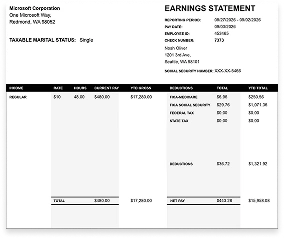
The lender or the landlord may ask you to show proof of income. In case you are self-employed and require proof of income in a professional format, then the pay stub generator will help you create pay stubs that will include all your income details in a single document.
Key Takeaways
- A retainer is considered to be a prepayment of a service that ensures the professional is available.
- Generally, a lawyer keeps the managed retainer money in the trust account and bills against it.
- A monthly retainer may grant a customer constant access to the freelancer and/or agency.
- Retainers are not deposits, which causes differences in refunds and how the money shall be treated.
What Is a Retainer?
Retainers mean that payment is made ahead of time so that the professional will do the task for you or will be there when you need the professional’s services. The meaning comes from the word means taking someone on board.
Retainers are seen in legal work, but they can also be found in marketing, consulting, design, accounting work, public relations, and freelance writing too. The concept is the same. The client has a chance to get access before anyone else and know his/her plans, while the professional enjoys constant income and a devoted client.
What Is a Retainer in Business?
Retainer meaning in business: In business, a retainer is a regular (periodic or one-time) fee that allows benefits from the service for many services.
Outside the context of the law, a retainer in business refers to an agreement in which a company pays a service provider regularly for a predetermined amount of work. This is what people mean when they talk about retainer jobs, which are ongoing assignments a service provider handles for a customer periodically, not one-time tasks. Some of the most typical
Examples of retainer jobs include:
- Marketing firms
- Website designers and IT professionals
- Accounting services
- PR agencies
- Business advisors
- Freelance artists, authors, and proofreaders
Retainers are optimal when the customer has a consistent volume of work and a supplier can perform it periodically.
What Does On Retainer Mean?
When a person tells others that he has a lawyer, agency, or consultant “on retainer,” this implies that he has paid the professional (or agreed to pay him periodically) so that he will be able to gain access to the specialist whenever he needs assistance. Some illustrative examples are:
- A small business has a lawyer on retainer so that it can always get consultancy on contracts without engaging the lawyer each time.
- A freelance software developer is retained for 20 hours of maintenance monthly.
- A startup pays a marketing company a certain amount monthly for its marketing services.
Being on retainer does not always imply that the specialists will be working full-time. On the contrary, it signifies a commitment made by the specialist and a commitment made by a client.
What Is a Monthly Retainer?
A monthly retainer refers to a set fee that a customer pays every month for a certain service. This approach is widely employed in agencies and in freelance jobs.
For instance, a freelance copywriter can charge $1,500 for producing 4 blog posts. An SEO consultant would charge $2,000 for audits and a limited number of support hours.
Why is it beneficial for both parties?
- Customers can predict expenses and have projects done promptly. Companies benefit from a fixed monthly income, which makes it easy to calculate monthly expenses.
- It is crucial to know what services/works are included in the proposed amount. If there is no clear scope of work, it will result in misunderstandings and extra work.
How Does a Retainer Work for a Lawyer?
People usually search for this specific question, and its answer relies on the retainer type. A retainer is defined as a prepayment a client makes to a lawyer for the purpose of starting or continuing legal representation. Then, the lawyer either uses the prepayment as payment in his/her office or charges it against the prepayment amount.
Generally, this is the process:
- You and the attorney agree about the terms. This includes settlement terms, hourly rate or fixed fee, and retainer amount.
- You make your payment. In many places, lawyers are required to deposit the unearned retainer funds into a trust account (also named either IOLTA account or trust account).
- The lawyer works and invoices against the retainer. According to the time and resources used by the lawyer, the lawyer withdraws money from the trust account.
- You replenish it as needed. The lawyer is able to make a request to you to replenish the account.
- Any remaining money is returned to you. In case the matter is finished and there are some remains, you are able to get the unearned part returned.
Types of Retainers In USA
Not all retainers work the same way. Here are the main kinds.
| Type | How it works | Refundable? |
| Classic (security) retainer | An advance deposit held in trust and drawn down as work is billed | Yes, any unearned balance |
| General (true) retainer | A fee paid to keep a professional available, whether or not you use them | Usually no, since you’re paying for availability |
| Flat-fee retainer | A set fee for a defined piece of work or period | Depends on the agreement and local rules |
| Monthly retainer | A recurring fee for ongoing services or a block of hours | Depends on the contract; often non-refundable for the month |
What Is a Retainer Contract?
An agreement for retaining services is a legal document stipulating the terms of cooperation between the expert and their client. Both parties are informed of all their rights and responsibilities under the agreement.
A big of a good retainer agreement might include the following:
- Scope of work to be done
- Amount of work/deliverables to be rendered by the expert
- Payment amounts and timing, including the method of payment
- Amount of the payment for extra work in case of going beyond the contractual work
- Refund policies
- Duration of the contract and its renewal conditions
- The ability to roll over the remaining work to the next month
- Termination conditions
- Confidentiality clauses
It should be remembered that a well-thought-out retainer agreement avoids any sort of misunderstandings beforehand.
Retainer Payment: How It Works?
A retainer payment is an amount that the customer pays in accordance with an agreement. Depending on the type of retainer, how this amount is handled can vary.
- In the case of lawyers: Payments are deposited in a trust account until the lawyer earns them.
- In the case of an agency or a freelancer: payments are usually received by the provider at the beginning of the payment period, as the payment is made in exchange for reserved time or a specific scope of work.
A payment retainer can be paid once upfront, as a monthly fee, or as a specific amount that is replenished according to use. Payments can be made via bank transfers, checks, ACH, or cards.
Retainer vs Deposit: What’s the Difference?
People mix these up all the time, and the difference matters when it comes to refunds.
Retainer versus deposit comes down to what the money is for and how it’s treated:
| Retainer | Deposit | |
| Purpose | Professional fees or retainer to provide availability | Used to guarantee purchase or booking |
| Typical use | Attorneys, firms, consultants | Hire-outs, events, big-ticket items |
| How it’s used | Released gradually as the work is performed, or retained as a retainer for availability | Applied to final cost or refunded |
| Refundability | The balance is refundable (traditional retainer); general retainers typically are not | Often fully refundable if conditions are met |
| Ownership | Belongs to the professional once earned | Still belongs to the payor until transaction is completed |
In short, a deposit holds your spot, while a retainer pays for a professional’s time and commitment. If you’re unsure which one you’re being asked to pay, ask directly and make sure the contract uses the right term.
Pros and Cons of Using a Retainer
Here are some pros and cons mentioned:
- Advantages to clients
- Fixed costs
- Priority and prompt service
- Service provider who knows you well
- Disadvantages to clients
- You can be paying for time that you do not get to use
- Some retainers have no refund options
- You cannot walk away easily once you have signed a binding agreement
- Advantages to professional services
- Regular, consistent income
- Effective planning and reduced gaps between assignments
- Stronger relationships with your clients
- Disadvantages to professional services
- Scope creep with unclear agreements
- Pressure on capacity when dealing with several retainer clients at the same time
- Over-reliance on limited number of clients for revenue
Final Thoughts
Then, this is a prepayment that will ensure that your professional’s services are reserved; if it’s a legal representative or a marketing agency, this prepayment should be made every month. Everything about this prepayment is different depending on what kind of retainer it is: traditional, general, or monthly.
Make sure to know exactly what you are paying for, where your money is kept and what happens to it in case there’s something left after all the services have been provided. If you are receiving retainers, take care to keep all the documents in order.
FAQ's
What is a retainer in simple terms?
+
A retainer means a payment made upfront for the services of the professional or for holding the professional available to you.
Is a retainer refundable?
+
It depends. In general, the retainer or trust retainer is always refundable as long as there is something unearned. In the case of a general retainer, which pays for your availability is nonrefundable. Always check your contract or agreement.
How much is a typical retainer?
+
There is no such thing. Legal retainers may vary from hundreds to thousands depending on the kind of case. Business retainers might be quite flexible as well.
Who holds the retainer money?
+
Regarding the lawyer, the money goes into the client trust account, and it earns interest for the lawyer. For agencies and freelancers, the money is transferred immediately.
What happens when the retainer runs out?
+
In the case of a legal issue, the lawyer will request that you return it to him/her. In the case of a monthly business retainer, the additional work is usually charged according to the rate per hour.
Is a retainer the same as a deposit?
+
No. The retainer money is meant to pay for the service, and a deposit is for securing the purchase or reservation and returning to you later.
Can a retainer be negotiated?
+
Yes, of course. It is only one of many things that could be discussed prior to contract signing.