.png)


 Chat with us now!
 Send Email!


When we are talking about tax withholding in the US, we are talking about the money that the employer will take from your paycheck and send it directly to the IRS. Because the tax system is pay-as-you-go, you pay taxes as you earn income.
One does not have to pay a huge sum of money as taxes once a year. Understanding this helps you see how withholding has a direct impact on the pay you take home.
What Is Tax Withholding?
Withholding taxes is simply a method of paying your total federal income tax liability throughout the year. Each paycheck you make has some of that paycheck taken out and sent directly to the government for what you owe for the year.
When you file your tax return, all those regular payments are added up and reconciled against your actual tax liability. If your total withholding turns out to be more than what you owe, you get a refund; if it falls short, you simply pay the difference.
What Gets Withheld From a Paycheck
When you get your pay stub on payday, you’ll notice that your take-home pay is less than your gross earnings. Money is automatically taken out before it hits your bank account, starting with mandatory statutory deductions:
- Federal income tax: This is the total deducted for income tax. That depends on which wage bracket you are in, what your marital status is and what decisions you made on your W-4.
- State and Local Income Tax: Regional taxes that are automatically withheld according to the state, county or municipality where you live and work.
- FICA Taxes: Federal Insurance Contributions Act taxes to fund Social Security (6.2% withheld) and Medicare (1.45% withheld) for the current tax year.
On your paycheck, you may also see voluntary deductions as well as the required taxes. Required taxes include Federal income tax, any applicable state / local income taxes ( not all employees work or live in a tax-collecting area), and FICA taxes. These voluntary amounts are in addition to required tax payments and include elected benefits such as health insurance, life insurance or retirement plan contributions.
How Tax Withholding Is Calculated
Employers do not just decide out of nowhere what percentage of your wages they’re going to hold back, and they don’t pull numbers out of thin air. When asking how is tax withholding calculated, the answer lies in strict regulatory frameworks.
Instead of guessing, payroll departments determine the correct withholding amounts according to official IRS guidance. This includes IRS Publication 15-T, alongside the personal financial information provided by the worker on their Form W-4.
They don’t just take a lazy flat percentage and apply it across the board. Modern automated payroll systems use IRS guidelines. This includes wage bracket or percentage method, to determine exactly how much money you need to pay each individual pay period. This can be done on a weekly, bi-weekly, semi-monthly, or monthly basis.
The Basic Calculation Steps
The real payroll deductions are a simple, multi-step process that all workers should know about:
- Determine Gross Pay: Add up your gross earnings for the pay period by multiplying your hourly rate of pay times the hours you worked or dividing your prorated annual salary by the number of pay periods in the year.
- Subtract pre-tax deductions: Subtract any pre-tax contributions you made for health insurance premiums, flexible spending accounts, or traditional retirement plans to get your taxable wages.
- Use IRS federal withholding tables to withhold taxes. Locate the federal withholding tables for your filing status and pay frequency and find the taxable wages.
- Adjust for credits or additional withholding Enter dependents, child tax credits or other additional dollar amounts from your withholding certificate.
Let’s put these steps in context with an example. So say you get paid $2,000 gross every two weeks. You contribute $100 to a traditional 401k and $50 for health insurance pre-tax. Their taxable gross pay drops immediately to $1,850. The $1,850 figure is then run through the percentage method withholding system using the federal withholding tables for their particular filing status. This yields the exact amount of federal income tax to be withheld for that pay cycle.
The Role of Form W-4
The Form W-4 (Employee’s Withholding Certificate) is the primary document used to inform your employer how much federal income tax to withhold from your paychecks. It considers your tax filing status, dependents claimed and other income, deductions or extra withholding requests. In 2020, the IRS overhauled the form, removing personal allowances and moving to a simpler dollar amount approach and information about the household.
Employees generally fill out a Form W-4 when they begin a new job or submit a new version after a major life event, such as getting married, having a child, or getting a second job.
For the most up-to-date guidance or to complete the document, you can access the official IRS Form W-4 and instructions.
Pre-Tax vs. Post-Tax Deductions
Knowing how all the different deductions affect your pay check will help you determine your net take-home pay. Pre-tax deductions reduce your taxable wages before income tax withholding is calculated. These include contributions to a traditional 401(k), Health Savings Accounts (HSAs), Flexible Spending Accounts (FSAs) and qualified health insurance premiums.
After-tax deductions, however, such as Roth 401k contributions, union dues or wage garnishments come out of your pay check after taxes. Note that tax treatment varies by deduction type. For instance, while health premiums usually reduce wages for both income tax and FICA taxes, traditional 401(k) contributions only reduce wages subject to federal income tax.
| Deduction Type | Timing in Calculation | Impact on Taxable Income | Common Examples |
| Pre-Tax | Before tax withholding | Reduces taxable gross wages | Traditional 401(k), HSA, FSA, health premiums |
| Post-Tax | After tax withholding | Does not reduce taxable wages | Roth 401(k), union dues, garnishments |
That structural difference is why two co-workers making the exact same gross salary end up with wildly different net paychecks and tax withholding amounts, based solely on how they structure their benefit elections at work.
Where to See Your Tax Withholding
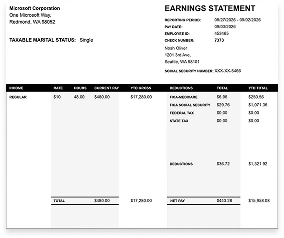
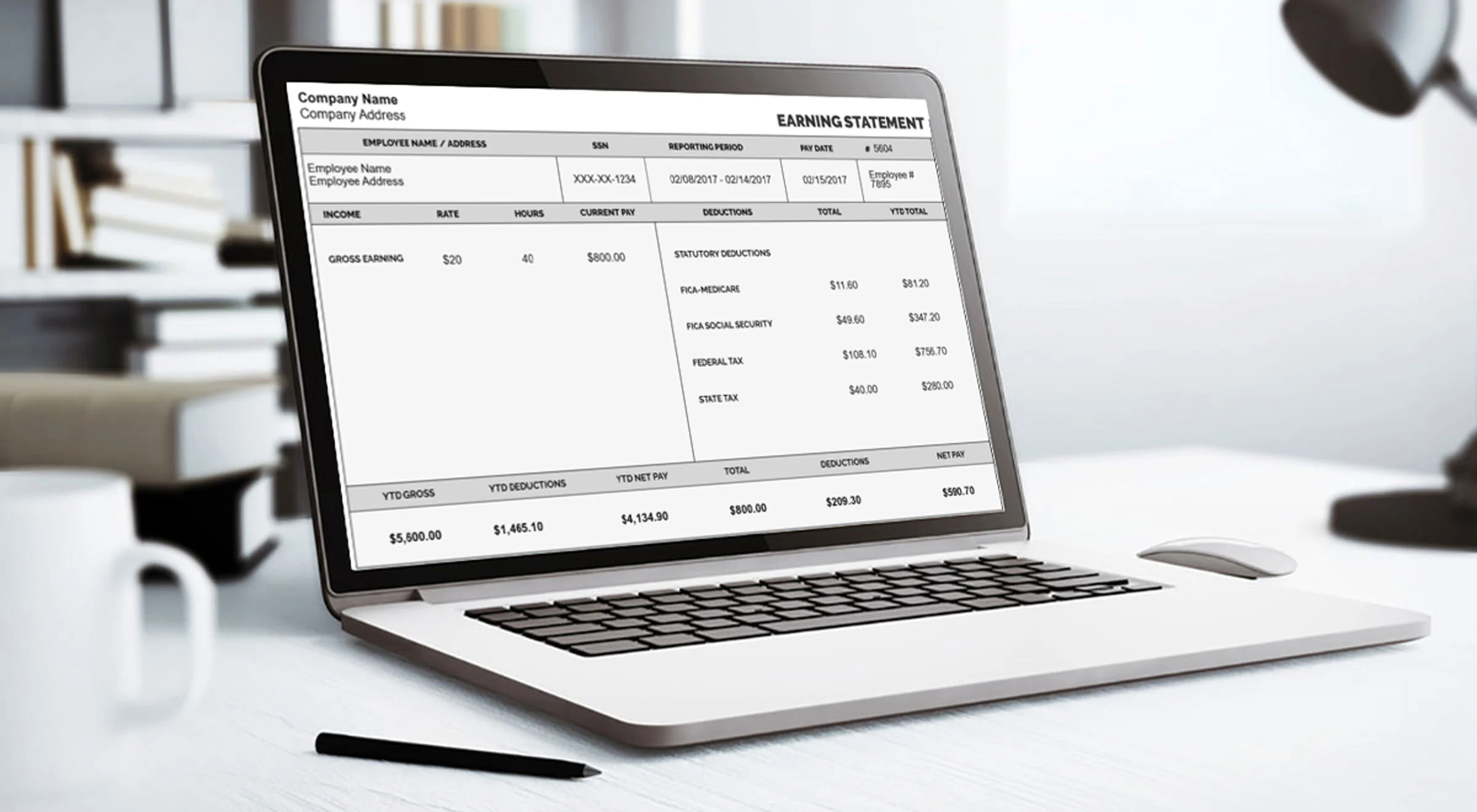
The clearest way to verify your tax withholding each pay period is by examining your official employer-issued pay stub, where federal income tax, state tax, and FICA amounts are listed as itemized deductions.
If you want to estimate your take-home pay under different scenarios an online paycheck calculator serves as a helpful forecasting tool. It can help you in adjusting your W-4 or changing your voluntary contributions.
Whether you’re a freelancer, small business owner, independent contractor or anyone else who needs to create formal payment records for income verification or loan applications, pay stub generator can help you create professional summaries of earnings and calculated deductions. But remember, a generated pay stub is just a record-keeping document and not a substitute for official tax filings or proof of taxes being actually paid to the government.
Why Tax Withholding Matters
One of the easiest ways to safeguard your personal financial health throughout the year is to get your tax withholding right. With the correct ratio, you obtain the following benefits:
- Avoids Tax-Time Surprises: If the correct amount of tax is withheld, you won’t be surprised by a big tax bill when you file your tax return.
- Avoids Penalties & Interest: Paying tax throughout the year can help you avoid getting in trouble with IRS underpayment penalties and interest charges.
- Easier Household Budgeting: Your take-home pay will be steady and predictable provided you have enough saved, making it much easier to budget for your monthly expenses and run your household budget.
What If Too Much or Too Little Is Withheld?
If your withholding is out of order, you will see the effect when you file your return and either get your refund or owe a balance:
- Over-Withholding: Withholding too much tax will result in a larger tax refund, but it is like giving the government an interest-free loan on money that you could have used or invested during the year.
- Under-Withholding: Withdrawing too little tax means you receive a bit more take-home pay each pay cycle, but it often results in a stressful tax liability and possible IRS penalties at tax time.
Corrective Action Taken:
Finding these discrepancies early will save you time and stress. You can use the official IRS Tax Withholding Estimator to enter information from your most recent pay stub, get an analysis of your current situation, and find out how to adjust your Form W-4 with your employer.
How to Adjust Your Tax Withholding
If your paycheck deductions don’t fit your current financial situation, you can make adjustments to your tax withholding easily. If you change your withholding, the right amount of tax will be taken out of each paycheck, so you won’t be caught off guard when it’s time to pay your taxes. Make a new Form W-4 and give it to your boss to change how much is withheld.
Want to change your deductions? Just follow these three easy steps:
- Look at your latest pay stub: If you look at a recent earnings statement, you can see exactly how much is taken out of your paycheck each pay period for federal and state taxes.
- Do the math: Use the IRS’s online Tax Withholding Estimator to see how much money you’re withholding now to make sure it matches up with what you’ll owe at the end of the year.
- Complete a new W-4 form: Fill out a current W-4 with your current filing status and submit it to your employer’s payroll or HR department.
It’s even more important to look over changes to your tax withholding when big things happen in your life.
When it comes to taxes, getting married, changing jobs, getting side jobs, or having a baby are all things that can change. Filling out a new W-4 form can help your paycheck stay on track with your actual tax situation.
Common Mistakes With Tax Withholding
Dealing with your paycheck seems like a simple enough thing, until tax season arrives and catches you off guard. Avoid these common payroll pitfalls to stay on track with your financial plan:
- Not Updating Your Form W-4 After Major Life Events: Marriage, a new baby or a new job can have a big impact on your taxes. Whenever a major change occurs, update your Form W-4 and submit it so your employer isn’t withholding money based on outdated information.
- Assuming Withholding Equals Your Total Tax Liability: Payroll withholding is an estimate of your annual tax liability, not a final payment. You still have to reconcile what was withheld, with what you actually owe when you file your return.
- Ignoring Freelance or Side Hustle Income Only your standard paycheck from your regular W-2 job is deducted. If you’re bringing in extra income from a side hustle or freelance gig, you’ll want to adjust your W-4 withholding or make estimated tax payments to avoid any nasty debt or penalties down the road.
- Federal Withholding Is Calculated as a Flat Percentage: Federal income tax is not determined as a flat rate. The payroll system uses the IRS tax tables which are progressive based on your pay frequency, filing status and taxable wage brackets.
Why Use Paycheck Stub Creator?
StubCreator offers online tools like the paycheck calculator and paystub generator to help you estimate your tax deductions, including federal, state and FICA taxes. Users can enter earnings and other information to generate previews of itemized documents or pay stub records as required.
These tools are helpful for estimating your withholdings or generating income documents for your own files. StubCreator is a document-generation tool, not a certified payroll processor or tax authority. It can’t verify real tax compliance, send money to the government or replace official tax documents sent by employers.
Key Takeaways
- Tax withholding is the portion of your pay that your employer withholds from your paycheck to pay your federal and state income taxes in advance throughout the year.
- Mandatory deductions are generally limited to federal income tax, state and local income taxes (if applicable) and FICA taxes (Social Security and Medicare).
- Employers use IRS formulas, official tax tables and the information you provide on your Form W-4 to determine how much to withhold each pay period.
- Look at your pay stub often to find out what you are paying. If your situation changes, you can adjust your withholding by giving your employer a new Form W-4.
- Online paycheck calculators and pay stub generators assist both workers and business owners in calculating deductions and generating itemized income records.
FAQ's
Do employers withhold taxes from part-time or seasonal employees?
+
Yeah. The payroll tax withholding doesn’t just apply to full-time employees, it applies to part-time and seasonal workers, too. Your employer has to withhold federal income tax and any state or local income tax and FICA taxes (Social Security and Medicare). How much is taken out of each paycheck depends on how much you make, how often you get paid and the information you provide your employer on your Form W-4.
What is Form W-4 and why is it important?
+
IRS Form W-4, Employee ’s Withholding Certificate is the official IRS tax form that tells your employer how much federal income tax to withhold from your paycheck. It takes into account your filing status, dependents and other income or adjustments so that your paycheck withholding is very close to what you owe in taxes.
What is the difference between tax withholding and estimated tax payments?
+
Taxes are automatically withheld by their employers from each paycheck for traditional W-2 employees. In contrast, the self-employed, freelancers and independent contractors (1099 workers) do not have taxes taken out by a client but instead make direct quarterly estimated tax payments to satisfy their tax liability.
Why did my tax withholding change if my salary stayed the same?
+
If you change your pre-tax benefit elections (i.e., health insurance premiums or retirement contributions) withholding may change without a pay increase. Things can also change outside of your control (annual IRS tax bracket changes, state tax rate changes, hitting the wage cap for Social Security partway through the year, etc.)
How can I check how much tax is being taken out of my pay?
+
The easiest way to find out is to check your latest pay stub or earnings statement. It will list itemized deductions for federal, state and FICA for the current pay period and year to date totals. You might also want to use an online paycheck calculator to estimate and double-check these figures.
What happens if not enough tax is withheld from my paychecks?
+
If you don't have enough tax withheld during the year, you'll owe the difference when you file your return for the year. You could also be charged penalties for underpaying as well as interest that accrues, depending upon the size of the shortfall and the threshold rules of the IRS.
Can I adjust my tax withholding at any time during the year?
+
Yes, you can change your tax withholding at any time by submitting a new Form W-4 to your payroll or human resources department. You should also check and update your Form W-4 after major life changes, such as marriage, birth of a child or new income.