.png)


 Chat with us now!
 Send Email!


How to Calculate Your Gross Monthly Income?
Gross monthly income means the total amount of money you make per month before taxes, health insurance, or retirement contributions are deducted. For the average salaried worker, this number is as simple as taking your total annual pay and dividing by 12 (Annual Salary ÷ 12). Lenders, landlords and banks look at your gross earnings when assessing your debt-to-income ratio for mortgages, car loans or rental approvals.
You may have a fixed salary, work hourly shifts or have a freelance business. To get this number, you will need to adjust your earnings to your specific pay setup. Here we have broken down worked examples for salaried, hourly and self-employed roles, and also a clear comparison of gross vs net pay.
What Is Gross Monthly Income?
Your gross monthly income is the amount of money you earn in a calendar month, before any taxes (mandatory or voluntary) or any other deductions are taken out. This includes your base rate or salary and other earnings such as regular overtime, annual bonuses, sales commissions, tips and paid time off.
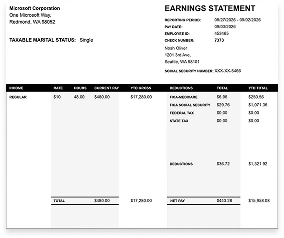
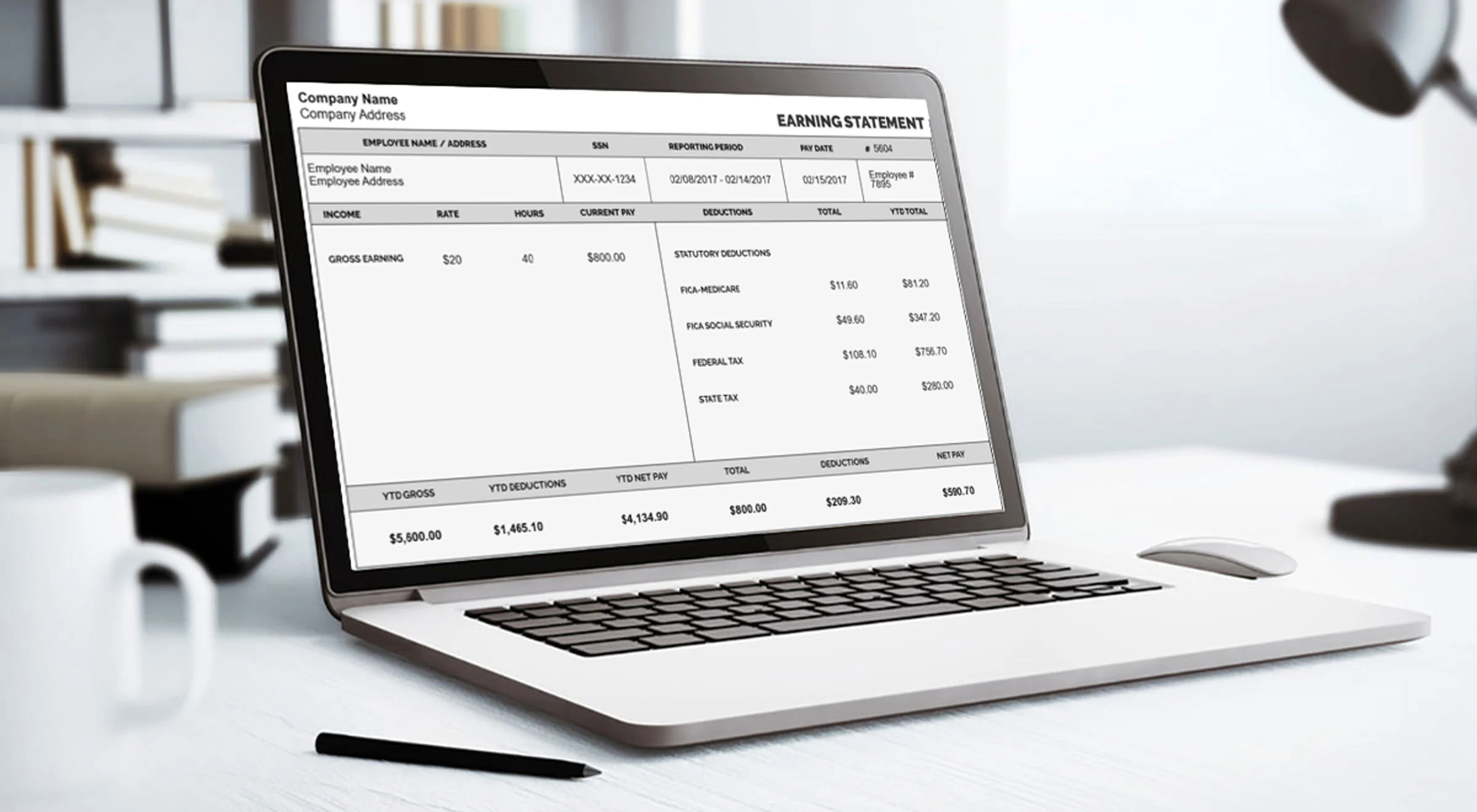
This number is usually located on your job offer letter, on modern pay stubs under the heading “Gross Pay”, and on official income verification forms that you fill out when applying for a loan or apartment.
Gross Monthly Income Formula
The basic mathematical expression for gross monthly income is simple:
Gross Monthly Income = Total earnings before taxes for the month
The exact math is just a little different depending on how you get paid. The basic concept is the same. For example: A salaried employee is paid a fixed amount per year. An hourly employee counts the hours worked in each pay period. * A self-employed contractor averages the variable payments received over a few months.
How to Calculate Gross Monthly Income by Pay Type
Because payment structures vary from job to job, using the right method keeps your numbers spot on. Here is a step-by-step guide to working out each common pay setup. If you want to skip doing the math by hand, you can also run your numbers through a gross monthly income calculator to get a quick estimate.
1. For Salaried Employees
For a salaried position, gross monthly income is calculated by taking your total pre-tax annual salary and dividing it by 12 months.
1. Determine Your Annual Income
Look at your offer letter, annual contract or yearly salary overview.
Know what is your annual salary is: You can find out the exact amount through the offer letter, annual contract or annual pay summary.
Look at the gross wage per annum, before tax and other deductions.
2. 12 months.
Divide by 12 months
Now divide that yearly figure by 12 to get your static monthly income.
Real Life Example:
Say an employee takes a $72,000 a year job.
12 months $72,000 $6,000/month
They make $6000 gross a month to the penny.
2. For hourly workers
If you’re paid hourly, calculate gross monthly income by multiplying your hourly wage by the hours you work in a week, then multiplying that by 52 weeks, and then dividing by 12 months.
Calculate Weekly Pay
- Determine Weekly Earnings:
- Multiply your hourly rate by the number of hours you work in a week.
- Convert Annual Income
- Change to yearly income:
- Multiply your weekly earnings by 52 (the number of weeks in a calendar year).
- Divide by 12 months.
- Divide your total by 12 to find your average gross pay per month.
Real World Example:
The worker makes $22 an hour and normally works 40 hours a week.
22×40 hours=880 per week
880×52 weeks=45,760 annual gross pay
12 months x 45,760 = 3,813.33 per month
Their gross monthly income is $3,813.33.
If your hours change week-to-week or you earn variable overtime, add up your earnings over the past 3 to 6 months and divide by that number of months to find your true average. To estimate your take-home figures quickly, you can also run your numbers through our Hourly Paycheck Calculator.
3. For Freelancers, Contractors, and Self-Employed Workers
If you’re a freelancer, independent contractor or run your own gig, calculating your gross monthly income from self-employed work is pretty straightforward. Add up all of your pre-tax earnings from clients over the last 12 months, then divide that total by 12.
- Summarise it. Annual sales:
Total pre-tax payments received for all client projects and 1099 contracts for a 12 month period.
- Divide by 12 Months:
Take that total and divide it by 12. That’s your monthly baseline.
Example from the real world:
In a full calendar year, a freelance designer has billed multiple client projects and earned $90,000 in total pre-tax client revenue.
12 months x 90,000 = 7,500 / month
They earn $7,500 gross per month.
How to figure out your gross monthly income
If you want to get a quick check of this figure without having to recalculate everything from scratch you can have a look at these standard financial documents:
- Pay stubs: Find a line that says “Gross Pay” or “Gross Earnings” for the current pay period. The exact amount before tax for that period of time.
- Hiring Papers: Your first job offer letter or contract will tell you what your fixed annual salary or base hourly pay is.
- Tax Documents: Check your end-of-year tax forms—specifically Box 1 on Form W-2 for traditional employees or Box 1 on Form 1099-NEC for independent contractors.
A recent pay stub remains the fastest, most up-to-date document for verifying active earnings. If you need to generate or review a clean earnings record for personal files, you can create one in minutes using our Pay Stub Generator.
Gross Monthly Income vs. Net Monthly Income
Gross monthly income is the entire amount of money you earn before any money is taken out. Net monthly income is the actual amount of money that lands in your bank account after mandatory tax withholdings and voluntary payments are deducted.
| Feature | Gross Monthly Income | Net Monthly Income |
| Basic Definition | Total money earned before any deductions | Final money received after all deductions |
| Included Items | Base pay, bonuses, commissions, tips, overtime | Gross pay minus taxes, insurance, and retirement |
| Deductions Removed | None | Federal/State taxes, FICA (Social Security & Medicare), health insurance |
| Primary Use Case | Loan approvals, rental checks, debt-to-income checks | Personal budgeting, daily spending, saving goals |
For Lenders and landlords, knowing your gross income is important, as this is proof for them about your total earning capacity. But when it comes to personal household budgeting, and you compare gross income vs net income, your net income is actually what you have available to spend.
Why Gross Monthly Income Matters
It’s worth checking your pre-tax monthly income for a few key financial checks:
- Mortgage & Loan approvals: Your gross monthly income is what lenders use to calculate your Debt-to-Income (DTI) ratio. This helps them determine how much you can borrow safely, whether it is a home or car loan.
- Rental Applications: Most property managers want to see that you make at least 2-3 times the rent amount each month before they will approve a lease.
- Benefits & Support Programs: Some state benefits and many help programs have a minimum income requirement that is based on pre-tax gross income.
- Tax Filing Thresholds: The IRS has thresholds that must be met to be eligible to file based upon your total gross income each year. According to IRS.gov, the minimum gross income for a single filer under age 65 that requires filing a federal return is $15,000 for 2026.
What If Your Income Isn’t Consistent Each Month?
When you work on commission, variable overtime, or freelance work, your income will naturally fluctuate from month to month. In these cases, banks and landlords prefer a multi-month average.
Add up your total pre-tax earnings from the last 3 to 6 months, then divide that total sum by the number of months. This evens out seasonal spikes and gives a steady picture of your true monthly earning power.
Common Mistakes When Calculating Gross Monthly Income
Avoid these common mistakes to ensure your calculations on loan or rental paperwork are correct:
- Confusing Gross Pay and Net Pay: Putting in your net pay instead of your gross earnings makes your income appear lower than it actually is.
- Supplemental pay: If you don’t include supplemental pay, you’re underreporting your income. Supplemental pay includes regular bonuses, sales commissions, tips and regular overtime hours.
- Relying on a single outlier month: Making determinations based on one outlier month, high or low, gives a distorted view of variable or freelance work. Instead, use a 6-month average.
- Confusing Pay Frequencies: Assuming that bi-weekly pay (26 paychecks per year) is equivalent to semi-monthly pay (24 paychecks per year) leads to mathematical errors. If you are bi-weekly, always multiply checks by 26 and divide by 12.
What is StubCreator?
StubCreator is a self-service document creation tool that helps small business owners, freelancers, and workers create clear, professional pay stub records. Not a payroll software provider, CPA firm or government agency, but it makes tracking and documenting your earned income simple and accurate.
With our Pay Stub Generator and Paycheck Calculator, you can easily verify your gross pay calculations, break down standard deductions and, generate organized documentation in accordance with standard accounting formats and 2026 tax tables.
Key Takeaways
- The gross monthly income is the total amount of money you earn in a calendar month before taxes or deductions are taken out.
- For those who receive a salary, divide the annual salary by 12 (Annual Salary ÷ 12). For hourly positions, multiply your hourly rate by weekly hours and 52 weeks, then divide by 12.
- You can locate your gross figures on active pay stubs, hiring offer letters, or end-of-year tax forms like a W-2 or 1099 statement depending on your 1099 vs W2 worker status.
- Gross pay represents your total earning potential (used by lenders and landlords), while net pay is what lands in your bank account after taxes.
- Use StubCreator’s Pay Stub Generator or Hourly Paycheck Calculator to verify your gross-to-net calculations instantly.
FAQ's
Does gross monthly income include pay from a second job or side gig?
+
Yes. Your gross monthly income is the total of all sources of income before any taxes are taken out. This includes your side hustle, part time job and second job. Total gross monthly income Enter the total gross monthly income you receive from all of your active jobs.
Does employer provided health insurance count as gross monthly income?
+
Nope. Employer contributions to benefits which are health insurance or retirement plans are not a part of your gross monthly income. Gross income is the cash you are paid before payroll deductions.
Is gross monthly income the same as net income?
+
Nope. Gross Monthly Income: The total amount of income you make before deductions. After all federal and state taxes, FICA withholdings and voluntary benefits are deducted, you take home your net income.
Does unemployment income count as gross monthly income?
+
Yes. Government-provided unemployment benefits are included in taxable gross income. If you are applying for loans or for housing, you can count unemployment compensation as one of your sources of total gross income unless the application specifically states income is limited to wages from active employment.
Why do lenders and landlords ask for gross monthly income?
+
Your gross monthly income is a standard way of measuring how much you earn in total, and lenders and landlords will look at it. A consistent measure of your overall ability to pay is to compare pre-tax income to debt or rent payments.
Does gross monthly income include bonuses and overtime?
+
Yes. Gross monthly income includes bonuses, overtime, tips, and sales commissions. If the payments fluctuate throughout the year, average the payments over a number of months to obtain a good baseline.