.png)


 Chat with us now!
 Send Email!
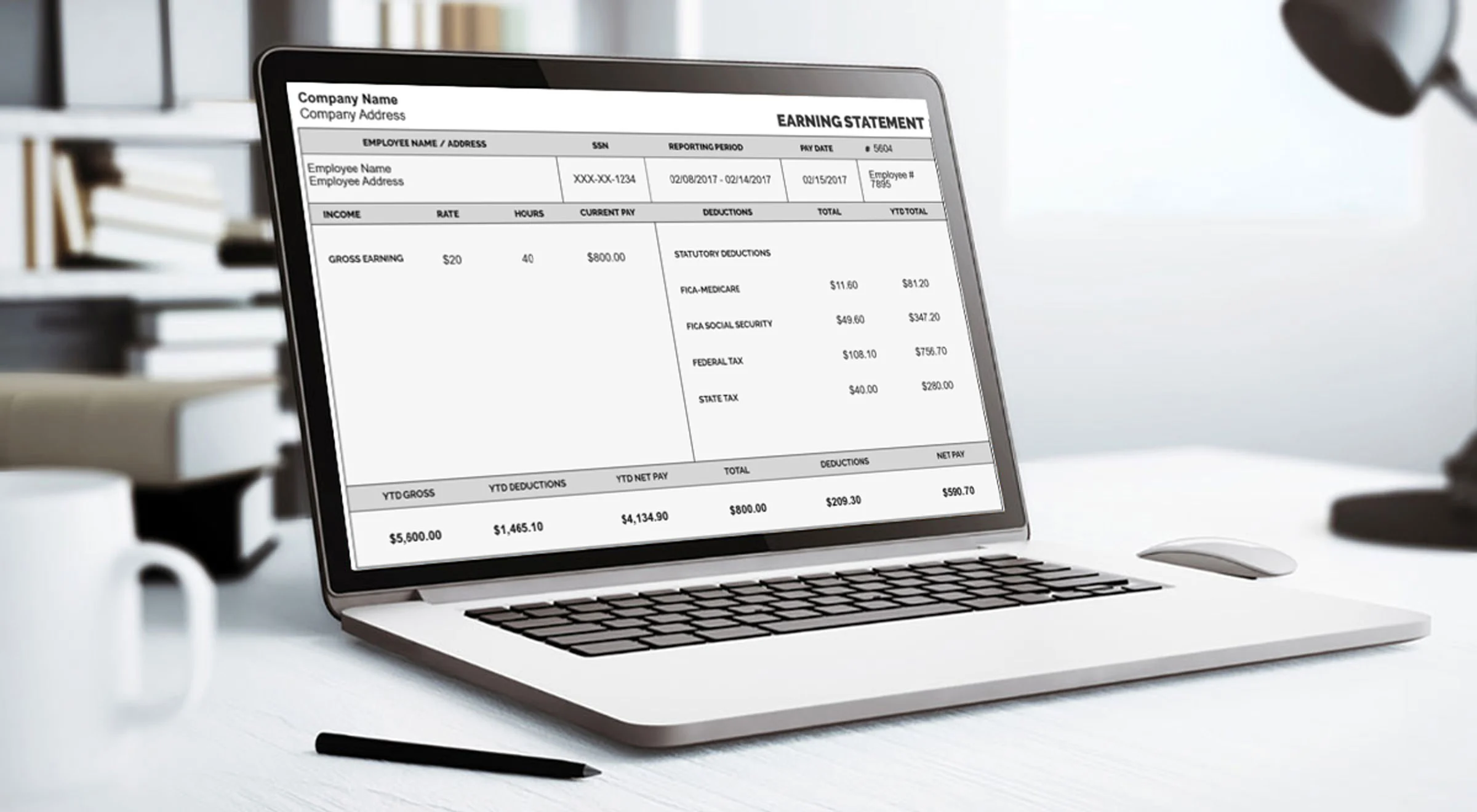
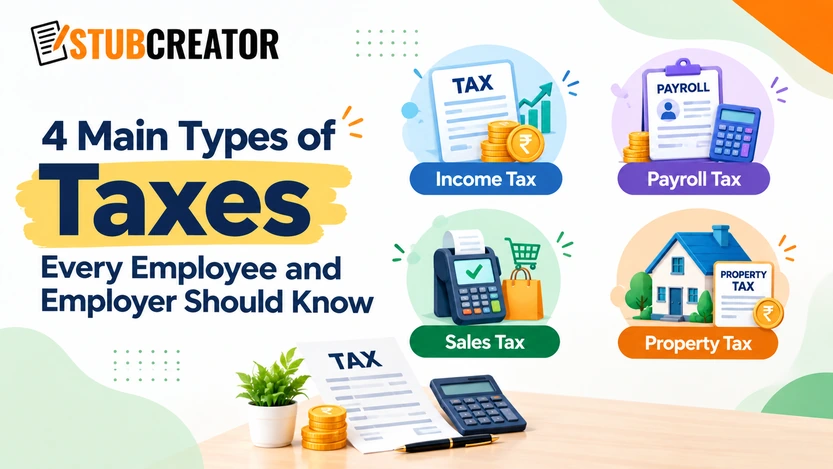
In the United States, there are many types of taxes, but there are 4 taxes that employees and employers have to handle on a regular basis: income tax, payroll tax, sales tax, and property tax.
Every proof of income has a unique tax, and there would be hardly anyone in the population who recognises all types of taxes and their differences. If you have ever checked your last paycheck stub, your last receipt, and your last property bill, you may understand what it is!
This guide is intended to provide you with information about these taxes, who is responsible for them, and their purposes.
What Are the Different Types of Taxes?
Various types of taxation can be grouped into several categories depending on what is being taxed:
- Taxes on earnings: income tax and payroll tax
- Taxes on spending: sales tax and excise tax
- Taxes on what you own: property tax and wealth tax
- Taxes on gains and transfers: estate, capital gains, inheritance, and gift tax
Among these four different kinds of taxation, there is great significance for regular workers and employers.
Types of Taxation: Progressive, Regressive, and Proportional
There are three basic types of taxation: progressive tax system, regressive, and proportional tax system.
| Tax system | How it works | Example |
| Progressive | Earners with high incomes pay a larger proportion | Income tax brackets of the federal government |
| Regressive | Earners with lower incomes pay a larger proportion of their income | Sales tax, wage limit of Social Security |
| Proportional (flat) | All earners pay the same proportion | Flat rate income tax |
Why Does the Government Collect Taxes, and What Are Taxes Used For?
Taxes are a compulsory payment made by people and corporations to federal, state and local governments. You can’t choose to take part, nor can you pick the services you use to pay for.
The government raises taxes to finance public spending on things like roads, schools, police and fire services, the military, Social Security, and Medicare. Without the tax money, it all won’t get built or kept up.
The uses of the tax money vary depending on who is collecting it:
- Federal government: defense, Social Security, Medicare, and interest payments on the national debt.
- State governments: roads, universities, Medicaid, and other state bodies.
- Local governments: school districts, police and fire services.
The 4 Main Types of Taxes: Income, Payroll, Sales, and Property
These four show up in almost every employee’s and employer’s financial life.
1. Income Taxes: Federal, State, and Local
- Personal income tax is levied on your income, which includes salary, self-employment income, interest, and business profits. It is the biggest source of revenue for the government.
- Federal income tax is considered progressive. These income tax rates range between 10% and 37%, and each rate applies only to income within a specific bracket. Advancing into the higher bracket does not mean increasing the tax rate. This federal tax rate depends on your filing status, such as single, married, or head of household.
- The state income tax and local income taxes differ greatly. Most states charge income tax, and some cities or counties charge an additional one on taxable income.
Income tax is also charged on businesses. Corporations pay corporate income tax, while sole proprietorships, partnerships, and the majority of LLCs pay taxes through individual tax returns. Your employer is supposed to withhold your income tax using your W-4 form. For employers: you are expected to collect the right income tax and remit it to the IRS.
2. Payroll Taxes: Social Security and Medicare
Payroll tax is used for Social Security and Medicare payments. The main difference from income tax is that it is divided into 2 parts: the employee’s one and the employer’s one. They are always listed on the pay stub as FICA.
- Social Security – 6.2% from the employee and 6.2% from the employer.
- Medicare – 1.45% from both sides with no wage limit.
- Additional Medicare Tax – an additional 0.9% from the high earner’s wages above $200,000 for single filers (only from the employee).
Social Security tax is capped annually. In 2026, the wage base will be 184,500(176,100 in 2025). Any income above this figure will not be taxed for Social Security tax. This is why the tax is considered to be regressive – the person with $60,000 income pays 6.2% on each dollar, while the person with $300,000 does so on a part of his/her income.
For employers – you have to match the contributions of your employees and then pay everything to the IRS according to form 941. Be sure your payroll software calculates the right wage base, because using outdated data is one of the most common mistakes in payroll.
Self-employed workers pay both halves themselves through self-employment tax.
3. Sales Taxes and Consumption Taxes
Sales taxes are included in the purchase price of goods at the point of sale. Sales taxes are paid by consumers and collected by sellers.
Sales taxes are not levied at the federal level. The states decide on the rate of sales tax, and cities and counties are allowed to charge an additional sales tax. In total, there are five states that do not levy any state sales tax, although cities and counties of such states can collect their own sales taxes. Since sales taxes are not charged according to one’s income, sales taxes are regressive taxes.
Gross receipts tax is charged in some states against the revenues of businesses rather than sales taxes. Gross receipts tax and sales tax are both considered to be consumption taxes.
4. Property Taxes: Real Estate and Personal Property
Property tax applies to your property, primarily land. It is determined at the local level and goes towards the financing of school districts, emergencies, and infrastructure.
The tax that you will be paying is usually the product of the assessed value of your property and the tax rate of that locality. There is a vast variation in rates in counties, hence why similar property in two different locations may have varying amounts of taxes to pay.
Most states also levy tangible personal property tax on things such as equipment, machines, and cars, among others.
Property taxes are often paid as part of mortgage payments. Property taxes account for over 30% of state tax collections. Property taxes are typically recalculated annually.
Other Types of Taxes: Capital Gains, Estate, Inheritance, and More
The four above cover most everyday situations. These come up less often, but they matter when they do.
Capital Gains Tax: Short-Term vs. Long-Term
The capital gains tax refers to the profit that arises when an investor sells an investment, such as stock. The tax is payable at the time of sale and not during the time of holding.
The period of holding determines the:
- Long-term (over a year): 0%, 15%, or 20% tax brackets based on income levels.
- Short-term (less than a year): taxed as regular income, which has a higher percentage than long-term gains.
This differential forms the reason why most investors hold their investments beyond a year before selling them.
Estate and Inheritance Tax: What’s the Difference?
Estate tax is levied against the value of an individual’s estate after he dies. In other words, the tax applies to an estate before the distribution of its assets. Currently, the federal estate tax exemption amount for 2026 stands at $15 million, which means that most people do not pay it.
Inheritance tax is imposed on the person inheriting the assets. There is no inheritance tax at the federal level; however, several states impose it. Moreover, certain states also levy their own estate tax, whose exemption is lower than that of federal tax.
Excise, Gift, and Wealth Tax
Some additional examples of taxes that you might encounter:
- Excise tax: paid on certain items such as fuel, alcohol, and tobacco; included in the item’s cost.
- Gift tax: levied on expensive gifts; annual gift tax exemption is $19,000 per person in 2026.
- Wealth tax: a tax on an individual’s entire net worth. There is no wealth tax in the United States.
Federal vs. State vs. Local Taxes: Who Collects What
| Level | Main taxes | What it funds |
| Federal | Income, payroll, capital gains, estate, excise | Defense, Social Security, Medicare |
| State | Income, sales, some estate and inheritance | Highways, higher education, Medicaid |
| Local | Property, local sales, sometimes income | Schools, police, fire, local services |
Different Types of Tax Forms Employees and Employers Use
For each type of tax, there are tax forms. This is the list of the most common ones:
- W-2: shows income and taxes paid during one year, provided by your employer each January.
- W-4: tells your employer how much money needs to be withheld from your paychecks as income tax.
- 1099 Forms: provide information on income from contracts or other non-employee income sources.
- Form 1040: individual tax return.
- Form 941: quarterly return for employers regarding payroll taxes.
The tax season normally starts in late January. It is the time when the IRS starts accepting tax returns. Each year, the start date may be different.
Which Types of Taxes Apply to You?
- If you are an employee, you will have to pay income tax and FICA from your salary, sales tax whenever you purchase something, and property tax either directly or indirectly via rent.
- In case you are an employer, you have to consider many responsibilities. You will be withholding income tax, paying payroll taxes, filing taxes on a quarterly basis, collecting sales tax in case you are selling taxable items, and even business property tax and corporate income tax.
In both cases, having an easy-to-understand pay stub will be helpful. Consider the relevant paystub template that is the most convenient way for you to check what taxes are being deducted from your salary.
Either way, StubCreator helps. It’s the easiest place to see which taxes are being taken out and whether the numbers look right.
Final Thoughts
The 4 main types of taxes are income tax, payroll tax, sales tax, and property tax. Understanding how these types function and whether they are progressive or regressive taxes would help you understand the payroll stub, create a budget, and process payroll easily. Tax rates keep changing every year; make sure to check the latest rates before filing.
FAQ's
What are the 4 main types of taxes?
+
Income tax, payroll tax, sales tax, and property tax. All of them form most of what individuals and businesses have to pay.
What's the difference between progressive and regressive taxes?
+
A progressive tax is when a larger portion of higher-income individuals is taxed, like federal income tax. A regressive tax is when a higher proportion of income is taxed for those earning lower incomes, like sales tax.
What are taxes used for?
+
They help finance public services, such as highways, education, the military, emergency services, Social Security, Medicare, and so forth
What's the difference between estate tax and inheritance tax?
+
Estate tax is paid by the estate prior to asset distribution. Inheritance tax is paid by the individual inheriting the estate.
What are the different types of tax forms?
+
Some of the common forms include W-4, W-2, 1099, Form 1040, and Form 941.