.png)


 Chat with us now!
 Send Email!
A leave of absence is a defined period of absence from work that has to be taken for a purpose, which can be personal as well.
A leave of absence is different from taking a simple leave for one day or two, and it usually requires more than two or three days to be approved. Moreover, leaves may be paid or unpaid and may carry job protection depending on the reason for the absence request. And how that pay shows up on your pay stub can matter later if you need to verify your income.
Some types of leave are required by law, and some others are offered to workers as part of benefits offered by an employer. Thus, it is essential to understand how a leave of absence works, what kind of leaves you have, and how they affect your pay.
Here you will find the types of leave of absence, how those leaves are paid, and how to request a leave of absence.
What Is a Leave of Absence? (Meaning & Definition)
The leave of absence is understood simply as the time that an employee takes off, with the permission of his or her employer, for a purpose that is outside of the normal time off. This is a more formal process than simply a break taken by the employee and agreed upon by the employer in terms of both, the reason of the leave taken, and the length of the period of the leave taken.
Leave of absence can be described in details as it differs with certain circumstances from one case to another in the following ways:
- A specific reason which can be medical matters( taking care of ill family member) or childcare, as well as leave taken for military affairs and matters of a personal nature.
- A specific timeframe of the leave which can be periodically changed due to some reasons.
- Some stipulations regarding the pay arrangements connected to the leave that can be full or half paid depending on the type of leave taken.
- The method of the leave used before returning to the job.
Then, what is a leave of absence from work?
It refers to an employee’s absence from work, who is not working, taking standard vacation or sick days, but has neither resigned nor been dismissed. Their relationship as an employee continues, albeit temporarily.
It is important to understand that “absence” in itself encompasses a broader meaning, meaning any time an employee doesn’t show up at work including an absence due to illness and a case when an employee doesn’t call the employer. A leave of absence, on the other hand, is a legitimate reason behind the absence.
Leave of Absence vs. PTO: What’s the Difference
Although the terms leave of absence and paid time off are sometimes used interchangeably, the two terms represent different situations that occur in the workplace environment. While both facilitates an absence from work, leave of absence and paid time off have a different way of working with each other.
Paid time off can be described as pre-assigned leave hours or days that an employee gathers over time and can utilize for anything he or she chooses to do. The main difference between it and a leave of absence is that it is a short-term type of leave that generally does not require proof of necessity and can be approved by an employer with ease.
A leave of absence is different in a few key ways:
| PTO | Leave of Absence | |
| Duration | Hours or a few days at a time | Typically weeks or months |
| Reason required | Usually not | Yes — a specific, documented reason |
| Approval process | Simple request | Formal request, often with documentation |
| Pay | Almost always paid | Paid, unpaid, or partially paid |
| Job protection | N/A (still actively employed) | Depends on the type of leave |
| Accrual | Builds up over time | Not accrued — granted per situation |
Types of Leave of Absence
The most common types of leaves of absence in the U.S. include:
1. Legally Protected & Mandatory Leaves
The leaves stated below are required by federal, state, or local laws. They do not need to be paid at the federal level but ensure job safety. This means you cannot get fired for taking these leaves.
- Family and Medical Leave Act (FMLA): This is a federal law that allows eligible employees (at companies with more than 50 workers) to receive unpaid leave that is protected for a total of 12 weeks annually. It applies to the birth/adoption of a child, serious health conditions, and providing care for a sick family member. Under FMLA, military caregiver leave can be longer than 12 weeks and for up to 26 weeks.
- Americans with Disabilities Act (ADA) Leave: As classified by the Equal Employment Opportunity Commission of the United States, leave can be sought as a reasonable accommodation under Title I of the Americans with Disabilities Act for covered employers having at least 15 employees.
- Jury Duty & Witness Leave: Many states require employers to provide time off in order for employees to comply with a civic responsibility. However, whether the leave will be paid or unpaid will depend on the state and local laws.
- Military Leave Under USERRA: The Uniformed Services Employment and Reemployment Rights Act allows employees leaving for military service to come back to the same job with the same rank and pay that were acquired before the leave.
- Workers’ Compensation Leave: An employee injured or sick due to work will receive leave for recovery based on the laws of each state, along with some compensation in the form of part of the salary being paid during the time off.
2. State-Mandated Paid Leaves
Because there are no federal requirements regarding leave of absence, states have introduced their regulations on the subject.
- Paid Family and Medical Leave: The program offers a type of insurance that provides partial or full wage replacement for employees who have to be away from work due to certain major life events. Mostly this program runs at California, New York, Washington, and Massachusetts and Washington, D.C.
- Mandatory Paid Sick Leave: A number of states and local governments have adopted mandatory sick leave laws that require employers to provide a number of paid sick days for any serious injury or health condition.
3. Voluntary & Employer-Discretionary Leaves
As far as the law is concerned, these kinds of leaves are not necessary, but companies decide to give them to remain competitive and pay attention to the quality of life of their workers.
- Paid Time Off (PTO)/Vacation Leave: The standard practices that permit employees to take a definite number of paid days off in a year.
- Bereavement/Compassionate Leave: The paid/unpaid leave that an employee may take following the death of his/her close relative. (Note: Some states now require employees to be given bereavement leave.).
- Sabbatical Leave: It permits long (time served) employees to take some time off for recuperation, travel, research, study, and self-improvement.
- Personal Leave: The paid/unpaid leave granted at the discretion of the employer in order to cope with personal circumstances/emergencies that are not covered by the FMLA.
How Leave of Absence Works: Key Terms Explained
1. Intermittent Leave (How the time is taken)
Intermittent leave refers to taking leave without losing a job. This leave is not taken all at once but in breaks. Instead of taking continuous leave for 12 weeks, it can be taken for a few hours or days because of one medical condition.
- How it works: As per U.S. Department of Labor FMLA guidelines, an employee can take a leave of absence in small blocks.
Some examples of intermittent leave:
- Planned: Taking leave for 3 hours every Tuesday for chemotherapy or physiotherapy.
- Unplanned: Taking sick leave from work due to sudden attacks of an illness such as headaches and asthma.
- Reduced work schedule: The reduction in work schedule that takes place owing to the change in work schedule from 40 hours to 30 hours due to ill health.
2. Concurrent Leave (How the time is paid/tracked)
Concurrent leave describes the act of taking two separate leaves of absence at the same time.
The federal Family and Medical Leave Act (FMLA) protects your job but does not provide compensation for a medical leave, which means many people cannot use it. By having concurrent leave, you can have both job protection and pay at the same time.
- How it works: When you take leave for a chronic illness, your employer will make you use all your paid time off (PTO), sick time, or short-term disability benefits at the same time.
For example: if you take four weeks for a considerable surgery, it means that you have used four weeks of FMLA leave and four weeks of paid PTO. So you are being paid with your PTO, but at the same time, you have the protection of FMLA.
FMLA Leave: Purpose and Eligibility
The Family and Medical Leave Act (FMLA) is the primary federal legislation regarding leaves of absence from work. Under the FMLA, eligible employees can take up to 12 weeks of unpaid leave that is protected from termination. In addition, the employee will receive continued insurance coverage. The FMLA provides for:
- The arrival of a new child through birth, adoption, or foster care placement
- Caring for a spouse, son, daughter, or parent with a serious health condition
- A serious health condition of the employee
- A military family member’s qualifying needs.
Furthermore, by virtue of the military caregiver leave, employees caring for a specific injured or sick service member can take up to 26 weeks of leave.
The employee must have worked for the employer for at least 12 months, have worked 1,250 hours during the previous 12 months, and have worked at a worksite with at least 50 employees living within a 75-mile radius in order to be eligible.
How to Request a Leave of Absence (Step-by-Step)
Making a formal request for a leave of absence from work can be made easy if you have a clear plan in mind instead of passing it casually. Here is a complete procedure to follow for requesting a leave of absence:
- Start by checking your organization’s leave policy. Consult the employee handbook or HR portal to learn about the kinds of leave your organization offers, what documentation they would require, and how much advance notice you need to give.
- Figure out which kind of leave pertains to your situation. Determine whether your situation qualifies for protected leave (FMLA), a state program, or your employer’s voluntary leave plan.
- Collect the necessary documentation. Most medical leave requests require the applicant to submit a certificate from their doctor. Military leave requires orders or formal notices. Different situations call for different documents including but not limited to death certificates or summons. Having all the documents in hand will shorten the process of obtaining approval.
- Give as much advance notice as you can. For foreseeable absences, like a scheduled surgery, parental leave, or military deployment, most policies require at least 30 days’ notice. In emergency situations, like a medical crisis, inform your employer as soon as practical.
- Present a formal request. Use that company’s leave request form or HR online system instead of using a verbal conversation or casual email. This establishes a paper trail for your protection and that of your employer.
- Check with HR regarding pay and benefits. Before starting your leave, make sure you have clarification on how it will affect your salary and health plan, as well as any other benefits, such as whether your portion of your premiums will still need to be paid.
- Clearly state your plans for your absence. Tell your manager what kind of communication to expect from you while you are gone and get a possible return date in writing.
- Keep a copy of all documentation. Retain a copy of your request, any notice of acceptance or denial, and other record-keeping, ensuring that you are prepared in case of possible future inquiries regarding your pay, benefits, or return to work situation.
How Long Does a Leave of Absence Last?
There isn’t a definite way to know how long a leave of absence lasts because it depends on the kinds of leave, the applicable laws, and the policies in place by the employer. In most instances,
- Family and Medical Leave Act (FMLA) allows for a maximum leave of 12 weeks in any given 12 months or 26 weeks concerning military caregiver leave.
- The short-term disability and medical leave also vary in time frames from a couple of weeks to a few months depending on the condition suffered and the coverage of the insurance plan.
- The time frame for parental leave is from a couple of weeks to 12 weeks depending on the program availed either FMLA, state policy or company policy.
- Generally, leaves taken for Jury duty or bereavement are shorter, lasting only a few days or weeks in total.
- Voluntary leaves depend on the employer’s policy and usually have fixed periods of 30, 60, or 90 days.
Extending or Denying a Leave of Absence
The procedure to extend the leave of absence is not simple and may vary depending on the type of leave.
- If the leave of absence is covered under FMLA, CFRA, or similar legislation, in most cases the extension will require new or updated documents. This means that the employee will need to submit new medical information for the leave of absence to continue to qualify.
- If the original leave of absence was a reasonable accommodation under ADA, then it may be an extension required under the law, even after the FMLA or other protected leave has expired, unless it would create undue hardship for the employer.
- If the leave is voluntary, the decision to continue it is solely up to the employer and the employer is not obliged to grant the leave of absence.
Refusing a leave of absence is risky for the employer from the legal point of view. It is especially so in cases where the employee qualifies for the leave under FMLA, CFRA, or other laws.
Leave of Absence and Your Pay Stub: Verifying Income During Leave
However, no matter how you utilize your leave, you’ll be able to see the results in your pay stubs and it’s helpful to know what that means.
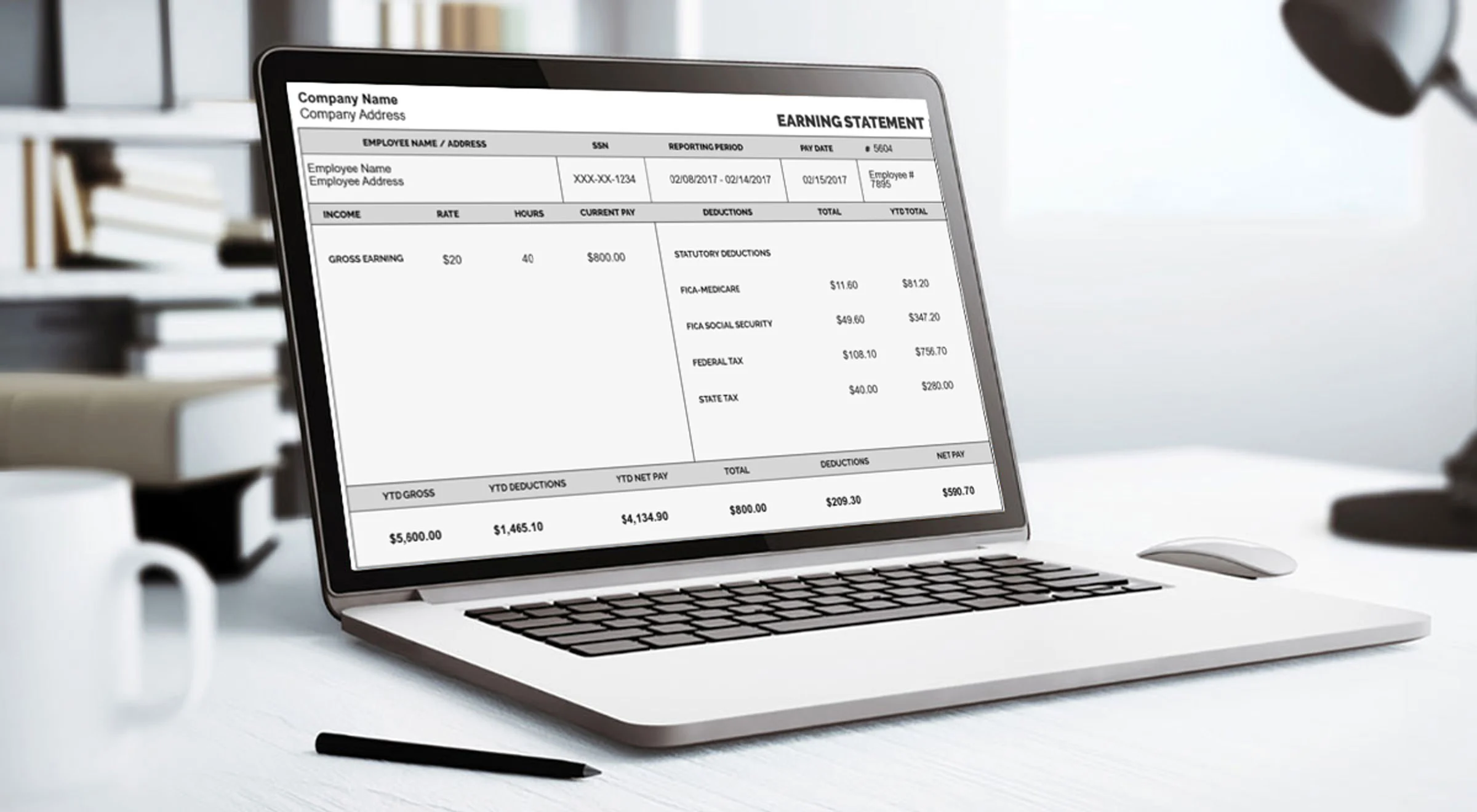
Paid leave (whether it’s a state program, short-term disability, or company policy) should show up in a separate section in your pay stub, such as “paid family leave” or “FMLA pay”. This aspect is critical for taxation and also calculating your income correctly.
Unpaid leave will show your gross wages as $0 or it won’t show in the stub at all during that time. Be sure to keep the pay stub you got before going on leave and the one you received after.
This is important not just for your payroll but also because lenders and landlords may need proof of income when you are on leave and a pay stub can make the process easier for you. In case your payroll system fails to produce a correct pay stub while you are on leave or you are self-employed, you can use StubCreator to create a pay stub reflecting your actual income.
FAQ's
What is leave of absence at work?
+
Leave of absence refers is employer-approved time away from work for a specified purpose, such as illness, taking care of family, or going for military service, and is different from PTO as it is for longer time period and for a specific purpose with job security.
What does taking a leave of absence mean?
+
A leave of absence means that one is formally relaxing work while remaining an employee without resigning. The pay, benefits and job security during the leave depends upon the type of leave taken.
What are valid reasons to take a leave of absence?
+
Legitimate reasons for the leave of absence are serious illness, caring for the family member, giving birth or adopting a child, serving in jury, going for military service and going for bereavement. Some of the reasons are protected by law, while some depend on the employer.
What's the difference between FMLA and LOA?
+
FMLA, or the Family Medical Leave Act, refers to a federal regulation that allows a potential absence of up to 12 weeks, without any pay, from work. Leave of Absence is a more general term including all forms of time off work, among which is one defined by FMLA.
What's the difference between a leave of absence and a layoff?
+
Leave of Absence is temporary and implies returning to the same job considering job protected leave. Layoff, on the contrary, means being out of work for a limited time or, sometimes, forever with no guarantee of employment restoration.
How long is a leave of absence in California?
+
In California, both FMLA and CFRA guarantee up to 12 weeks leave. Pregnancy Disability Leave is available for 4 months, and Paid Family Leave can be taken for a period of 8 weeks at a reduced salary.