.png)

 Chat with us now!
 Send Email!

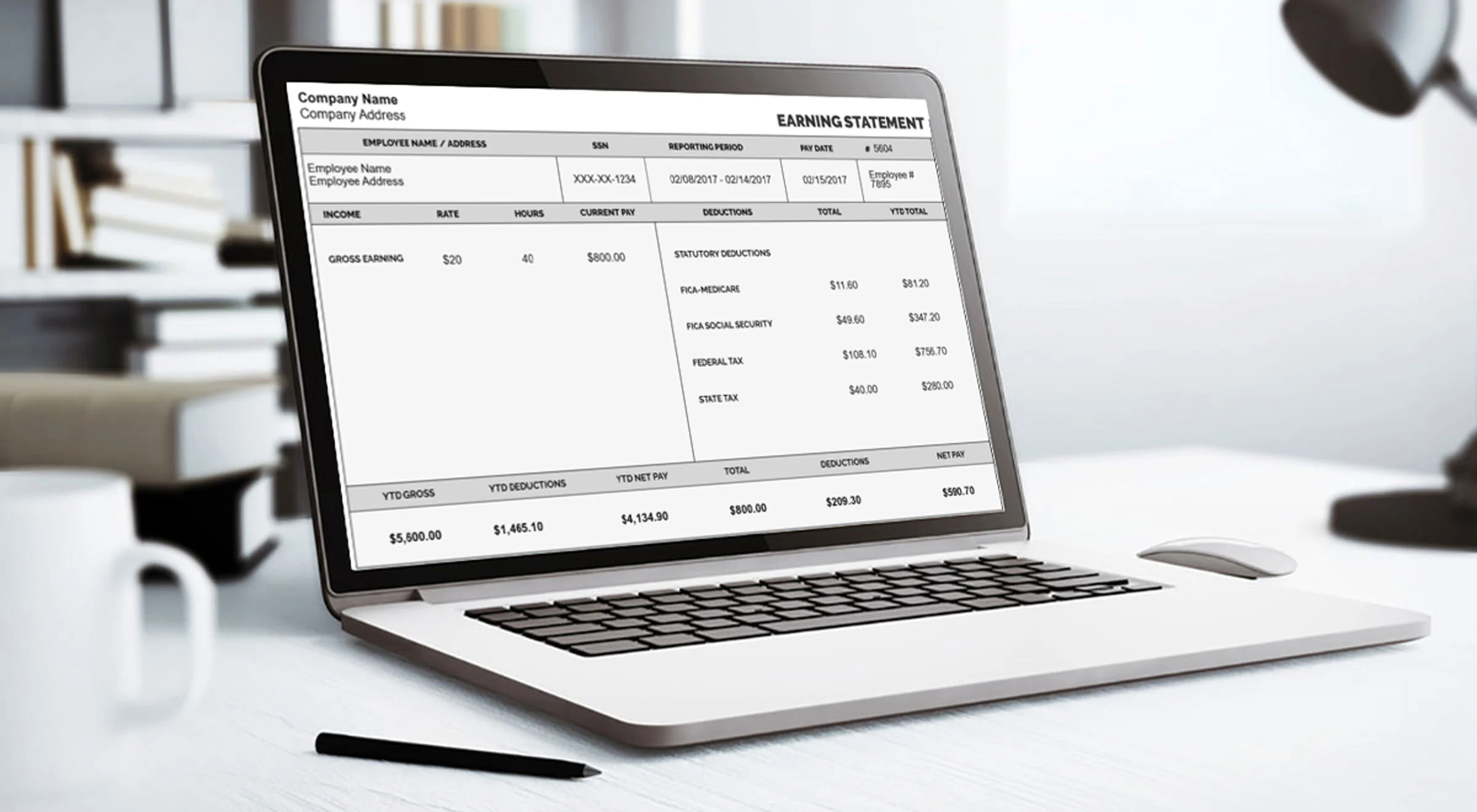
Bills don’t wait until you receive your paycheck. If you’ve worked the hours, waiting for that money might feel unfair. Fortunately, you can get your paychecks in advance. Some financial institutions, websites, and employers offer this service. This guide will walk you through the services that will allow you to access your money early, how they operate, and the charges applied.
You can also use a paystub maker to create pay stubs that help you organize and document your earnings for personal financial records.
How to Get Paycheck Early
There are three ways one can receive one’s salary before the established pay date. They include going to a bank that offers early direct deposit, using an application for earned wage access, or requesting an advance.
- Bank with early direct deposit: This means your salary arrives on average 2 days before payday, and it is free.
- Earned wage access (EWA) app: Using an EWA app implies that the user gets the salary portion before its official disbursement date.
- Employer advance: Asking for an employer advance on a paycheck means the employer gives one’s salary in advance and expects to receive it back from future payments.
What Is Early Payday?
Early payday is the term used for receiving your salary before it is due.
Early direct deposit is arguably the most common way to achieve an early payday. Your money is in your bank account sometimes up to 2 days ahead of the scheduled payday date. Other options include using EWA apps and asking your employer for a paycheck advance.
How Does Early Direct Deposit Work?
The mechanism behind early direct deposit includes releasing money once your bank receives the payroll file instead of when payday arrives.
The employer processes payroll file to the bank several days prior to payday. In essence, it contains information on who is entitled to get paid, the amount payable to him/her, and the date of payment. In general, banks display the money on payday. It is important to note that those banks utilizing early direct deposits post the funds when receiving the payroll file, which is why you may notice that your employer’s salary appears two days in advance.
Banks That Pay 2 Days Early
Chime, TD Bank, Alliant Credit Union, Ally, Discover, and SoFi allow early direct deposit. Different rules and fees apply for each bank.
- Chime: According to Chime, you can receive your paycheck early when you sign up for direct deposit. Chime is a financial service and not a bank.
- TD Bank: With TD Early Pay, eligible direct deposits may be released to you 2 business days earlier.
- Alliant Credit Union: You can sign up for Early Payday at Alliant Credit Union for free if you have an eligible direct deposit or Social Security payment.
- Ally, Discover, and SoFi: Other banks offering early direct deposit services.
Before you get excited about this service, check if it operates automatically, if your account type qualifies, and if a fee is charged for it.
What Time Does Direct Deposit Hit 2 Days Early?
There are no predefined dates. Money is deposited once the bank receives the payroll information from its respective employer.
For example, if the payroll system has been submitted on a Wednesday but payday falls on a Friday, the bank will most probably credit the account on Wednesday. It should be pointed out that the timing of deposits varies, depending on when the payroll was submitted, when the bank processes it, or if there are weekends or holidays. Thus, it should be said that “2 days early” is more of a goal than a guarantee.
How to Set Up Early Direct Deposit
If you want to set up early direct deposit, you need to open an account that provides early deposit capabilities and share that information with your employer. The following steps will help you:
- Please select an account that offers early deposit features. Make sure the type of account you pick will allow you to make early deposits.
- Complete the Direct Deposit Authorization form. In addition to providing your employer with your account number and routing number, please note that many employers may require up to two payroll cycles to complete the authorization process.
- Early payments must be turned on by your bank or the company that provided your account. Many banks will ask you to “opt in” to early payments through either their mobile application or another method.
- You’ll want to watch for your first few paychecks over the next couple of weeks. When those initial deposits arrive, you won’t want to anticipate that the funds will be available earlier than usual. If you still don’t see anything different after receiving several of your paychecks, you’ll need to reach out to either your bank or employer.
Is Early Direct Deposit Guaranteed?
It is a fact that early direct deposit is not something that can be taken for granted. In situations in which your salary is paid late by your employer, your funds are going to come later. You can expect to receive it either two days in advance, one day ahead of time, or on the standard payday.
Additionally, it is worth mentioning several additional limits you should be aware of:
- It won’t solve money-related issues. There is only one early paycheck, and then the process of getting your wages remains unchanged.
- Not all payments can be made via early banking services. Payrolls, pensions, and governmental payment systems work in this way, but not Venmo, Zelle, and mobile check deposits.
- Always remember that the funds received earlier can be taken by the bank at any time. The company may return the payment after it has been transferred to the bank.
How Can I Get a Cash Advance on My Paycheck?
You can get a cash advance on your paycheck through an earned wage access app or by asking your employer. Both let you get money before payday.
1. Earned Wage Access (EWA)
Earned wage access allows you to use part of your pay before payday. This isn’t a loan. EarnIn is one of the companies offering it. You can get up to $200 each day and $1,000 per pay period with no interest or credit checks. Typical transfers are free and take 1-2 business days. If you want your money in minutes, you have to pay a fee starting at $3.99. Dave, DailyPay, and Tilt provide similar services too.
2. Payroll Advance From Your Employer
An advance of wages, or an advance of salary, happens when your company pays to you part of your salary ahead of time. The amount generally varies between $100 and $500 and is recovered from future earnings via deduction in your paycheck. Employers often limit the amount to less than 50% of the wages due to the employee.
3. Avoid Payday Loans
A payday loan is not the same as a paycheck advance. The CFPB says a typical two-week payday loan can have an APR of almost 400%. Stay away from them if you can.
Earned Wage Access vs. Paycheck Advance vs. Payday Loan
A paycheck advance cannot be regarded as a payday loan. According to the Consumer Financial Protection Bureau, a normal payday loan for two weeks would cost nearly 400% APR.
You get access to money that you will receive in the future when you take a paycheck advance. Meanwhile, a payday loan means borrowing money, which, however, will be very costly due to its high fees and conditions.
- To be more precise, earned wage access implies accessing wages that have already been earned to some extent but haven’t been paid yet.
- In contrast, a paycheck advance means getting a part of your paycheck in advance.
- Finally, a payday loan means borrowing money, which you will need to pay back on the next payday at a very high APR rate.
Who Can Get a Paycheck Advance From Their Employer?
It depends on your employer. Each company sets its own rules. Some only offer advances after a set time, such as 90 days. Some limit them to full-time staff. Many also limit advances to one or two a month. Ask HR or check your employee handbook.
How to Ask Your Employer for an Early Paycheck
If you need to request an advance on your paycheck, write a simple request to HR or to your supervisor.
- Tell them how much you need. Rather than asking for your entire pay, ask for a specific amount you require at that time.
- Give them an explanation. You don’t have to elaborate on the reason behind your request; just one line would suffice.
- Propose a plan for paying it back. You may suggest paying back the advance amount over your next two pay periods.
- Be specific about your timing. Let them know how soon you will need the money.
Other Ways to Get Paid Early: Payroll Cards and Gig Apps
Payroll cards and gig applications provide immediate payment availability. Several companies deposit wages onto prepaid payroll cards, thus providing easy payment for workers who don’t have bank accounts. Similarly, gig applications such as Uber allow for post-work cash-out, often at a small fee. However, these methods are contingent on whether your employer or gig platform will provide them.
How Much Does It Cost to Get Paid Early?
Early direct deposit is usually free. Apps and advances can have fees.
| Option | How fast | Usual cost |
| Early direct deposit | Up to 2 days early | Usually free |
| EWA apps | Minutes to 2 days | Free standard transfer, fee for instant |
| Employer advance | A few days | Free or small fee |
| Payroll card | Same day as payroll | May have card fees |
| Payday loan | Same day | Very high |
Always read the fee table before you sign up.
Why Getting Paid Early Can Save You Money
Receiving payments in advance can allow you to stay clear of overdue payments and a possible bank overdraft penalty. In 2024, consumers paid at least $12.1 billion in overdraft fees and non-sufficient funds fees. On average, one overdraft fee charges 15-37. By receiving money two days earlier, you can be sure that you will be able to settle one bill on time. Overall, it is less stressful if you receive payments before payday, as receiving payment suggests that you are being paid.
Does Getting Paid Early Affect Your Credit Score?
However, receiving payments beforehand does not improve your credit rating directly. Early wage payments and earned wage access are not regarded as loans, and therefore they are not reported to credit bureaus; in most cases, they do not require a credit check either. However, if you manage to pay bills thanks to it and protect your credit history, you may benefit from this process.
What to Check Before You Choose a Service
When selecting a service to use, remember to check for the charges, the eligible groups, and the duration of transfers.
- Charges: Look for the costs associated with instant transfers, monthly maintenance fees, or optional gratuity.
- Eligibility criteria: Direct deposit is a prerequisite for some services, while others require particular payment frequency or support from an employer.
- Speed: Early may refer to a few minutes in one case or to two days in another.
Alternatives If You Need Cash Before Payday
In case there is no option of early pay, you can utilize your savings, overdraft protection, or personal loans.
- Savings: Tap into your emergency savings account until payday.
- Overdraft protection: Some banking institutions allow customers to go over their bank balance without any fees. Inquire about your bank’s policy.
- Personal loans: According to lenders of personal loans, credit unions and online lending institutions charge lower fees for personal loans than payday loans.
Which Option Is Best for You?
- Want something free and automatic? Use a bank with early direct deposit.
- Need money before your next paycheck? Compare EWA apps and employer advances.
Final Thoughts
Banking institutions that provide early direct deposit options are the most straightforward and typically no-cost alternative. EWA applications and early wage advances provide financial assistance in case of urgency. Choose the most affordable option and make sure to keep your payment receipts in order. Payment receipts will verify your income and help you track your deposits. You may have your payment receipts arranged through the paystub generator.
FAQ's
Which banks offer early direct deposits of two days?
+
Chime, TD Bank, Alliant Credit Union, Ally, Discover, and SoFi offer their services.
Is early direct deposit a secure option?
+
Yes, the process of early direct deposit is the same as regular direct deposit. The only change in here is the timing of transactions.
Is early direct deposit service charged?
+
Most of the banks do not charge their customers for this service. Please verify your own bank’s regulations.
How does earned wage access differ from a paycheck advance?
+
With earned wage access, you get paid now for work you’ve already done. When you receive a paycheck advance, you get money before you’ve worked, and you must pay it back after you’ve been paid.