.png)


 Chat with us now!
 Send Email!

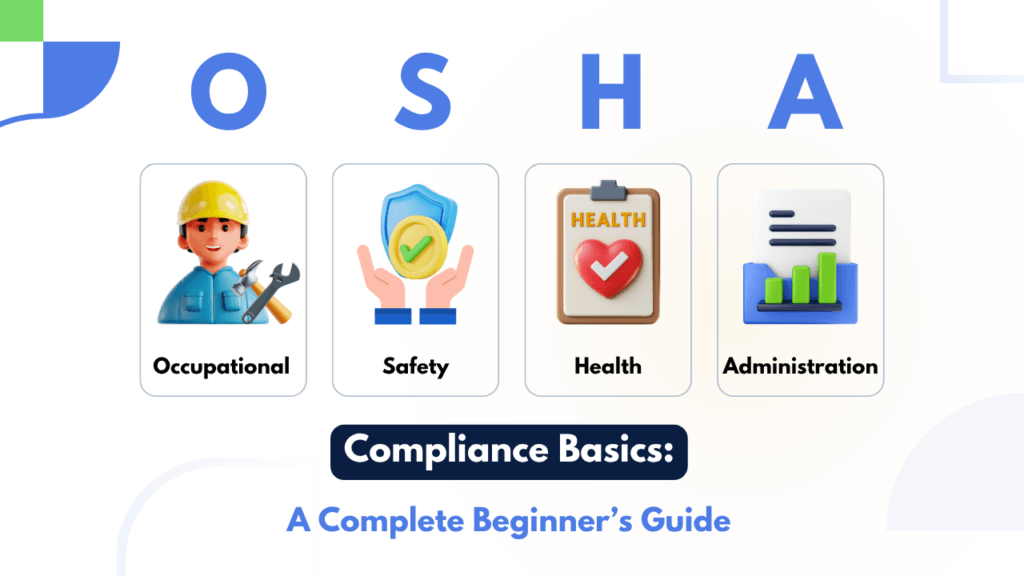
Workplace safety has evolved from a legal necessity to an essential part of running an ethical and profitable business. OSHA compliance refers to following the safety standards set by the Occupational Safety and Health Administration (OSHA).
For employers, OSHA compliance is a critical part of safety, no matter the industry or size of organization. Regardless of the company’s size, these laws and regulations affect daily operations and employee well-being, among others, which can cause business disruption. Avoiding compliance can result in expensive fines, lawsuits, and dangerous accidents that were avoidable.
To stay OSHA Compliant in 2026 requires appropriate safety preparation from employers, and preparedness for an inspection at any time. OSHA’s requirements touch your operations daily, just like using a free paystub maker ensures accurate payroll management.
This guide will take you through all the information you should have to understand what is OSHA compliance, including essential requirements and common violations, as well as actionable steps you can take to ensure your workplace remains safe and compliant.
What is OSHA?
OSHA stands for Occupational Safety and Health Administration, which is a federal agency run by the U.S. Department of Labor. Its job is to provide guidelines for workplace health and safety, protect employees by inspecting workplace environments, and ensure employers comply with safety and health standards.
OSHA has seven sectors:
- Agriculture
- Construction
- Federal agencies
- Healthcare
- Maritime
- Oil and gas
- Warehouse.
Importantly, OSHA does not cover self-employed individuals with no employees, immediate family members working on a family farm, or workplaces regulated by other federal safety agencies (such as the Mine Safety and Health Administration or the Federal Aviation Administration).
What is OSHA Compliance?
OSHA compliance refers to a business following the specific set of best practices, rules, and regulations outlined by OSHA to ensure the safest possible environment for its workers.
Safety is just one part of compliance; recordkeeping is also important. Employers keep logs to track incidents and injuries. OSHA looks at this data to update its safety advice. Workers are likely exposed to risks if the plan isn’t clear. Most companies probably need a step-by-step approach to meet these standards. This practical action plan is what employers usually want to know.
What is The Purpose of OSHA?
The purpose of the Occupational Safety and Health Administration (OSHA) is to ensure safe and healthy working conditions for employees by setting and enforcing workplace safety standards and providing training, education, and assistance to employers and workers. Established in the United States under the Occupational Safety and Health Act of 1970, OSHA works to prevent workplace injuries, illnesses, and deaths by regulating hazards, inspecting, and promoting best safety practices in various industries.
Why is OSHA important?
OSHA is necessary because it creates a federal standard of safety and occupational health standards in all workplaces and because the adoption and enforcement of safety and health standards has significantly reduced fatalities, injuries, and illnesses in the workplace. Additionally, OSHA’s outreach compliance training programs have increased awareness of workplace hazards and how to recognize and avoid them.
How Does OSHA Enforce Its Standards?
When an imminent workplace hazard is reported to the Administration, when an injury occurs in a workplace accident, or when a report is received alleging safety or health issues that violate an OSHA standard, OSHA enforces its standards through inspections and investigations. Every business subject to OSHA’s safety and health standards cannot be inspected or investigated simultaneously, so the agency has established a system of priorities. The system of priorities is:
- Imminent danger in the workplace.
- Catastrophes and fatal accidents.
- Complaints of alleged violations.
- Planned inspections at high-hazard workplaces.
OSHA considers any situation to be an imminent hazard where there is reasonable certainty that a hazard exists that can be expected to cause death or serious injury before the hazard can be eliminated through the normal inspection and enforcement process.
Such matters may be brought to OSHA’s attention by an employer or employee, and are reviewed by an area director before conducting a priority inspection. Upon confirmation of imminent danger, OSHA inspectors will request voluntary removal of the hazard and/or exposed employees from exposure to the hazard.
Examples of OSHA
The examples of OSHA standards by type are mentioned below:
- Fall Protection: Provides safety nets for employees working at heights of six feet or more.
- Hazard Communication: It requires manufacturers and employers to maintain Safety Data Sheets for chemicals and label hazardous containers.
- Personal Protective Equipment: Mandating the use of hats, safety glasses, and gloves to protect against chemical or mechanical hazards.
- Machine Guarding: Installing protective mechanisms on machinery to prevent injuries from moving parts.
- Confined Space Entry: Developing a well-maintained procedure for entering areas with limited access and potential hazards, such as tunnels.
OSHA Required Training Checklist
By systematically addressing workplace safety standards, companies can prevent workplace incidents, avoid costly fines, and ensure a compliant workplace.
Hazard Recognition and Risk Assessment
- Identify workplace hazards like chemical spills and electrical accidents.
- Train employees on detection systems and engineering controls to minimize risks.
Personal Protective Equipment and Safety Gear
- Educate employees on the proper use of protective equipment, including respiratory equipment and protective clothing.
- Ensure fit testing for PPE to maintain safety compliance.
Emergency Preparedness and Response
- Develop and communicate an emergency evacuation plan, which includes emergency exit procedures.
- Train employees on handling medical emergencies and first-aid procedures.
Machine Safety and Electrical Protection
- Educate employees about machine guarding and the safety of powered industrial trucks.
- Conduct sanitation tracking on workspace conditions for industries such as manufacturing operations and healthcare industries.
What are OSHA Requirements?
OSHA requirements ensure employees have a safe and healthy working environment. Key OSHA requirements include the following:
1) Provide a safe workplace
Employers should provide a workplace free from serious hazards like:
- Unsafe machinery
- Toxic chemicals
- Electrical risks
- Fire hazards
2) Provide Safety Training
Employers should train employees on workplace safety, including:
- How to use equipment safely
- Hazard recognition
- Emergency procedures
3) Provide Personal Protective Equipment
When hazards cannot be eliminated, employers must provide PPE, such as:
- Hard hats
- Safety googles
- Respirators
4) Maintain OSHA Records
Businesses with more than 10 employees must maintain records of workplace injuries using forms like:
- OSHA Form 3000
- OSHA Form 301
- OSHA Form 300A
5) Display OSHA Poster
Employers must display the official OSHA workplace poster explaining employee rights.
6) Report Serious Workplace Incidents
Employers must report severe workplace incidents to OSHA:
- Fatality: Within 8 hours
- Hospitalization or eye loss: Within 24 hours
7) Follow OSHA Safety Standards
OSHA has specific standards for different industries, such as:
- Construction
- Manufacturing
- Healthcare
How does OSHA Gain Compliance with Safety Requirements?
OSHA uses a multi-pronged approach to achieve compliance, blending education, enforcement, and collaboration. Here’s how the corporation guarantees compliance with its security requirements:
1) Unannounced Inspections
The inspections can be brought on by:
- Employee proceedings about unsafe running situations
- Reports of severe ailments
2) Enforcement Actions
When violations are observed, OSHA takes immediate enforcement action. This includes:
- Imposing fines
- Issuing citations for non-compliance
- Stopping work in intense cases
3) Training and Education
To encourage compliance, OSHA offers training assets for employees as well as employers. This includes;
- Workshops are custom-made for specific industries
- Safety guides outline first-class practice.
4) Consultation Services
OSHA offers free consultations to small and medium-sized organizations. These application skills help detect risks and implement corrective actions before a breach occurs. Importantly, consultations are confidential and no longer have citations or penalties, making them an attractive option for activist companies.
5) Partnership Programs
To encourage cooperation, OSHA partners with employers and enterprise agencies through initiatives such as the Voluntary Safety Program (VPP). These partnerships promote best practices in the work safety space and recognize groups that go above and beyond in maintaining compliance.
6) Addressing Hazardous Substances
In health care and various industries, hazardous chemical substances pose considerable threats. OSHA’s Toxic and Hazardous Substances Phase specializes in materials such as formaldehyde, ethylene oxide, and glutaraldehyde, which are commonly found in medical settings. Compliance includes proper labeling, segregation, and disposal of those materials, as well as training employees on their safe handling.
7) Recordkeeping
OSHA has called on corporations to preserve detailed data on job injuries, illnesses, and the location of unsafe incidents. Accurate reporting allows OSHA to identify trends, target high-hazard areas, and enhance standard safety measures.
Who is Covered Under OSHA?
Private sector businesses and their employees must comply with OSHA safety and health requirements set directly by federal OSHA or through an OSHA-approved state plan. This means that most small, medium, and large businesses in all 50 states, the District of Columbia, and other US jurisdictions are subject to OSHA regulations.
OSHA rules for some small companies are simpler. Businesses with ten or fewer workers get partial relief. They still must follow OSHA standards, but don’t have to keep injury records unless OSHA or the Bureau of Labor Statistics sends a written notice. That means they only record incidents when asked. Some small shops may miss record-keeping duties if not notified in writing. These rules help ensure safety without overburdening tiny operations. Small employers must follow the rules, but aren’t always required to document injuries if no official notice is sent.
What Businesses are Not Covered Under OSHA?
If you’re wondering what occupations OSHA doesn’t cover, the answer is very few. These businesses fall under special categories.
- Self-employed: This includes people who report self-employment income and have no employees, such as independent contractors or sole proprietors.
- Family farms: These are farms that are operated by an immediate family and do not have outside employees.
- Externally regulated facilities: The Department of Labor (DOL) classifies these as workers whose hazards are regulated by another federal agency, such as the Department of Energy, the Federal Aviation Administration, or the Coast Guard.
The federal OSHA protections do not apply to public sector employees working for state and local governments.
Pro Tip: Even when using a free paystub template, make sure it includes clear breakdowns of hours worked, overtime, deductions, and employer details; this not only improves transparency for employees but also helps maintain accurate records.
Which Safety and Health Resources can Workers Use inside their Workplace?
Safety and health resources safeguard workers from common hazards ranging from falls, chemical spills, and repetitive strain. And while the laws and regulations may seem burdensome, they are there to help your business avoid soaring medical bills and claims that can add up quickly. The following are the resources:
- Safety Data Sheets: Provide details about chemicals, hazards, and safe handling procedures.
- Workplace safety training programs: Required training sessions on hazards and emergency procedures.
- Warning signals and labels: Posted around the workplace to identify risks.
- Protective equipment: Items like helmets, gloves, and masks are provided by the employer.
- Emergency action plan: Procedures for fire and medical emergencies.
- First aid kits and medical facilities: Easily accessible supplies and assistance for injuries.
- OSHA posters and guidelines: Inform workers about their rights and safety standards.
Core OSHA Standards Every Employer Must Know
The following standards generally apply to most workplaces:
1) General Duty Clause
This basic tenet underlies the Occupational Safety and Health Act (OSHA Act), which mandates that employers maintain a workplace free from recognized hazards likely to cause serious physical harm. This essentially requires preemptive action for employee safety.
2) Hazard Communication
This regulation requires employers to develop and implement a written hazard communication program if they have hazardous chemicals in their workplace. The program should include training employees on the hazards associated with these chemicals, safe handling procedures, and the availability of Safety Data Sheets (SDS).
3) Personal Protective Equipment Standards
PPE requirements are detailed in OSHA regulations, which must be followed to protect workers from hazards encountered on the job. Those PPE standards detail what types of PPE are required for different jobs, and the employer’s responsibilities regarding choosing, maintaining, and training for that PPE use.
4) Recordkeeping Requirements
Employers are required by OSHA standards to keep records of occupational injuries and illnesses. It is imperative to keep these records, as they are useful in identifying the trends related to workplace safety, which ultimately help in taking preventive measures.
OSHA Inspections: How They Work and What to Expect?
An OSHA inspection can be a daunting process, but the more you know about it, the easier it is to deal with. The objective is straightforward: find hazards and prevent employees from being harmed.
How Does an OSHA Inspection Work?
Below is how an OSHA inspection works:
1) Inspection Triggers
OSHA does not randomly inspect every workplace. Inspections get triggered by:
- Imminent danger situations
- Severe injuries
- Employee complaints
- Referrals from other agencies
- Follow-up inspections after previous violations
2) Arrival of the OSHA Officer
An OSHA compliance officer arrives unannounced. They will:
- Present official credentials
- Explain the reason for the inspection
- Outline the inspection scope
3) Opening Conference
This is a meeting where the officer:
- Explains why the inspection is happening
- Describe the process
- Review the company records
4) Walkaround Inspection
The officer will:
- Inspect work areas for hazards
- Observe employee practices
- Take photos and videos
- Interview employees privately
5) Employee Interviews
Employees might be interviewed to:
- Understanding working conditions
- Verify safety practices
- Identify unreported hazards
6) Closing Conference
The officer will:
- Discuss findings
- Point out potential violations
- Suggest corrective actions
What Happens After The Inspection?
OSHA might review:
No Violations: Inspection ends with no penalties
Penalties:
If violations are found:
- Serious Violations: High risk of injury
- Other than serious violations
- Willful violations- intentional disregard
- Repeated violations
Each citation includes:
- A deadline for fixing the issue
- A financial penalty
Employee Rights Under OSHA: What Employers Must Respect?
Under the Occupational Safety and Health Administration (OSHA), workers have a right to a workplace free of known hazards, and employers must respect key rights. Workers are entitled to get adequate safety training, learn about workplace hazards, and access reports of injuries and illnesses. They may request an OSHA inspection, report unsafe conditions, or file a complaint without fear of retaliation.
Employees may also accompany for inspections, speak privately with OSHA inspectors, and receive copies of test results performed at their workplace. Above all, employers must not discriminate against or retaliate against workers who exercise these rights, but rather create a culture of safety, transparency, and accountability in the workplace.
How to Comply with OSHA Requirements?
Keeping a safe working environment, observing safety standards, and managing proper documentation constitute compliance with Occupational Safety and Health Administration (OSHA) requirements. Below is the breakdown:
1) Understand Applicable OSHA standards
Begin by identifying which OSHA rules apply to your industry. These standards cover hazards like fall protection and electrical safety.
2) Create a Workplace Safety Plan
Develop a written safety plan that includes:
- Hazard identification
- Safety procedures
- Emergency action plans
- Employee responsibilities
3) Provide Employee Training
Train workers on:
- Workplace hazards
- Proper equipment use
- Emergency procedures
4) Maintain Proper Records
Keep accurate records of:
- Workplace injuries
- Safety training issues
- Incident reports
5) Use Required Safety Equipment
Provide and enforce the use of:
- Personal Protective Equipment
- Safety grounds on machines
- Proper labels
6) Conduct Regular Safety Inspections
Perform a routine check to identify and fix hazards before they cause any harm.
7) Report Incidents on Time
Severe injuries or fatalities must be reported to OSHA within the required timeframe.
8) Display OSHA Posters
Employers should display official OSHA posters informing workers of their rights in a visible area.
9) Encourage a Safety Culture
Promote open communication where the employees can report hazards without fear of retaliation.
10) Prepare for OSHA Inspections
Be ready for inspections like:
- Keeping documents accessible
- Training staff members on inspection procedures
- Fixing hazards immediately
Key Takeaways
Meeting the OSHA requirements in 2026 requires more than simply posting a poster and submitting incident reports. It means establishing an authentic culture of safety, in which leadership truly cares about worker well-being, workers feel safe speaking up, and the organization learns from near-misses and incidents at work before they turn tragic. At the same time, maintaining accurate payroll and compliance records using tools like paystub generator free for generating pay stubs helps ensure transparency and proper documentation.
The regulatory landscape is and will constantly be changing. The 2026 penalty increases, the deregulatory rulemaking wave, the Walkaround Rule, the PPE fit mandate, and OSHA’s increasingly expansive definition of what counts as a workplace hazard all point toward the improving bar: that is, to say that employer responsibility now climbs higher in two different directions.
People May Also Ask
1) What does OSHA stand for?
OSHA stands for Occupational Safety and Health Administration.
2) What is OSHA 10 certification?
OSHA 10 certification is an entry-level safety program that is designed to teach workers how to identify, avoid, and prevent workplace hazards.
3) What is OSHA 30 certification?
OSHA 30 certification is a comprehensive safety training program that is designed for supervisors with safety responsibilities, providing an in-depth understanding of identifying, preventing, and controlling workplace hazards.
4) What is OSHA 40 certification?
OSHA 40 certification is compulsory training for workers handling hazardous waste or performing cleanups or being exposed to hazardous substances.
5) What is OSHA 360?
OSHA 360 is referred to as an online safety training course offered by 360 Training, an authorized OSHA provider.
6) What is OSHA Compliant?
OSHA compliance ensures safe workplaces by enabling timely data access to identify hazards, reduce risks, and meet regulatory safety requirements.
7) What is OSHA 10?
OSHA 10 is an entry-level safety program that is designed for construction and general industry workers to learn about workplace hazards and employers’ responsibilities.
8) What is Forklift Certification?
Forklift certification means an operator has finished mandatory safety training and performance evaluations, complying with OSHA standards to operate powered industrial trucks.
9) What is the Responsibility of OSHA?
OSHA responsibility is to assure safe and healthful conditions for workers by setting and enforcing standards and providing training, outreach, education, and compliance assistance. Under the OSHA law, employers are responsible for providing a safe and healthful workplace for their workers
10) What is OSHA’s Mission?
OSHA’s mission is to ensure safe and healthful working conditions for workers by setting and enforcing standards, and by providing training, outreach, education, and assistance.
Also check:
Download Free Payroll Compliance Checklist 2026 [Latest]
Ensuring Payroll Compliance with Evolving Tax Laws and Regulations
What Is Retro Pay? Meaning, and How Retroactive Payments Work
FAQ's
How can You File a Report with OSHA?
+
You can file a complaint with OSHA online, by phone, mail, or fax, depending on your preference. For emergencies, calling OSHA directly is the fastest option.
How does OSHA Enforce its Standards?
+
OSHA enforces its standards through workplace inspections by compliance officers to check safety practices. If violations are found, they may issue citations and fines.
Which of The Following are Employers Required to do under OSHA?
+
Employers are required to provide a safe workplace by identifying hazards, offering safety training, and ensuring compliance with regulations.
What Fall Protection is Required by OSHA When Working on an Aerial Lift?
+
OSHA requires workers on aerial lifts to use proper fall protection such restraint system. This typically includes a full-body harness securely attached to an approved anchor point.