.png)


 Chat with us now!
 Send Email!
A flexible work-life balance for employees and employers is essential in today’s corporate world, helping organizations manage their workforce while maintaining productivity. Whether you’ve seen it on a work schedule or received a notification offering it, you might be wondering about the VTO meaning and how it works.
In this guide, we’ll explain everything you need to know about VTO, including volunteer time off policy, benefits, and how companies use it for employee well being.
Since VTO can affect an employee’s hours worked and overall earnings, it’s important to review paystubs carefully. Businesses can use a free paystub generator to create accurate pay stubs that reflect voluntary time off, deductions, and employee earnings.
What is VTO?
Voluntary Time Off (VTO) is a company-approved benefit that allows employees to take time off from work voluntarily during periods when there is less work available. In its simplest form, VTO allows employees to voluntarily take unpaid leave during periods when business demand is lower than expected.
Unlike layoffs, VTO puts the decision in the hands of the employee, creating a collaborative approach to managing workplace schedules and staffing requirements. This strategy has gained a footing across industries such as manufacturing and supply chain operations that experience fluctuating demand patterns.
Also Check: Workplace Policies and Employee Relations
How does Voluntary Time Off work?
Voluntary Time Off is a workplace policy that allows employees to take time off from work voluntarily when a worker has less work available. Instead of requiring employees to stay on clock during slow periods, employers offer VTO, and employees can select whether to accept it or not.
VTO Working Process
1) The employer announces VTO availability: Management identifies a period of low workload or reduced business demand. Employees are informed that VTO is available for a specific shift, day, or period.
2) Employees choose whether to take VTO: Participation is completely voluntary. Employees can accept or decline the offer based on their personal and financial needs.
3) Time off is recorded: If an employee accepts VTO, the hours spent volunteering are removed from their scheduled work time. The company records the absence as Voluntary Time Off.
4) Payment is affected: In most cases, VTO is unpaid, meaning employees do not receive wages for the hours not worked. Some employers may allow workers to use paid leave balances, such as PTO or vacation time, to cover the missed hours.
5) Employee returns to work as scheduled: Once the VTO period ends, the employee resumes their normal work schedule.
What is VTO at work?
In case you have received a message from your employer stating VTO is available, it means the company has more workers scheduled than necessary.
For example:
A warehouse expects 10,000 customer orders but only receives 6,000 orders on a particular day. Rather than paying all scheduled employees despite lower demand, management may offer VTO.
Employees can then decide whether they want to:
- Stay and work their scheduled shift
- Accept VTO and leave early
- Take the entire day off if offered
Also Check: Scheduling, Staffing, and Payroll Management
Why do companies offer VTO?
Many people search for what is V T O because they seem to see this abbreviation as unfamiliar but with a purpose. Companies offer VTO for various reasons, such as:
- Managing labor cost: When business slows down, companies can reduce payroll expenses without terminating employees.
- Avoiding layoffs: Instead of eliminating positions, employers can temporarily reduce staffing levels through voluntary participation.
- Handling seasonal demand: Industries like retail often experience dramatic fluctuations in customer demand throughout the year.
- Improving employee satisfaction: Workers who need personal time may appreciate the opportunity to take leave without using PTO.
- Workforce flexibility: VTO gives organizations the ability to quickly adapt staffing levels to changing operational needs.
What are the types of VTO?
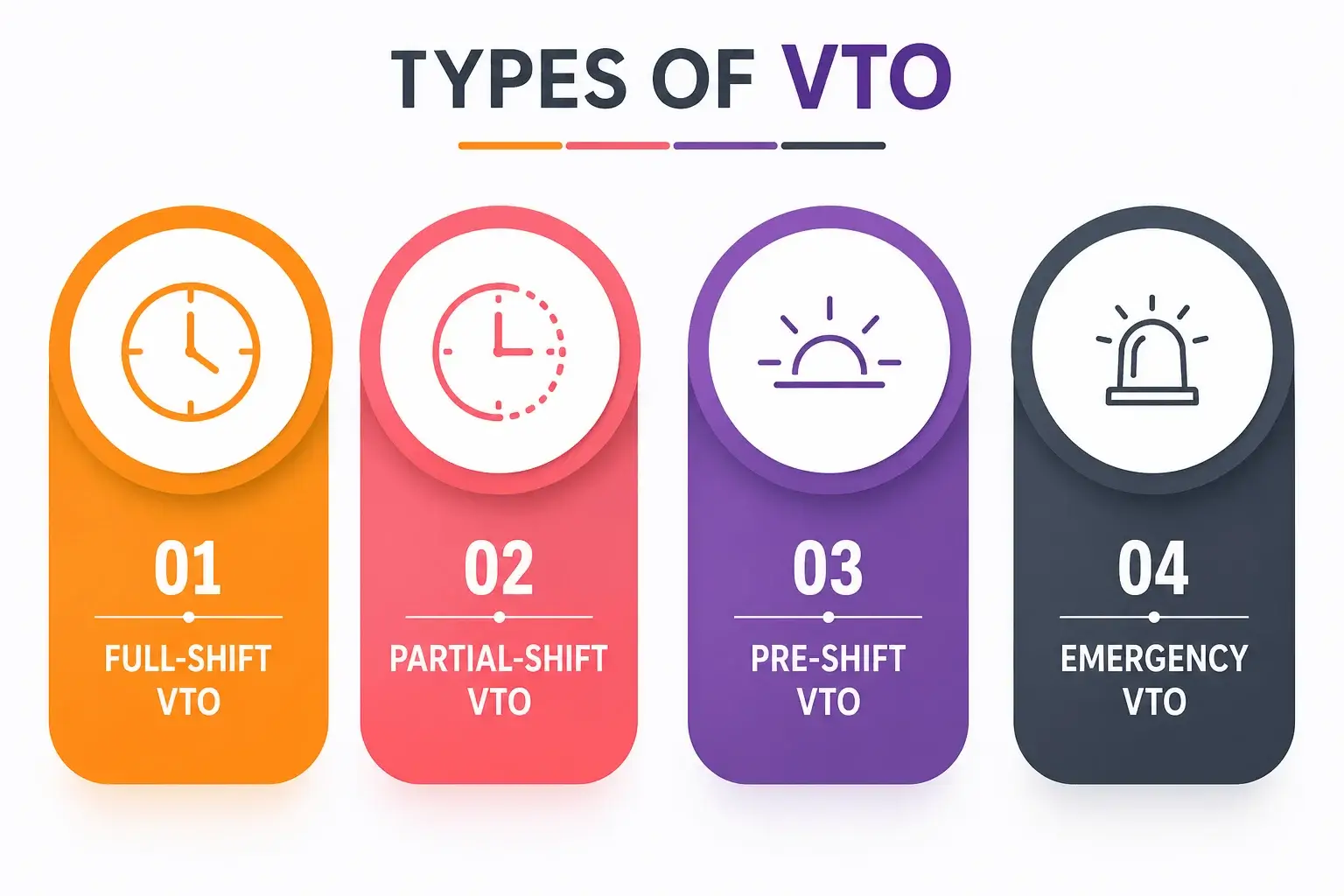
There are 4 types of VTO, which we have described below:
1) Full-Shift VTO: Employees take an entire scheduled shift off.
2) Partial-Shift VTO: Employees leave before their shift ends.
3) Pre-Shift VTO: The company offers VTO before employees arrive at work.
4) Emergency VTO: Businesses may offer VTO during unexpected slowdowns or operational disruptions.
Who is eligible for VTO?
Eligibility varies by employer. Common requirements include:
Employees who are:
- Being scheduled for a shift
- Maintaining good attendance
- Meeting performance standards
- Working in departments where staffing exceeds demand
Also Check: How Reduced Hours Impact Pay Cycles
Do you get paid for VTO?
You get paid for VTO depends on your employer’s policy. In most workplaces, VTO is unpaid, meaning employees can choose to leave work early or take time off when business demand is low, but they are only paid for the hours they actually work. However, some companies may offer paid VTO as an employee benefit or allow workers to use their accrued PTO to cover the missed hours and maintain their regular pay. Because VTO policies vary by employer, it is important to check your company’s handbook or speak with HR to understand whether your VTO hours will be paid or unpaid.
Is VTO paid or unpaid?
Among the varieties of pay structures, some involve unpaid time off to reduce the employer’s cost, and paid volunteer time off when employees volunteer at organizations that are approved.
Unpaid hours are quite different from a regular paid workday and, as a result, are not accounted for in the same way as paid volunteer hours. They will not affect your PTO balance like regular PTO would.
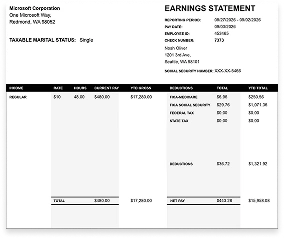
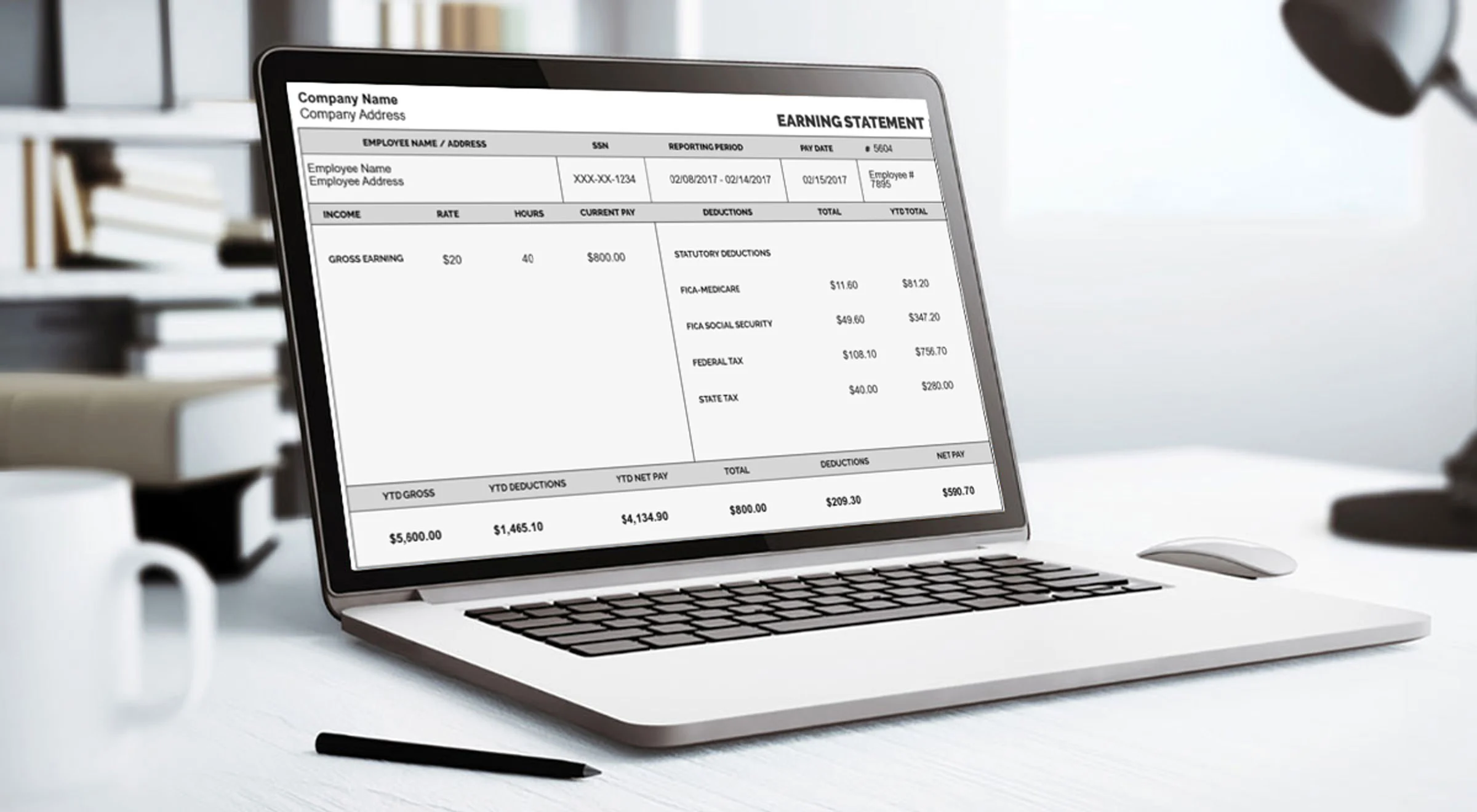
Unpaid hours are reflected on your paycheck stub as unworked hours, and your gross pay will be decreased because of this. The hours you work as a part of your employer’s official giving back program (paid volunteer time) will be reflected on your pay stubs as hours worked at your full rate of pay.
If you want to know more about how your hours are shown, you can always check by logging into your employer’s HR portal or by having a word with your company’s human resources department.
How does an Employee Use Volunteer Time?
Volunteer Time Off (VTO) is an employer-sponsored benefit that allows employees to take paid or unpaid time away from work to participate in charitable, nonprofit, or community service activities. Companies typically provide a set number of VTO hours or days each year, which employees can use to volunteer with approved organizations. To use VTO, employees usually submit a request, receive managerial approval, and then participate in the volunteer activity during their scheduled work hours. Once approved, the time is recorded separately from vacation or sick leave. VTO programs help employees give back to their communities while supporting corporate social responsibility initiatives and improving employee engagement.
VTO & Other types of leaves
In order to fully grasp voluntary time off, one must be able to differentiate it from other types of leave that are typically found in most workplaces. Although they may seem alike at first glance, VTO has a very different aim in labor management, which makes it stand out even from regular leave alternatives. Such discrepancies determine the manner in which VTO is put into practice, recorded, and experienced by the employer/employee in the shift system of the organization.
- VTO vs PTO: Unlike paid time off for volunteering, which is an employee benefit applied at the discretion of the worker for non-public needs, VTO is unpaid and is typically granted at some point of precise enterprise conditions.
- VTO vs Mandatory time off: While mandatory break time calls for employees to leave for a specific period of time, VTO remains optional, and the worker organization takes precedence.
- VTO vs Flourghs: A furlough is a mandatory temporary layoff, whereas a VTO represents a voluntary option that can be granted or denied to employees without affecting their employment status.
- VTO vs Flextime: Flexible scheduling typically involves rearranging picture hours while maintaining normal hours of labor, while at the same time reducing the VTO to the duration of total running hours.
- VTO vs Leave absence: Absence papers are usually long preparations for precise non-public scientific motives, while VTOs are usually of short duration and tied to enterprise wishes all at once.
The difference between VTO and different types of departures is mainly important when management systems and reporting systems are introduced. Many bodies of worker analysis platforms now include special monitoring capabilities for VTO, recognizing its special role within the broader panorama of employee attendance and scheduling regulations. This specialized monitoring enables businesses to measure the impact of VTO packages on effort costs, worker enjoyment, and operational performance.
Also Check: Managing Labor Costs and Staffing Fluctuations
Common industries that use VTO
- Warehousing: Distribution centers frequently experience fluctuating order volumes.
- Manufacturing: Production schedules often change based on customer demand.
- Retail: Sales can vary significantly during different seasons.
- Hospitality: Hotels and restaurants may experience unpredictable traffic.
- Customer Service: Call centers use VTO when call volumes decrease.
VTO benefits for Employees
Usually, employers implement voluntary time off mainly as a tool to adjust to the changing demands of their business. Still, this kind of time off can also be very beneficial to employees. Since voluntary time off is optional, it is a great way for employees to have one more option of getting flexible work schedules, which they can use to have a better balance between work and personal life. If team communication systems are really good, VTO can be a chance for employees to take care of their personal things at the same time getting their jobs done.
- Enhanced Work-Life Balance: VTO allows additional opportunities for non-public time when personnel want it the most, without exhausting their regular PTO allotment.
- Increased Control: The voluntary nature of VTO gives employees more control over their agenda, which contributes to greater job satisfaction.
- Reduced Burnout: Accessing an extra day off can help you save burnout at some point in high-pressure environments or particularly demanding work intervals.
- Job Security: When used as an opportunity for layoffs in the course of a recessionary period, VTO allows employees to preserve jobs while still giving them some control over the impact.
VTO benefits for Employers
Introducing a well-planned voluntary time off program can bring various benefits to a corporation that go several times beyond mere cost-cutting. Labor cost control, which is one of the main reasons, is just one benefit among many. First, there are strategic benefits with the flexibility of staff, better employee relations, and operational optimization. In sectors where industries are competitive and demand changes often, such types of benefits can radically improve competitiveness by making scheduling of shifts much more dynamic.
- Labor Cost Management: VTO lets businesses align labor costs with actual business enterprise demand, reducing unnecessary employees for periods of slow intervals without resorting to layoffs.
- Avoiding Layoffs: During a momentary business downturn, VTO presents the opportunity for layoffs, which helps retain trained employees while reducing immediate costs.
- Improved Resource Allocation: By customizing employee titles through VTO, groups can allocate human resources more effectively to tasks.
- Enhanced Work Culture: Proposing a VTO as a preferred alternative to implementing mandatory reductions demonstrates recognition for employee autonomy and may enhance work morale.
Employers can also maintain accurate payroll records during such adjustments using relevant pay stub template to clearly document employee earnings and deduction in paystub.
Best Practices Before Taking VTO
Below are the best practices before taking VTO:
I) Review Your Budget
Can you afford a smaller paycheck?
II) Understand Company Policies
Know how VTO affects benefits and scheduling.
III) Consider Upcoming Expenses
Avoid taking excessive VTO if major bills are approaching.
IV) Evaluate Personal Needs
If you need rest or personal time, VTO may be valuable.
V) Maintain Financial Stability
Balance flexibility with income requirements.
Also Check: Common Small Business Payroll Mistakes
Key Takeaways
Grasping what VTO stands as a must-have for employees and employers alike, given the current trend of a flexible work setting. In fact, VTO is a scheme that employees can use to take time off work voluntarily in most cases, not getting paid, at a time when the company does not need much input from them. First, it is a handy method for employers to keep labor expenses under control. On the other hand, it is a source of more freedom for the employees and an improvement of their work-life balance.
As workers’ expectations change, VTO could become a key part of a complete shift management plan. Companies that create advanced, employee-focused VTO programs will get a competitive edge through better operational flexibility, optimized cost management, and deeper employee relationships.
Using solutions like appropriate paystub creator to maintain accurate payroll records and manage compensation details, businesses can ensure transparency even during VTO periods and enhance the overall employee experience.
FAQs
1) What does VTO mean?
VTO stands for Voluntary Time Off, a workplace policy that allows employees to take unpaid time off when business demand is low. Employers may offer VTO to reduce labor costs without requiring layoffs or mandatory schedule cuts. Employees can choose whether to accept or decline VTO, making it a flexible option for managing staffing levels.
2) What is the meaning of VTO?
Voluntary time off is a category of leave that gives your employees the option to take unpaid time off work at their discretion.
3) Do you get paid for VTO at Amazon?
No, Voluntary Time Off (VTO) at Amazon is unpaid.
4) What is V T O?
V T O is known as Voluntary Time Off or Volunteer Time Off.
5) What does VTO mean at work?
VTO stands for Voluntary Time Off. It is a workplace policy that allows employees to take time off from work voluntarily, usually when business demand is low. Depending on the employer’s policy, VTO may be paid or unpaid.
6) Do you get PTO when you take VTO?
You do not earn (accrue) Paid Time Off (PTO) or vacation hours while taking Voluntary Time Off (VTO).
7) Can I still work if I took VTO?
No, you cannot do pictures while in VTO. Voluntary time off (VTO) is unpaid leave. Once you’re given that, you’re removed from the energetic schedule, and the device often saves you clocking.
8) Does VTO affect overtime?
Time should be recorded in whole hour increments with 1 or 2 hours, no longer 1. five hours. When an employee uses VTO and is paid, an hour paid as VOLPD can be charged as earnings on the employee’s paycheck. Because VTO hours are not labored hours, VTO hours are not counted in overtime calculations.
9) Who is eligible for VTO?
A few businesses offer VTOs to all employees, while others restrict them to full-time employees or those who have completed a probationary period.
10) Why would a company offer VTO?
A company may offer VTO to reduce labor costs, manage slow business periods, avoid overstaffing, and balance workforce needs without requiring layoffs. It gives employees the option to take time off voluntarily when less staff is needed.