.png)


 Chat with us now!
 Send Email!


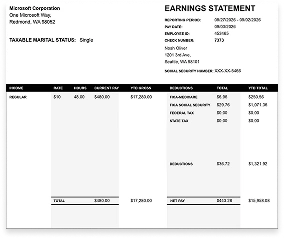
If you’re wondering what is a deduction on a paycheck or what deductions are on a paycheck, you’re not alone. Many employees also ask how much tax is deducted from a paycheck, and the answer depends on several factors, including income, filing status, and benefits enrollment.
At StubCreator, we understand that a pay stub is vital to managing finances effectively, especially the deductions section. If you want to use our platform, we recommend you begin your journey with our free pay stub generator, which will give you access to a free pay stub.
In this blog, we will learn all about payroll deductions, the types of deductions, how deductions appear on your payroll, and how to calculate them. So, let’s get started.
Defining Pay Stub Deductions
The amounts withheld from an employee’s gross pay by their employer to cover taxes, benefits, and other obligations. Understanding payroll deductions meaning is essential for employees to accurately calculate their net pay. It includes:
- Taxes
- Insurance premiums
- Retirement contributions
- Other benefits
Understanding paystub deductions is crucial for employees to calculate their net pay and plan their finances accordingly and accurately. We view the importance of transparency in a pay stub. Now, you can be assured that your financial statements are accurate, and you can make informed decisions about spending and saving habits using our platform.
How Do Pay Stub Deductions Work?
Employees receive information about their deductions, which is different from the sources used in the pay stub process. Pay stub taxes are based on the employee’s W-4 form, which is required to assist the pay stub department in calculating tax withholdings for an individual.
Employers with staff in states like Washington should note specific rules using a payroll calculator. Washington can help account for local tax rates and state-specific requirements.
The Pay Stub department should set up a standard procedure for gathering information on pay stub deductions. Employers who have staff in multiple geographic locations might need to adjust their pay stub process to withhold for various state and local tax rates.
Understanding tax and deductions together is key to accurate payroll processing. The pay stub department should set up a standard procedure for gathering information on pay stub deductions. Employers with staff in multiple geographic locations might need to adjust their pay stub process to withhold for various state and local tax rates. For example, employers with staff in states like Washington should use a payroll calculator for Washington to accurately account for local tax rates and state-specific requirements.
As complexity increases, small businesses might have a more sophisticated pay stub system or choose to outsource it to a trustworthy provider.
What are Some Common Examples of Incorrect Payroll Deductions?
An incorrect payroll deduction might occur due to errors in calculation or misclassification of employees.
Some examples of incorrect payroll deductions are:
- Deducting more taxes than required.
- Unauthorized deductions for tools.
- Failing to deduct mandatory taxes or benefits.
What are pre-tax deductions?
A pre-tax deduction is the amount of money deducted from an employee’s gross pay before tax is calculated. Generally, these deductions are agreed upon when the employee starts working for the employer. Because these deductions are taken before tax, they lower the employee’s taxable income, reducing the amount owed in federal income taxes.
Pre-tax deductions save employees money by lowering their taxable income, and they also save employers money by reducing the costs of Federal Unemployment Tax (FUTA) and state unemployment insurance.
Simply put, it refers to money deducted from your gross pay before any taxes are calculated.
Type of Pre-Tax Deductions
Several types of pre-tax deductions have become effective, but here, we are only going to mention the main ones.
- Life Insurance: For example, your employer offers you a group term life insurance plan. In this scenario, the employer-sponsored premiums that you pay are considered as a pre-tax deduction for federal income tax withholding, FUTA, and the Federal Insurance Contributions Act (FICA). The employee will only receive their tax benefits on premiums for the first $50,000 of the policy.
- Health Insurance: If your employer is sponsoring a health care plan, you can contribute towards the cost of premiums as a pay stub deduction, meaning you will not have to pay taxes on them because employees receive their tax benefits when the amount is withheld from their gross pay; they can’t claim it as a medical deduction on their 1040 Form.
- Retirement Contribution: If you’re an employee who is contributing to a pre-tax retirement plan, these are considered pre-tax deductions. As for 2026, you can contribute up to $24,500 to these retirement plans, meaning up to $24,500 in tax deductions for the year.
- Disability Insurance: Long-term disability insurance premiums can be covered with pre-tax dollars, allowing you to pay for the crucial insurance plan before taxes are withdrawn from your gross pay. The negative impact of doing this is that you will have to pay taxes on the disability payouts by yourself.
Pre-Tax Deductions V/S Pay Stub Deductions
Pre-tax deductions and pay stub deductions are similar—they both deduct a particular amount of money from your gross pay, reducing your net income. A payroll deduction is explicitly the kind of amount withheld for federal income tax purposes, benefits contributions, and any garnishment deductions. Pay stub deductions will be specified as either voluntary or mandatory deductions.
Pay stub deductions shall be specified as either voluntary deductions, such as retirement contributions or health insurance, or mandatory deductions, like federal and state taxes.
What are post-tax deductions?
Also known as after-tax deductions, these are amounts deducted from an employee’s paycheck after tax withholdings. Generally, these deductions are made from the net income, meaning it is the amount the employee gets to take home after deductions have been made.
Unlike pre-tax deductions, post-tax deductions do not minimize an employee’s taxable income. As a result, they have zero impact on the income tax the employee owes. Though some post-tax deductions, such as charitable donations, are voluntary, bonus payments are not. They all come under the category of mandatory, which is also known as non-optimal post-tax deductions.
Common post-tax deductions include:
- Roth 401(k) contributions
- Life Insurance premiums
- Retirement contributions
- Disability insurance
- Health insurance policies
- Union dues
- FSA (Flexible Spending Account) contributions
Types of Post-Tax Deductions
Just like pre-tax deductions, there are several types of post-tax deductions. But here, we are only going to mention the main ones.
- Voluntary Retirement Contributions: Examples of post-tax contributions in U.S. retirement accounts, which include Roth 401(k) and Roth 403(b) plans. Contributions are made with post-tax dollars and do not provide an immediate reduction in taxable income.
- Union Dues: Employees in labor unions might have union dues deducted from their paychecks. Union dues are generally post-tax deductions.
- Charitable Donations: If an employee makes a charitable contribution through workplace-provided programs, the contribution might be deducted from the employee’s after-tax income.
- Schedule A Deductions: These deductions might include medical and dental expenses, state and local taxes, mortgage interest, and job expenses.
What are the types of Payroll Deductions?
Mandatory Deductions:
- Federal Income Tax (FIT): Based on the employee’s W-4 and earnings
- State & Local Income Tax: Varies by state/locality
- Social Security Tax (OASDI): 6.2% of wages (up to the annual wage base)
- Medicare Tax: 1.45% of all wages (plus 0.9% Additional Medicare Tax for high earners)
- Court-ordered garnishments: Child support, alimony, creditor garnishments
- Tax levies: IRS or state tax levies
Voluntary Deductions:
- Health, dental, and vision insurance premiums
- 401(k) / 403(b) retirement contributions
- HSA / FSA contributions
- Life and disability insurance premiums
- Union dues
- Charitable contributions
- Employee stock purchase plans (ESPP)
- Commuter/transit benefits
How Can You Calculate Pay Stub Deductions?
With StubCreator’s payroll deduction calculator, you can quickly generate pay stubs, calculate deductions, and ensure financial transparency.
Steps to Calculate:
- Collect Information: Collect all the essential information, such as gross pay, tax withholdings, and voluntary deductions from the employee’s pay stub.
- Access Our Pay Stub Generator for Free: Visit StubCreator’s official website to access our generator. Then, insert the required information into the fields and generate your pay stub.
- Calculate Deductions: Insert gross pay and other details into the generator. It will automatically calculate various deductions, including taxes, deductions, insurance premiums, and retirement contributions.
- Preview Result: Once all the information has been filled into the required fields, carefully preview each field and make edits if necessary. Our built-in calculator will give you a breakdown, making it easy for you to understand each deduction.
- Generate Pay Stub: Once you are satisfied with the previewed result, click the Submit button to generate your pay stub.
By choosing the free paystub template, you can simplify your paystub process and reduce errors to zero.
How much Taxes Deducted from Paycheck?
Typically, it’s estimated that employees have approximately 29%-33% of their gross remuneration deducted for taxes, including federal income tax, FICA taxes, and state/local taxes. The precise rate is dependent mostly on the state of your employment and residence.
Most of the federal income tax is paid out in this tax bracket, and it is determined on a progressive scale using rates between 10% and 37% based on one’s taxable income. Besides that, 7.65% is used for FICA, of which 6.2% is allocated for Social Security from earnings up to $184,500 and 1.45% for Medicare. The employer contributes a similar amount separately. If your annual income goes beyond $200 000, you will be subject to an additional 0.9% Medicare surtax.
The amount that states take as tax differs greatly according to the place. Some of them do not take anything, while others tax up to 13%, so your location is quite a significant factor in your ultimate net pay. Your W-4 can be used for lessening your withholding, get involved in pre-tax 401(k), HSA plans, or claiming tax credits, which lead to a lower taxable income the employer withholds on.
Key Takeaways
Understanding payroll deductions isn’t just about knowing where your money goes; it’s about taking control of your financial picture.
Every deduction on your pay stub, whether mandatory or voluntary, plays a role in your overall compensation. Federal, state, and local taxes fund public services you rely on daily. FICA contributions build your future Social Security and Medicare benefits. And voluntary deductions from health insurance premiums to 401(k) contributions are often among the most powerful tools available for protecting your health and growing long-term wealth.
If you need a clear breakdown of your earnings and deductions, a paystub generator free tool can help you create professional pay stubs.
People May Ask
1) What are common pay stub deductions?
Pay stub deductions typically include federal and state taxes, Social Security, Medicare, and benefits like health insurance or retirement contributions.
2) How are tax deductions calculated on a pay stub?
Tax deductions are calculated based on the employee’s earnings, tax filing status, and withholding allowances listed on their W-4 form.
3) Can pay stub deductions vary by state?
Yes, state-specific taxes like income tax, disability insurance, or other local taxes may apply depending on where the employee works.
4) What should I do if my pay stub deductions seem incorrect?
Review your deductions with your employer or payroll provider to verify accuracy and address any discrepancies promptly.
5) What are deductions on paycheck?
Deductions on your paycheck are amounts subtracted from your normal profit (gross pay) to cover obligations such as taxes, benefits, etc. These reduce your pay to your final take-home amount (net pay).
6) What is phase 3 payroll?
Phase 3 payroll includes providing comprehensive solutions in digital transformation across HR, Payroll, and Finance.
7) What is payroll deductions definition?
Payroll deductions are the amounts subtracted from an employee’s gross wages before issuing their net pay.
8) What are the deductions in payroll?
A payroll deduction is an amount withheld from an employee’s gross earnings by the organization. These subtractions shape the difference between gross pay and net pay. They are used to cover taxes assessed by the government, social protection contributions, worker benefits, and authorized voluntary fees.
9) What is a payroll checklist?
A complete payroll is important to ensure all payroll games are played accurately and on time. It facilitates human resources and allows payroll specialists to manage the complex process of payroll, which includes calculating payroll, managing deductions, and ensuring compliance with tax regulations.
10) What is an example of a payroll deduction plan?
401(ok) plan, IRA, or other retirement savings plan contributions. medical, dental, or imaginative and predictable health insurance plans. Flexible spending account or pre-tax health savings account contributions.