.png)


 Chat with us now!
 Send Email!
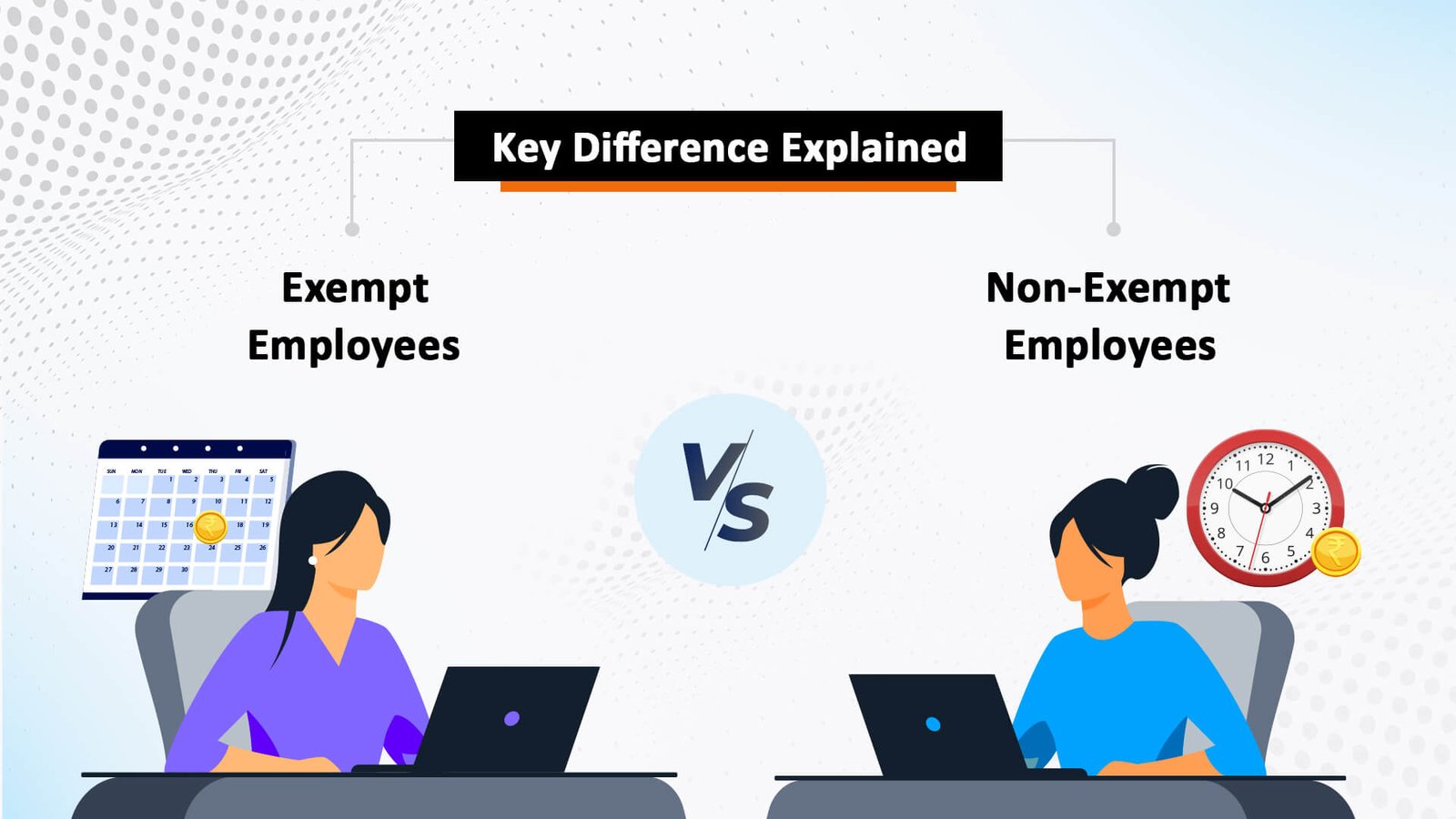
Understanding how employees are classified isn’t just an HR formality; it directly affects pay, overtime, and compliance. One of the most commonly misunderstood topics in labor law is exempt vs. non-exempt employee classification. Whether you’re an employer trying to stay compliant or an employee checking if you’re being paid fairly, knowing the difference can save you from costly mistakes and confusion.
At its core, the exempt vs. non-exempt distinction determines who is eligible for overtime pay, how wages are calculated, and what must appear on an employee’s pay record. This is where accurate documentation becomes essential. Using a reliable paystub generator helps businesses clearly break down earnings, overtime, and deductions, making employee classification more transparent and easier to manage.
In this guide, we’ll explain the key differences between exempt and non-exempt employees in simple terms, explore how each classification impacts pay and overtime, and help you understand why getting it right matters for both legal compliance and payroll accuracy. Let’s get going.
Exempt Employees Meaning
An exempt employee is someone who is paid a salary above a certain level and they perform a specific level of work. These employees’ roles involve executive and professional duties that require independent judgment and decision-making authority.
To qualify as an exempt employee, an employee needs to meet both earnings and job duty requirements. The job description involves managing others and advanced knowledge in a specialized field.
Examples of Exempt Employees
Below are the examples of exempt employees:
- Chief financial officer
- Executive director
- HR managers
- IT managers
- Marketing directors
Pros and Cons of Exempt Employees
Below, we have mentioned the pros and cons of exempt employees:
| Pros | Cons |
|---|---|
| Obvious payroll costs, but with fixed salaries | High base salary requirements |
| No overtime calculation | Limited ability to reduce compensation during slower periods |
| Greater scheduling flexibility | Potential for employee burnout |
| Attracts experienced professionals | Ensures positions meet the exemption criteria |
| Simplified payroll processing | Firm culture requires careful monitoring for the prevention of overwork |
Exempt employees are salaried workers who are not eligible for overtime pay and are typically employed in executive, administrative, or professional roles. For exempt employees in California, employers must follow strict state labor laws, including minimum salary thresholds and specific job duty requirements.
Proper documentation of earnings is essential, and using a professional paystub template helps clearly display salary details, deductions, and benefits while staying compliant with California payroll regulations. Accurate pay stubs also make it easier for exempt employees to track income and for employers to maintain transparent payroll records.
What is a Nonexempt Employee?
A Non-exempt employee is someone who is protected by FLSA wage and hour laws. They’re usually paid an hourly rate or are paid below the threshold. These employees must receive at least the minimum wage for all hours worked, plus overtime pay for any hours worked in addition to overtime pay for beyond 40 hours in a workweek.
Examples of Non-Exempt Employees
Below are examples of non-exempt employees:
- Administrative assistants
- Customer service representatives
- Retail associates
- Manufacturing workers
- Data entry workers
Pros and Cons of Non-exempt Employees
Below, we have mentioned the pros and cons of exempt employees:
| Pros | Cons |
|---|---|
| Flexibility to scale labor costs | Administrative burden of tracking hours and calculating overtime |
| Employees receive fair compensation | Higher labor costs in peak periods |
| Clear wage and hour protection reduces compliance risks | Potential for payroll errors |
| Overtime pay provides additional earnings opportunities for employees | Complex payroll tax calculations |
Non-exempt employees are workers who are entitled to minimum wage and overtime pay under labor laws. Their earnings are typically calculated on an hourly basis, meaning their total pay can change each pay period based on hours worked, overtime, and shift differentials. Because of this variability, it is essential to have clear and accurate salary records.
Differences Between Exempt and Nonexempt Employees
| Exempt Employee | Nonexempt Employees |
|---|---|
| Will not be paid less than $684 per workweek on a salary or fee basis through June 30, 2024. As of July 1, the pay per workweek is $844, and by January 1, 2025, it is $1,128. | Be paid at least minimum wage for all hours worked and overtime pay for hours over 40 per workweek. |
| The main duty require use of advanced skills. | The main duty does not require advanced skills. |
| Little direct supervision. | Directly supervised. |
| Ability to make recommendations, although may not provide final approval. | Employees working in positions where tasks are routine. |
What is Exempt vs Nonexempt Employee Compensation?
One of the main differences between exempt and non-exempt workers is their compensation method. Exempt employees, in most cases, fall outside the protections of the Fair Labor Standards Act (FLSA), which sets minimum wage and overtime pay requirements. Instead, exempt employees are typically paid on a salary or fee basis, meaning they are entitled to their previously agreed-upon salary each workweek, regardless of how many hours or days they worked. For accurate salary documentation and pay records, many employers rely on tools like StubCreator to generate clear and compliant pay stubs.
Except for a few cases for instance, the first and last week of work, unpaid FMLA leave, etc., an exempt employee has to get the full salary for any week during which he/she has done any kind of work no matter how many hours or days they have worked, in these terms.
Alternatively, non-exempt employees may be paid on an hourly, piece, salary, commission, or other basis, provided that the employee is paid at least the federal minimum wage for each hour worked and an overtime rate less than one-half the employee’s regular pay rate.
Wage and Hour Laws Of Exempt vs Nonexempt
Employment businesses need to continually update themselves on the federal, state, and local wage and hour laws that are applicable to them. The Fair Labor Standards Act (FLSA) sets the bar for employee classification, pay (such as minimum wage and overtime), and recordkeeping requirements for employers who are covered by this law.
Currently, the federal minimum wage rate is equal to $7.25 per hour. Employees covered under the FLSA must also receive overtime pay at one and a half times their regular rate if they work more than 40 hours a week. However, it is important to note that many states have their own wage and hour laws that employers must follow.
Consequences of Exempt and Non-exempt Workers
Misclassifying an employee may result in fines and penalties, which may also include garnishment of unpaid wages. Make sure you follow the following best practices to avoid costly consequences of employee misclassification:
- Understand the rules and regulations outlined by the FLSA regarding exempt vs non-exempt employee classifications.
- Turn your attention to your state, as various states have their own regulations.
- Review, update, and use the job description to make sure employees performing similar duties are classified consistently.
- Don’t leave best practices to chance.
What is the Exempt Employees Fair Labor Standards Act?
The Fair Labor Standards Act (FLSA) states that exempt employees refer to those workers who are not eligible for minimum wage and overtime pay protections. Such workers are generally compensated on a salary basis and have to satisfy specific job duties and salary criteria established by the U.S. Department of Labor.
Exempt employees generally cover roles such as executive, administrative, professional, computer, and outside sales. An employee is required to be paid at least the minimum salary limit and mainly carry out management, independent judgment, or specialized knowledge tasks to be considered exempt.
Can You Re-classify an Employee from Exempt to Nonexempt?
From time to time, employers might need to re-classify employees due to changes in job duties. The following are the main guidelines to consider when reclassifying employees:
Nonexempt to Exempt
Most employees are classified as non-exempt. Very few people meet the necessary criteria to be considered exempt. When changing an employee’s classification from non-exempt to exempt, employers must first ensure that the employee meets all applicable exemption criteria.
- Apply federal and state taxes: Make sure the employee qualifies for exemptions under federal and applicable state laws. Exempt employees generally must be paid a predetermined salary regardless of the quantity or quality of work and must meet minimum wage and duties requirements to be exempt. If there is any doubt as to whether the employee qualifies for the exemption, the employee should be classified as non-exempt.
- Communicate the changes in advance: Employers must notify employees in advance and in writing of the classification change, and explain how the change will affect the employee. For example, employers should explain that as an exempt employee, the employee will receive a set salary for each week worked and will not be entitled to overtime pay. Employers should also explain any revised procedures for absences and reductions in pay.
- Avoid improper deductions: Employers are limited in the types of deductions they can take from an exempt employee’s wages. While employers may deduct deductions from an employee’s pay for the first or last week of work if the employee did not work the entire week, or when an exempt employee is absent for one or more full days for personal reasons, other deductions are generally prohibited.
Exempt to Non-Exempt
The following guidelines assume that the employee was initially properly classified as exempt. See the Correcting Past Misclassifications section below for a discussion of when an employee is misclassified as exempt.
- Review classification regularly: Employers should regularly review the classification of exempt employees to determine whether the employee still qualifies for the exemption. Changes in an employee’s job duties should also be reviewed. If an exemption no longer applies, the employee must be immediately reclassified as non-exempt and paid overtime in accordance with federal and state law.
- Communicate the changes: As with any change in employment conditions, employers must notify employees in advance and in writing, explaining the impact of the change. Employers can address the perception that changing from exempt to non-exempt is a demotion by detailing the benefits of being classified as non-exempt, such as receiving overtime pay whenever the employee works more than 40 hours in a work week.
- Be ready for questions: Employees may have questions about timekeeping, benefits, and other issues related to the new classification. When notifying the employee about this change, let them know who they can contact with questions.
Key Takeaways
Understanding the differences between exempt v non exempt employees is essential for both employers and workers to comply with labor laws and avoid costly payroll mistakes. These classifications directly impact overtime eligibility, pay structure, and pay protections under the Fair Labor Standards Act (FLSA). Using accurate payroll systems or a Online paystub creator helps businesses document wages correctly and maintain compliance. Misclassifying employees can result in fines, back pay, and legal issues, making it important to implement the correct classification from the beginning.
By clearly identifying whether a role is exempt or non-exempt, businesses can accurately manage payroll, properly track work hours, and maintain transparent compensation practices. For employees, knowing their classification helps ensure fair pay and workplace rights. Staying informed and using reliable payroll tools can make employee classification and pay management simpler, more accurate, and legally sound.
FAQs
1) What is the exempt non-exempt definition?
Exempt employees typically hold administrative, professional, or executive positions. They are exempt from the overtime rules of the Fair Labor Standards Act (FLSA) and, therefore, are not entitled to overtime pay. Non-exempt employees are typically paid hourly and perform more manual or technical duties.
2) What is the minimum salary for exempt employees?
U.S. The DOL has set a $684 minimum weekly wage for exempt employees. Note that this amount may change in the future under a proposed rule that would increase the salary limits for the FLSA’s white collar and highly compensated employee exemptions. Different states may have different limits.
3) Can Non-exempt employees be salaried?
Although non-exempt employees are typically paid hourly, sometimes they may be paid on a salary, commission, or piece rate basis. However, regardless of pay basis, all non-exempt employees must receive FLSA-mandated overtime pay for hours worked more than 40 in a workweek. Thus, a salaried non-exempt employee’s hours must still be tracked each work week to determine when they are eligible for overtime pay.
4) What makes an employee exempt vs nonexempt?
An employee’s classification is generally determined by considering how much an employee is paid, how an employee is paid, and the individual’s primary job responsibilities. Exempt employees often require advanced knowledge or specialized skills to perform their primary duties, while non-exempt employees are focused on more routine work.
5) Are Independent contractors exempt or nonexempt?
Independent contractors are not considered employees and are not covered under FLSA guidance on this topic. However, you should be aware of the tax laws and other regulations affecting independent contractors in your workplace.
Also Read:
Hobby Lobby Employee Login: Step-by-Step Guide
How Long Is a Business Day: Definition, Meaning And More
How Many Hours is Part-Time? A Guide For Employers And Employees
FAQ's
Is it better to claim exempt or non-exempt?
+
It depends on how you work and what’s most important to you. Among other differences, exempt employees are often paid a set salary and enjoy superior benefits or job security, while non-exempt employees qualify for overtime, which can inflate their total income when working extra hours.
What does exempt mean for a job?
+
The exempt job designation means the employee is not entitled to overtime pay under the Fair Labor Standards Act (FLSA). Salaried employees generally perform executive, administrative, or professional duties.
What does it mean when I am not exempt?
+
Nonexempt means you can expect to receive overtime pay (typically at 1.5 times your regular hourly rate) for the hours worked beyond 40 during a workweek.
What is the difference between exempt and non-exempt employees?
+
Where it differs is when overtime kicks in and the pay schedule. Exempt employees are paid a set salary and do not receive overtime, while non-exempt employees generally are considered hourly workers who need to be compensated for any work beyond 40 hours in a given week.
Is it better to be exempt or non-exempt employee?
+
Neither option is universally better. The wages of exempt employees typically remain constant, including benefits, and non-exempt employees have the potential to earn extra money when paid overtime. The right answer is you don’t know; it depends on your job role, load , or financial goals.
What are the three factors to determine exempt or nonexempt?
+
The three main components are: level of salary, basis of salary, and job duties. An employee must meet minimum salary requirements and be paid on a salary basis, among other criteria, and perform certain executive, administrative, or professional duties to be considered exempt.
How does overtime work if you are salaried?
+
Non-exempt salaried staff can get overtime pay when they work more than 40 hours in a week. Salaried exempt workers, however, do not qualify for overtime, no matter how many extra hours they work.