.png)


 Chat with us now!
 Send Email!

Parents may be aware that childcare often takes a big share of their family’s financial pie, which is why there is the FSA for childcare to help decrease this sum before taxes take it away.
For the year 2026, the allowable amount for the household level increased, which is the first time in decades. Those who have to cover the expenses of daycare, preschool, or summer camps because of their job may benefit from this account.
The guide will cover the notion of the FSA for childcare rules, what costs qualify for it, who may use it, and how it works as opposed to the childcare tax credit.
Key Takeaways
- A Dependent Care Flexible Spending Account lets you pay for eligible childcare expenses using tax-free funds.
- The 2026 maximum limit is $7,500 per household, or $3,750 per married filing separately individual, although the limit may be lower depending on the plan your employer offers.
- Daycare services, preschool, before-school care, after-school care, and summer camps qualify for reimbursement as eligible childcare expenses, whereas kindergarten tuition and overnight camps don’t qualify.
- Childcare expenses must be necessary for you, or if married, your spouse, to work or to be actively seeking work, with an exception if the spouse is a student or disabled.
- You are only reimbursed up to the funds that are currently available in your FSA account.
- If you don’t use your funds for eligible childcare expenses, generally you lose the money, so make sure to consider both the grace period and the claims deadline for your FSA account.
- Remember, you can’t be reimbursed for the same expense through both your FSA and by using the child and dependent care tax credit.
What Is an FSA for Childcare?
FSA for childcare refers to the Dependent Care Flexible Spending Account (DCFSA), in which an employer directly allocates an amount out of the employee’s gross salary each pay period, including DCFSA funds that are supposed to be used for the eligible expenses of dependent care.
The system becomes even more advantageous, as deposits are exempt from income and FICA taxation, making the funds non-taxable. Thus, less taxable income means that every dollar contributed costs you less than a dollar received as a take-home salary. It is offered by most of the employers during the open enrollment period, and it appears on the paycheck as an income-exempt deduction.
How Does a Dependent Care FSA Work?
When it comes time for open enrollment, you decide how much money to set aside for the year. Each paycheck deducts a portion of what you contribute to the program. You still have to pay your provider and file a claim with your benefits administrator as per FSA for childcare expenses.
In an important difference from health FSAs, an FSA to pay for childcare only you for the contribution you make. Therefore, if you choose to contribute $7,500 but your first daycare expense arrives in February, you can only be reimbursed for the amount of money you have in the account at the time.
When you proceed with filing your claims for reimbursement, you will need to provide similar information regardless of the plan you’ve chosen:
- The name and address of the provider
- The tax identification number or Social Security number of the provider
- The date of service
- The amount of payment you’ve made, listed on the receipt or invoice
A few plans allow you to create your own bank account for faster reimbursement payment.
Can You Use FSA for Childcare? Eligible Dependent Care Expenses
Yes, you can use dependent care FSA for childcare, as long as the care lets you (and your spouse, if you are married) work or look for work. These are eligible dependent care services under IRS rules.
| Eligible | Not eligible |
| Childcare centers and home-based child care services | Tuition for kindergarten and higher grades |
| Preschools and nursery schools | Overnight camp |
| Before-school and after-school care programs | Summer school and tutoring |
| Summer day camps | Care from your own child under age 19 |
| Employing a babysitter or au pair | Care from someone you claim as a dependent |
| Adult day care for disabled or elderly spouses or other family members | Costs for care while you were not working |
| Service fees | Separately billed meals, supplies, or activity fees |
The most common mistake is claiming kindergarten tuition. The IRS treats it as education, not care, so the claim gets denied even if the same school runs a qualifying after-school program. Day camp counts, but a camp where your child sleeps does not.
Who Is Eligible for an FSA for Childcare?
The eligibility for the dependent care FSA depends on the plan provided by the employer, the family situation, and the members for whom care is being provided.
- Eligible children: In this case, must not have exceeded 13 years of age at the moment of receiving care. The care ceases to be eligible once the child turns 13.
- Disabled spouse or dependent: A qualifying spouse or dependent may be of any age, provided that they live with you for at least half the year and are unable to care for themselves.
- Work requirement: You and your spouse must be working or looking for work. An exception to this requirement applies to a spouse who is either a full-time student or disabled.
- Earned income: Your contributions must not exceed the earnings of your lower-earning partner in the relationship. In the case of a student or disabled partner, he or she is considered to have earned at least 250 dollars a month, or even 500 dollars in the case of two or more qualifying dependents.
- Employer plan: Your employer’s plan has to include this option. Self-employed people are not able to open a dependent care account without the support of their employer.
Dependent Care FSA Limit for 2026
The dependent care FSA limit for 2026 is $7,500 per household, or $3,750 if you are married filing separately. That is up from $5,000 and $2,500 in 2025, following the One Big Beautiful Bill Act.
Two details trip people up:
- The limit is per household, not per person. If you and your spouse both have a plan, your combined contributions cannot exceed $7,500. Electing the full amount at both jobs makes the excess taxable income.
- Your employer decides. The higher limit is allowed, but your plan may still cap you at $5,000 until it updates its plan document. Check your open enrollment materials before you choose an amount for next year.
Higher earners may also face a lower limit if the plan fails IRS nondiscrimination testing.
How Much Can You Save With an FSA for Childcare?
Your tax savings depend on your bracket. Take a parent in the 22% federal bracket. Contributions avoid 22% income tax plus 7.65% FICA taxes (Social Security and Medicare), so each dollar saves about 29.65 cents.
| Annual election | Estimated tax savings |
| $5,000 | About $1,480 |
| $7,500 | About $2,225 |
This is an example, not a promise. State income taxes are not included, and a parent in a lower bracket saves less, while one in a higher bracket saves more. Either way, the savings show up in every paycheck instead of arriving as a refund months later.
FSA for Childcare Rules to Know
The rules for a Care FSA (Flexible Spending Account) are inflexible, with the main rule being that whatever you aren’t able to use in your Care FSA by the end of the plan year is lost.
- There may be grace time: Some employers will allow some leeway after the plan year ends. This is optional for employers, so check your plan.
- There is no carryover: The rules for the Care FSA do not allow carryover of funds the way a health FSA does.
- Claims deadline: Plans will require you to submit claims by a certain date or lose your funds even if you have receipts.
- Locked elections: You cannot make any changes to your contributions during the year unless there is a qualifying life event, such as marriage, adoption, or birth of a child, or unless there is something changing with your care provider or care costs.
- Incurred expenses only: You will only be eligible for reimbursement based on care that you received during the plan year, not care that you are going to receive in the future.
FSA for Childcare or Tax Credit: Which Is Better?
Both can be utilized within the same calendar year, but not for the same expenses. The child and dependent care tax credit provides coverage for up to $3,000 worth of expenses for a single child or up to $6,000 in expenses for two or more children. Amounts paid through the FSA will offset this amount dollar for dollar.
What this means in practice:
- With one child, using the maximum $3,000 FSA amount will equal the total amount of the credit.
- With two children, claiming a $7,500 FSA amount means you have used up all the available expenses for your credit. A $4,000 FSA claim leaves $2,000 of eligible expenses available for the credit.
- Families in higher tax brackets generally benefit more from an FSA, while those in the lower-income group can do better with the credit.
Take the time to analyze your choices before the end of open enrollment.
How to Use FSA for Childcare Step by Step
Here is the complete procedure for using Flexible Spending Account funds to pay for child care.
- Join during the open enrollment period. Determine your annual contribution amount. If you do not join during the open enrollment period, you can only do it outside the period due to a qualifying event in your life.
- Confirm your yearly contributions. Know whether your employer considers the $7,500 limit for the current plan year.
- Pay your child care provider. Most Flexible Spending Accounts reimburse the expenses incurred after your payments are made, so it is important to keep cash management in mind.
- Get the necessary invoices. Ensure you ask for an itemized invoice that meets the requirements of the IRS.
- Submit your claim. Provide the necessary information online or update your claim through the app, and wait for your reimbursement to reach your bank account or payroll.
- Monitor your financial resources. Check if any funds are left in your Flexible Spending Account at the end of the plan year to spend them during your grace period.
Tax Time: W-2, Form 2441, and Your Pay Stub
Your employer records your dependent care benefits in Box 10 of your W-2. When you submit your tax return, you use Form 2441 to identify the care provider and amount of payment. If you forget to include it or report more benefits than can be proven, the difference is considered taxable income.
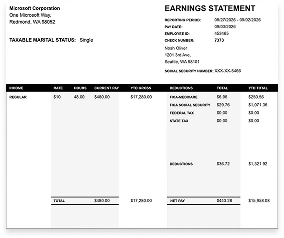
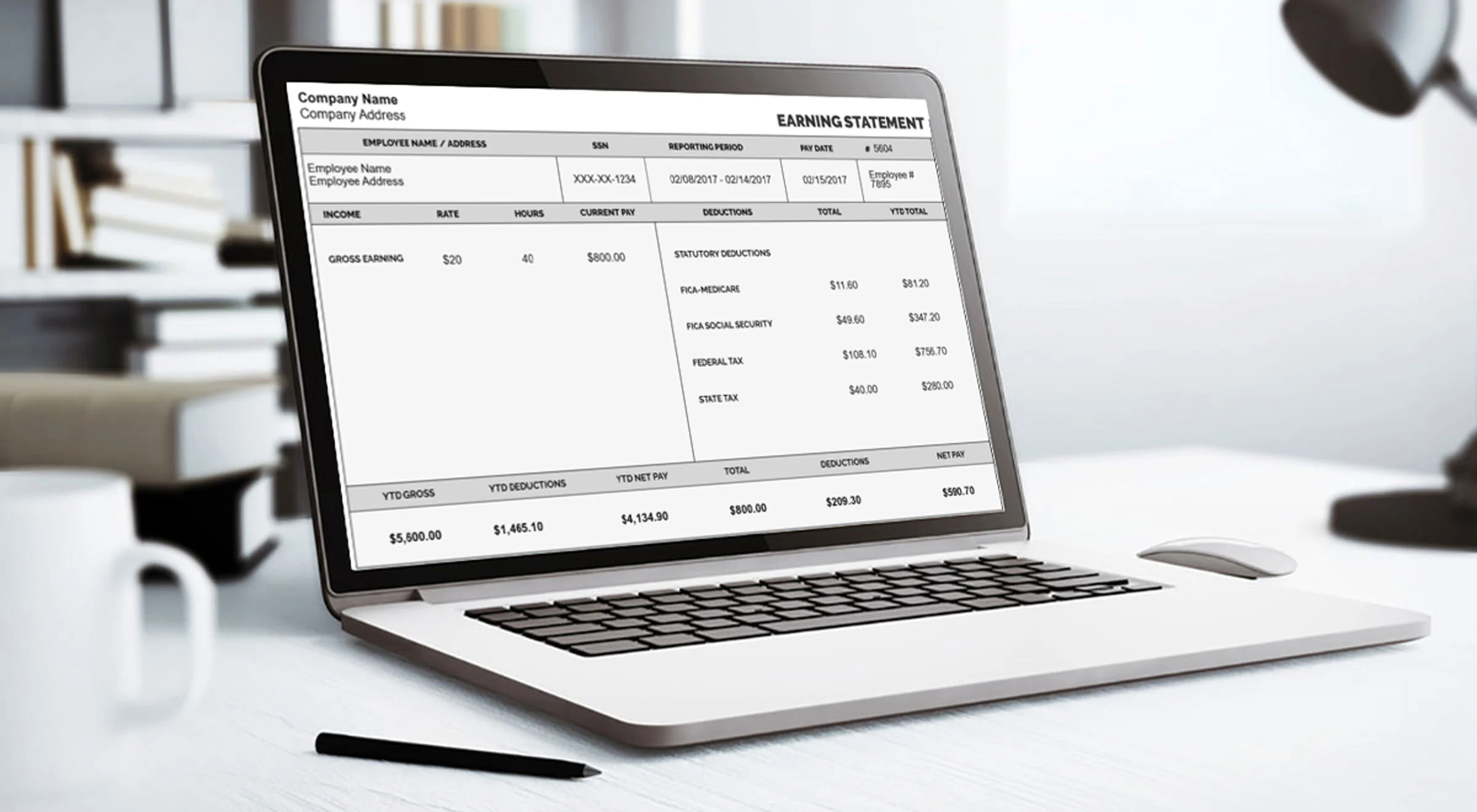
The easiest way to spot errors is from your pay stub. Look for the dependent care deduction mentioned in the pre-tax section, and make sure that the total amount equals the total in Box 10 of your W-2. If there is a discrepancy in the amounts, notify your payroll assistant. Need help creating or checking your pay stub? Use a pay stub generator.
Conclusion
An FSA for childcare is one of the easiest ways that makes it possible for you to save in daycare expenses. Check if your employer has a limit of $7,500, estimate your monthly contribution, save your receipts, and make sure to submit them on time. Compare it before the end of open enrollment with a tax credit to ensure that you make better use of each dollar you have set aside.
FAQ's
Can FSA be used for childcare?
+
Yes, but only if you are using a dependent care flexible spending account (FSA). While a health flexible spending account helps reimburse medical costs, it is not able to reimburse daycare expenses. However, daycare expenses qualify as long as the service is necessary for you to earn income from work..
Can you pay for childcare with FSA before the plan year starts?
+
No. You will only be able to get reimbursed from your flexible spending account for care that you have received, but only up to what you have put into your account.
Does a dependent care FSA roll over?
+
No. Unused money is forfeited at the end of the plan year, unless your employer offers a grace period.
Can I use FSA for childcare if my spouse does not work?
+
No. Money that has not been used from your account will go to waste at the end of the period unless your employer offers you a grace period.
Is a dependent care FSA worth it?
+
Most working parents incur these expenses. An example would be if you fall into the 22 percent federal tax bracket with 7.65 percent for FICA, you can save about $2,225 on $7,500 in expenses.