.png)


 Chat with us now!
 Send Email!
Failure to pay your taxes means the IRS imposes an additional late payment fee of 0.5% for each month, charges interest (which is currently 7%, compounded daily), and sends you various notices. Failure to respond may result in a tax lien being filed against you, a wage garnishment, or even confiscation of your passport in severe cases. However, if you have not filed your tax return, the cost is even greater.
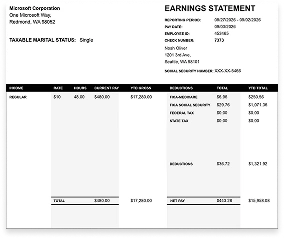
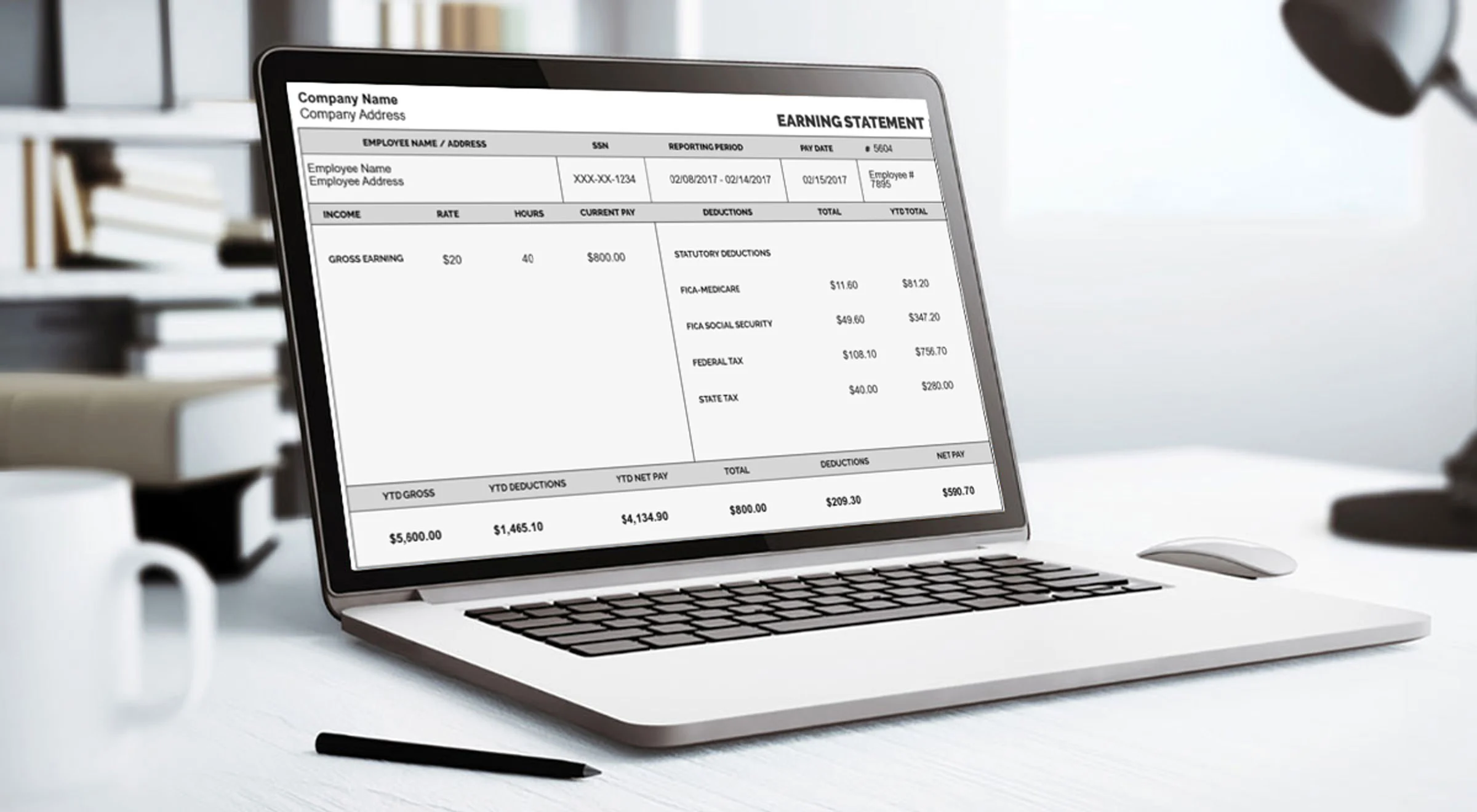
The following guide outlines what consequences you will face in case you fail to pay your taxes, what these penalties will cost you, and what steps to take in case you have some unpaid taxes but cannot afford to pay the entire amount. Keep recent pay records handy, since you may need to show proof of income. A paystub generator can help you put those records together.
Key Takeaways
- It is always more expensive to be late with a filing than late with a payment. Failure to file taxes will result in an additional 5% per month of unpaid taxes; however, the late filing penalty is only 0.5% per month.
- Interest keeps compounding. For any underpayment of tax during Q4 2026, interest will accrue at a 7% rate until you pay everything off.
- The IRS has no deadline for chasing those who failed to file returns. Its assessment statute does not commence until the return is filed.
- You have choices. File your tax return on time even if you cannot pay, but establish a payment agreement. You can reduce your monthly penalties.
What Happens If You Don’t Pay Taxes?
The IRS doesn’t jump straight to seizing your paycheck; there are some conditions if you don’t pay taxes. It works through a series of steps, and each one costs more than the last. Here is the usual order.
| Stage | What happens | Typical timing |
| 1. Due date passes | Late payment penalty and interest start building | The day after the deadline (April 15 for most people) |
| 2. Notices | The IRS mails a bill, then reminders that get firmer in tone | Within weeks to a couple of months |
| 3. Final notice of intent to levy | You get 30 days to pay, set up a plan, or appeal | Several months in |
| 4. Tax lien | A legal claim against your property and assets | After the notices go unanswered |
| 5. Levy or garnishment | The IRS can take money from your bank account, wages, or other assets | After the final notice period ends |
| 6. Passport action | Possible for seriously delinquent tax debt | Last resort, usually for large balances |
What Happens If You Don’t Pay Your Taxes: Penalties and Interest
In addition to the tax you owe, there are three penalties that could be added to it: a failure to file penalty, a failure to pay penalty, and interest.
-
Failure to file penalty
The failure to file penalty is 5% of the unpaid tax per month or partial month the return is late, but no more than 25 percent. In case of being late with the tax return by more than 60 days, there is an additional minimum penalty. It is either a fixed sum of money (exceeding $500 now), or 100 percent of your tax debt.
This is one of those unexpected penalties. Late filing is worse than being late on your payments; that’s why the rule is simple: file the taxes, even if you cannot afford paying right away.
-
Failure to pay penalty
The failure to pay penalty is 0.5 percent of the unpaid tax per month, and no more than 25 percent. The penalty begins to apply from the original due date. An extension does not prevent the penalty from applying since the extension provides extra time for filing, not for paying.
In case you have an installment agreement with the IRS and have filed, the rate drops to 0.25% per month.
Late filing penalty and late payment penalty compared
| Failure to file | Failure to pay | |
| Rate | 5% per month (4.5% when both apply) | 0.5% per month |
| Maximum | 25% of unpaid tax | 25% of unpaid tax |
| Starts | Day after the filing deadline | Day after the payment deadline |
| Extension helps? | Yes, if filed on time | No |
| Combined max | Up to 47.5% of the tax owed (22.5% late filing plus 25% late payment) |
When both penalties hit in the same month, the IRS reduces the filing penalty to 4.5% so the two together are 5%, not 5.5%.
Interest on unpaid taxes
Interest payments are not penalties. An individual taxpayer is charged the federal short-term rate plus 3% points, which is adjusted quarterly. For the last quarter of 2026, the interest rate will be 7% and will accrue on a daily basis. The IRS can waive penalties but not interest.
For Example: what a $5,000 tax bill costs
Say you owe $5,000 and file and pay 5 months late:
- Failure to file: 4.5% x 5 months = 22.5% = $1,125
- Failure to pay: 0.5% x 5 months = 2.5% = $125
- Interest: about $145 at 7% a year
That’s roughly $1,395 in extra charges, and the bill keeps climbing from there.
What Happens If You Don’t Pay Federal Taxes to the IRS?
If the penalties and interest don’t draw your attention, there are tougher measures that the IRS may take. Here’s what could happen if you fail to pay the IRS over time.
-
Notices and collection Letters
The first letter will be a demand for payment. And if you ignore it, more will come, and the language will become increasingly threatening. The final letter will give you 30 days to pay up, work out a payment schedule, or request a hearing. But do not throw them in the trash can. Each of these has an expiry date.
-
Levy and wage garnishment
What if you don’t pay taxes on time? An IRS levy is when the IRS is able to obtain control over your property. The IRS has the ability to take money from your bank account, garnish some of your wages (paycheck), or take possession of any other types of property you may have.
One major difference between the IRS and most other private creditors is that the IRS does not require a judge’s order to be able to take your property, if you received the required notices prior to being levied upon.
-
Federal tax lien
This is a lien on your property, such as your house, car, and financial assets. But it doesn’t mean that the IRS has seized anything from you yet. It is now part of the public record and stops you from selling or mortgaging your property. But liens are rarely listed on credit reports anymore.
-
Passport restrictions
If you are significantly behind in paying taxes (a minimum of approximately $60,000 in overdue taxes including penalty and interest charges which is adjusted annually for inflation), then the State Department has the authority to refuse to issue a new passport to you, or take away an existing passport. This action is extremely uncommon and used only as a last resort. However, this is possible.
-
Lost refunds and a substitute return
If you don’t file and the IRS knows about your income from your W-2 or 1099, the IRS will file a “substitute for return” on your behalf. What happens if you don’t pay your taxes? A substitute for return will leave off most of the deductions and credits that would have lowered the amount of taxes you owe.
Therefore, the substitute for return will typically be larger than the actual amount of taxes you would have owed. Additionally, if the substitute for return shows that you should receive a refund, you lose your right to claim that refund after 3 years.
Is It Illegal to Not File Taxes?
YES. Non-filing of a tax return is a violation of the law, and the act of willful non-filing is punishable by a misdemeanor. There are possible to give late filing penalty of up to $25,000 and one year’s imprisonment for each year of non-filing of a return.
In most cases, the IRS pursues criminal prosecution in case of deliberate acts of evasion and fraud, such as concealing income or preparing false returns. Those people who have just missed some deadlines are usually punished in a milder way. However, “in most cases” does not mean “always.”
You must file a tax return if your annual income exceeds the filing requirement according to your age and filing status. Even if you are not obliged to file your tax return, you may file it just to receive your refund.
What If I Don’t File Taxes? How Many Years Can You Go Without Filing?
There’s no safe number of years. Without ever filing, the 3 year window the IRS normally has to assess taxes is never opened. This means that it can chase you for missing returns years later, with penalties and interest added up for each of those years.
The rule of thumb is that when the IRS reaches out to a taxpayer regarding missing returns, it always asks for the past six years. There’s no guarantee that it won’t continue beyond six years, though, especially with the applicable penalties.
The solution is simple: file the missing returns. Filing eliminates any further accruals of the failure to file penalties and is the first step towards negotiating a payment plan or penalty relief.
What to Do If You Can’t Pay Your Taxes
If you’re worried that “what happens if you don’t pay federal taxes,” consider the following tips, listed in order of importance.
- File your return on time regardless. It prevents the much larger penalty for not filing at all.
- Pay whatever you can. Each dollar you send decreases the penalties and interest which will accrue later.
- Contact the IRS before it contacts you. You can create an Online Payment Agreement, or call the phone number on the notice.
- Do not ignore notices. Each notice carries a due date and ignoring it may cost you the ability to appeal.
- Request relief from penalties. The first-time penalty abatement program will forgive penalties if you have a good record for the last three years.
How to Pay Back Taxes: Your Options
If you want to know how to pay back taxes, you have more choices than most people think.
| Option | Best for | Key point |
| Pay in full | Anyone who can | Stops penalties and interest at once |
| Short-term payment plan | Balances you can pay within 180 days | Usually no setup fee, but interest and penalties still apply |
| Installment agreement | Longer monthly payments | Lowers the late payment penalty to 0.25% per month if you filed on time |
| Offer in compromise | People who can’t ever pay the full amount | The IRS may settle for less, but approval is hard |
| Currently not collectible status | Real financial hardship | Collection pauses, but interest still accrues |
You can apply for most of these online at IRS.gov, by phone, or by filing Form 9465 by mail. A tax professional can help if your situation is complicated.
How Can You Owe Taxes in the First Place?
It often happens that individuals inquire about the statement, “how can i owe taxes?” The truth is that it’s a prevalent case with multiple reasons behind it.
Here are a few:
- Not enough amounts withheld- Your W-4 does not match your real situation, for example when you have two jobs or when your spouse works.
- Other sources of income- Freelance, gig, or self-employed workers usually don’t have taxes deducted from their income.
- Bonuses and additional payments- The bonus may equal to a higher tax rate than the withholding anticipated.
- Income from investments- All kinds of investment revenues, such as interests, dividends or capital gains, are taxable.
- Credits or deductions lost- Change of family circumstances or income can lessen your refund or make you owe taxes.
- Unemployment benefits or retirement payouts- Taxes are applied to these incomes and many people neglect withholding.
How to Avoid Owing Taxes Next Year
Tax time can be less stressful if you take certain steps:
- Check your withholding status- If you find you owe taxes, update your W-4 after using the IRS Tax Withholding Estimator.
- Make estimated payments-If you earn self-employment or other forms of income that require you to make your payments quarterly, you will want to make estimated payments.
- Make sure to monitor your pay- By keeping your pay stubs, you will have records of all federal and state taxes throughout the year, and you can determine whether you will owe at tax time. If you need to create pay stubs so that you can have records of your income that are accurate and up-to-date, check Stubcreator for a solution you can count on.
- Make sure to keep savings- You need to set money aside from each one of your side jobs so you do not have to scramble at tax time.
Final Thoughts
It raises the question as to what consequences await taxpayers if tax bills remain unpaid? Initially, amounts due plus interests and penalties start accumulating and later, the IRS generates some notices. If action is not taken, matters may further escalate to liens and levies.