.png)


 Chat with us now!
 Send Email!
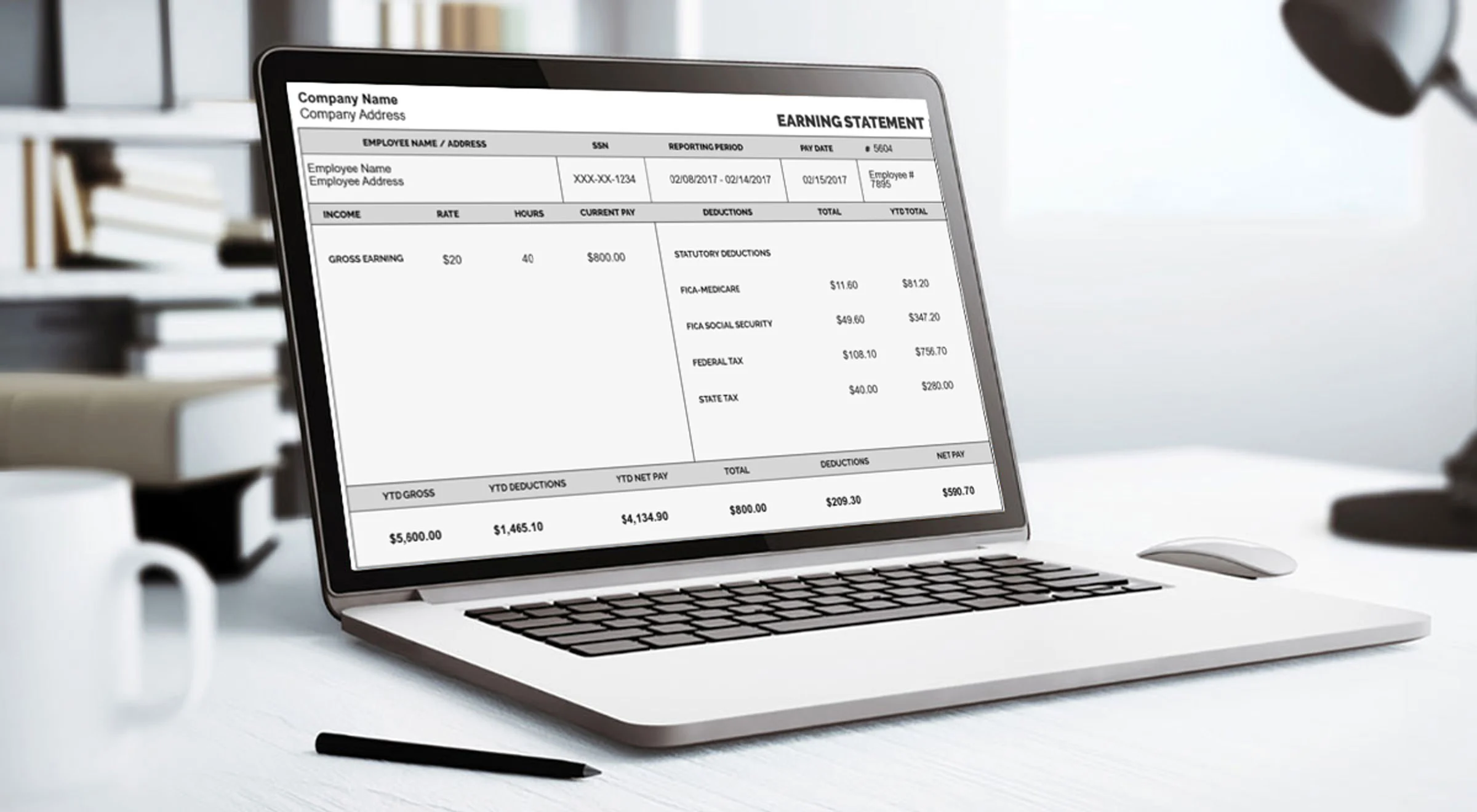

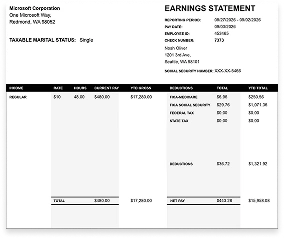
If you’re paid in cash, showing proof of income can be difficult, as financial operations like rental applications require proof of income to be shown. But the truth is, you can still prove your income effectively even when you do not have a standard pay stub in hand by using a free paystub generator tool.
You can get proof of income if paid in cash by keeping a detailed record of payments, like receipts, requesting signed pay stubs, or using bank deposit records to verify your income.
In this guide, we will be learning how to show proof of income if paid in cash and provide a breakdown of it all in a single place. So, if you’re a gig worker or a freelancer, ensure you have read this blog till the very end.
What Is Proof of Income?
Proof of income is an official document that shows how much money you earn on a regular basis. Below are some common examples of who can ask for proof of regular pay:
- Landlords
- Banks
- Government agency
- Immigration department
- Financial institutions
Now, even if you are still paid in cash, your income becomes legal as it is recorded, consistent, and a verified source.
Why Does Proof of Income matter?
Whether you are applying for a new apartment, a proof of income for apartment is your golden ticket, which proves that you can back up your promises in cash. A landlord is all about risk management; they just want to know if you’re entering into a contract with them, you have the financial capacity to fulfill your deal. Below is why proof of income matters:
Developing Creditworthiness
When you borrow money, the lender needs to know you are not going to cheat them and can pay on time. Proof of income helps them calculate your Debt-to-Income ratio.
Verifying Employment
A single paystub is a screenshot of tax returns, which is a story. Regular income proof shows to a landlord that you have a stable job and a consistent income, making you a safe bet.
Governing Loan Terms & Limits
Your income does not just decide if you get a loan, but how much you get and at what interest rate.
- Higher income: This often leads to higher credit limits and lower interest rates.
- Lower income: Might result in the requirement of a co-signer.
Legal and Tax Compliance
POI ensures:
- Child support: Payments are calculated based on actual earnings.
- Tax brackets: You’re paying the correct amount of income tax.
- Subsidies: You qualify for assistance programs that have strict earning caps.
Who requires Proof of Income and why?
Proof of income is required for anyone who needs to check verifiable income. The following entities require proof of income:
- Landlords: To check if you can afford the rent or not
- Banks & lenders: For loans, credit cards, or mortgages
- Government agencies: For benefits, subsidies, or tax verification
- Employers: During background checks or salary verification
- Insurance companies: To decide premium eligibility
- Immigration authorities: For visa or residency applications
Why is it required?
- To confirm financial stability
- To reduce the risk of fraud
- To ensure affordability
- To verify legal and tax compliance
- To support fair eligibility decisions
How to Show Proof of Income if Paid in Cash? (Step-by-Step Breakdown)
Below, we have mentioned various ways to show proof of income if paid in cash.
1) Request an Employment Verification Letter
If you work for someone else, ask your employer for an official employment verification letter. It should state your name, job title, date of hire, and exactly how much you are paid in cash.
2) Maintain a Detailed Income Ledger
Keep a physical or digital log of every payment you receive. For every cash transaction, record the date, the amount, the person or company who paid you, and the service you provided.
3) Deposit Cash into a Bank Account Immediately
Create a paper trail for cash, and deposit the total amount into your financial institution account as soon as it is received. Avoid spending cash without delay. When a lender or landlord sees $1,000 deposited every Friday, it is considered a bank statement as proof of income.
4) Issue Receipts
If you are a freelancer or contractor, give your clients a receipt for every cash payment. If you are an employee, ask your boss for a signed receipt. Keep copies of these to match against your ledger and bank deposits.
5) Collect your Business Information
Use the paystub creator and insert your company details. If you’re a self-employed individual, you can insert your own sole proprietorship name as the employer.
6) Insert Employee & Salary Details
Input your personal information and your pay rate. If you are paid $20/hour in cash, enter that rate along with the hours worked for that specific period. StubCreator will automatically calculate the totals to ensure they match your actual net pay.
7) Calculate and Apply Deductions
If you are paid in cash, you are responsible for taxes. Create a paystub by using the detailed paystub template, check the deductions, and then consider your federal and state withholdings.
8) Generate Your Paystubs
Use the check stub maker tool to generate the pay stub. Review the YTD totals. Having a sequence of pay stubs is much more convincing to a landlord than a single document.
9) Align with your Tax Returns
At the end of the year, make sure the total income on your generated pay stub matches what you report on your tax returns. Visit the IRS self-employed tax center for detailed guidance.
10) Organize a Proof of Income Folder
Combine all the above. When asked for proof, present your pay stubs, your bank statements showing the matching deposits, and your tax returns. This multi-layered approach makes your cash income as official as a corporate salary.
Strongest to Weakest Proof of Income (Ranked)
Check the order from strongest to weakest proof of income.
1.Tax Returns
Tax returns are considered the most reliable proof of income because they are official government documents filed with tax authorities. They show total annual income, deductions, and income sources.
Why it’s strong:
- Legally verified and difficult to fake
- Accepted by lenders, landlords, and government agencies
- Shows long-term income stability
Best for:
- Loans
- Mortgages
- Self-employed income verification
- Rental applications
2. Bank Statements
Bank statements prove that money is regularly being deposited into your account. They help verify cash income when direct pay stubs are unavailable.
Why it’s strong:
- Shows consistent cash flow
- Confirms actual deposits
- Useful for freelancers and cash-paid workers
Best for:
- Rental approvals
- Personal loans
- Verifying recent income activity
3. Pay Stubs
Pay stubs provide detailed information about earnings, deductions, taxes, and payment frequency from an employer.
Why it’s strong:
- Direct proof of employment income
- Shows gross and net pay
- Commonly required by landlords and lenders
4.Profit & Loss Statement
A Profit & Loss statement summarizes business income and expenses over a specific period. It is commonly used by freelancers, contractors, and small business owners.
Why it’s moderately strong:
- Shows business profitability
- Helps verify self-employment income
- Useful when supported by bank statements or tax returns
5.Invoices / Receipts
Invoices and payment receipts show proof that work was completed and payments were received from clients or customers.
Why it’s useful:
- Creates a record of transactions
- Helps document freelance or cash-based work
- Supports other income documents
6.Cash Ledger
A cash ledger is a personal record of cash payments received and expenses tracked manually.
Why it’s useful:
- It creates an organized income history
- Useful for tracking irregular cash payments
- Can support tax filing and financial records
What Makes Proof of Income Legally Acceptable?
If you’re paid in cash, your proof of income is legally acceptable when you can prove that your earnings are traceable and consistently earned. Cash payments do not create a digital payment history; you must build a financial record using verifiable documentation.
Landlords, lenders, government officials, and even employers accept proof of income only when the documentation contains accurate information about your earnings and deductions, and it can be cross-verified if needed.
Factors that make Proof of Income Legally Acceptable
Verifiable Documentation
Income proof should be supported by documentation that others can verify. This includes the following:
- Bank statements showing regular deposits
- Tax returns filed with reported income
- Receipts issued for work completed
- Pay stubs or earning summaries
- Employment verification letters
Income Records
One-time cash deposits are not enough. Lenders and landlords prefer to see a history of fixed income over several months. Consistency helps in proving that your earnings are an ongoing process rather than a temporary outcome.
Tax Compliance
Reporting your cash income is one of the strongest ways to make it legally acceptable. Tax documents show:
- Income is officially declared
- Taxes are being paid properly
- The government recognizes earnings
Transparent Source of Income
Your documents should clearly explain where the money comes from. No matter if you are:
- Self-employed
- Freelancer
- Gig worker
- Independent Contractor
- Cash-paid employee
Accurate Information
All details in your proof of income must be truthful and match across documents. Any mismatch in the following documents can cause havoc:
- Income amount
- Dates
- Employer details
- Tax information
Professional Formatting
Documents that are properly formatted and organized are most likely to be accepted. A professional-looking pay stub helps in demonstrating legitimacy. Important details include:
- Full name
- Payment dates
- Income amount
- Client information
- Contact details
- Tax deductions
Why does this matter for people paid in cash?
Cash income leaves less automatic documentation, creating a reliable paper trail, which is vital. Combining multiple records, like blank statements, tax returns, and invoices, creates stronger and legally acceptable proof of income.
The more organized your records are, the easier it becomes to prove your financial records for loans, taxes, or other financial needs.
Best Practices to Strengthen Cash Income Proof
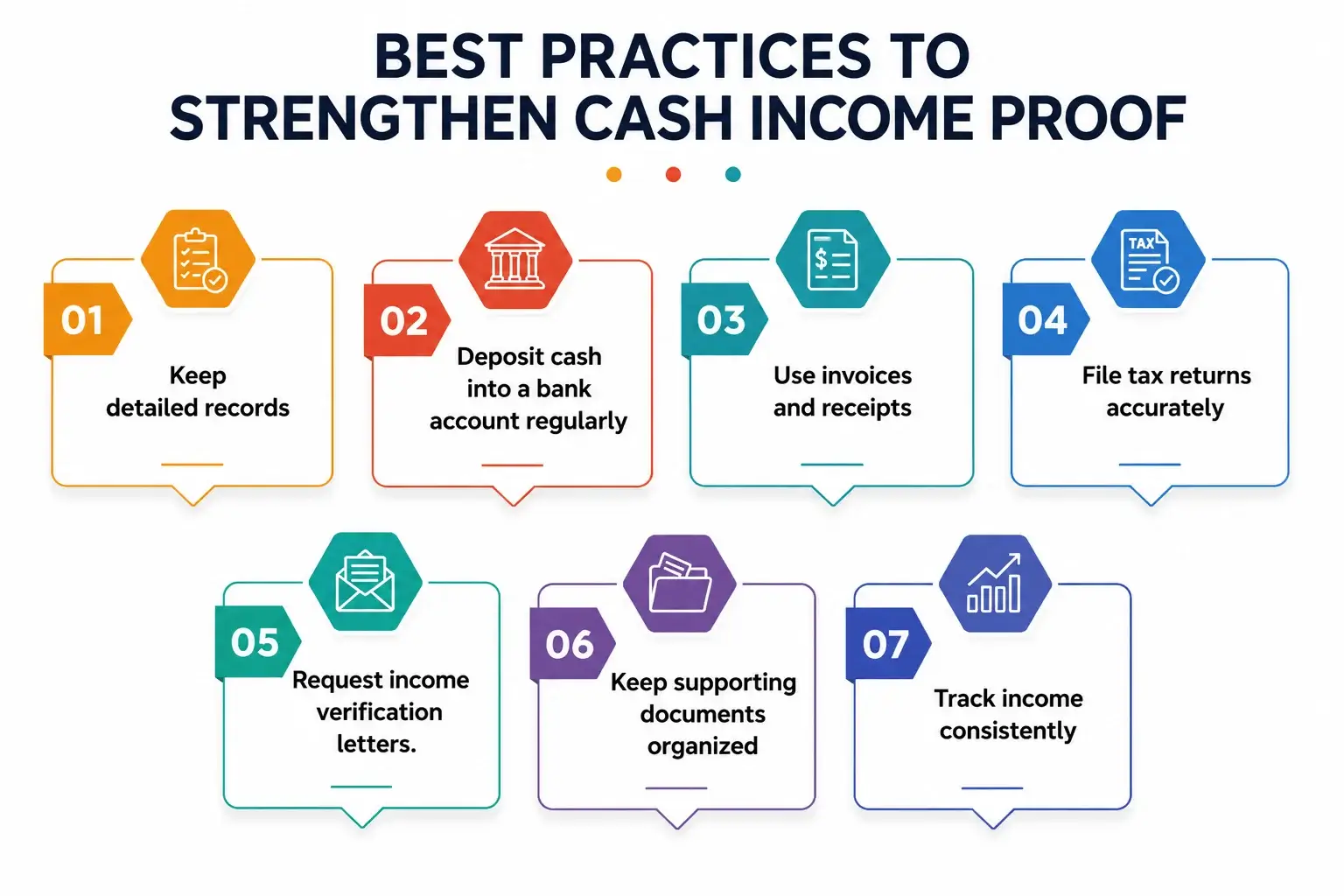
Below are the best practices to strengthen your income proof:
- Keep detailed records: Maintain a spreadsheet or a digital log of all the cash payments received.
- Deposit cash into a bank account regularly: Consistent deposits create a financial trail that supports your income claims.
- Use invoices and receipts: Provide clients with receipts and keep copies for your records.
- File tax returns accurately: Reporting your cash income on tax returns adds legal credibility.
- Request income verification letters: Employers can provide signed letters confirming your earnings.
- Keep supporting documents organized: Save bank statements, payment apps records, and transaction histories in one place.
- Track income consistently: Regular documentation looks more reliable than standard records.
Common Mistakes to Avoid
- Not keeping income records: Missing documentation makes it difficult to verify earnings.
- Mixing personal and business finances: This creates confusion and weakens income credibility.
- Failing to deposit cash into a bank account: Cash without bank records is harder to prove.
- Providing inconsistent information: Income figures should match across tax returns, bank statements, and invoices.
- Ignoring tax filing requirements: Unreported cash income may appear unreliable or suspicious.
- Using incomplete documents: Missing dates, signatures, or payment details can reduce acceptance chances.
- Submitting outdated records: Recent documents are usually preferred for verification.
Key Takeaways
Just like receiving cash as a mode of payment to a person, and finding it hard to document the income received, is not impossible. That is why in this blog, we have answered all of your queries on how you can show the proof of income if the mode of payment used is cash, all while using a free paystub maker tool.
This manual will enable you to keep a record of your income for record-keeping and proof of income. They go hand in hand not only to achieve the requirement for loans, rentals and etc but also to carry the peace of mind that every individual needs. Remember that keeping accurate records and being consistent will earn you a good report file.
Frequently Asked Questions
1) How to get proof of income if you get paid in cash?
If you get paid in cash, you can still show proof of income by using documents like bank deposit records, receipts, invoices, pay stubs, tax returns, employer letters, or a written income verification letter.
2) How to prove cash earn of income?
If you take your pay in cash, you could generate formal proof of income. The first option is to create a signed income statement. You can also keep a log of profits in a spreadsheet.
3) Can you use cash as a proof of income?
Currencies do not leave a computerized virtual trace; alternative documentation is required. Signed Affidavit- A written statement to employers or clients verifying payments made. Deposit data: Bank deposits, regular to currency profits can establish profit patterns.
4) How does the IRS verify cash income?
The IRS proves unreported cash earnings through indirect techniques with the help of reconstructing income, studying financial institution deposits, and evaluating commercial enterprise ratios to industry standards.
5) What is the $10,000 cash rule?
The $10,000 cash rule refers to the federal requirement that businesses must report cash payments over $10,000 to the IRS using Form 8300.
6) Can I create my own proof of income?
Yes, you can create your own proof of income if you are self-employed, freelance, or paid in cash. Common documents include self-made pay stubs, invoices, bank statements, income letters, profit and loss statements, and tax returns.
7) What do I do if I get paid in cash?
If you are paid in cash, you should tune all benefits and separate cash for taxes and document it on your tax return, even if your firm no longer provides pay stubs or 1099 forms, to avoid IRS penalties and ensure you receive Social Security debt.
8) Do you have report income if paid in cash?
Yes, you must report income even if you are paid in cash. Before filing taxes, you need to report income. It includes- cash payments, freelance work, tips, and side income.
9) Is lying about proof of income illegal?
Yes. If you knowingly lie about incorrect facts, you are committing fraud, and the penalties can include fines and jail time. Although credit card corporations will not routinely now ask you to verify factors like income, legally, they can.
10) Can I deposit $9,000 cash every week?
Yes, you can legally deposit $9,000 cash every week if the money comes from a legitimate source.