.png)


 Chat with us now!
 Send Email!

Mileage reimbursement is an important aspect of business when employees use their personal vehicles for work. From client visits and deliveries to running errands, many companies rely on employees to travel using their own cars instead of company-owned vehicles. This raises a common question for employers and employees alike: what is mileage reimbursement, and how does it work?
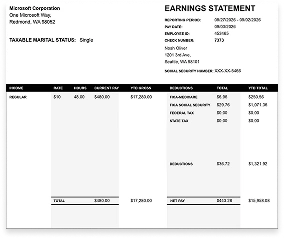
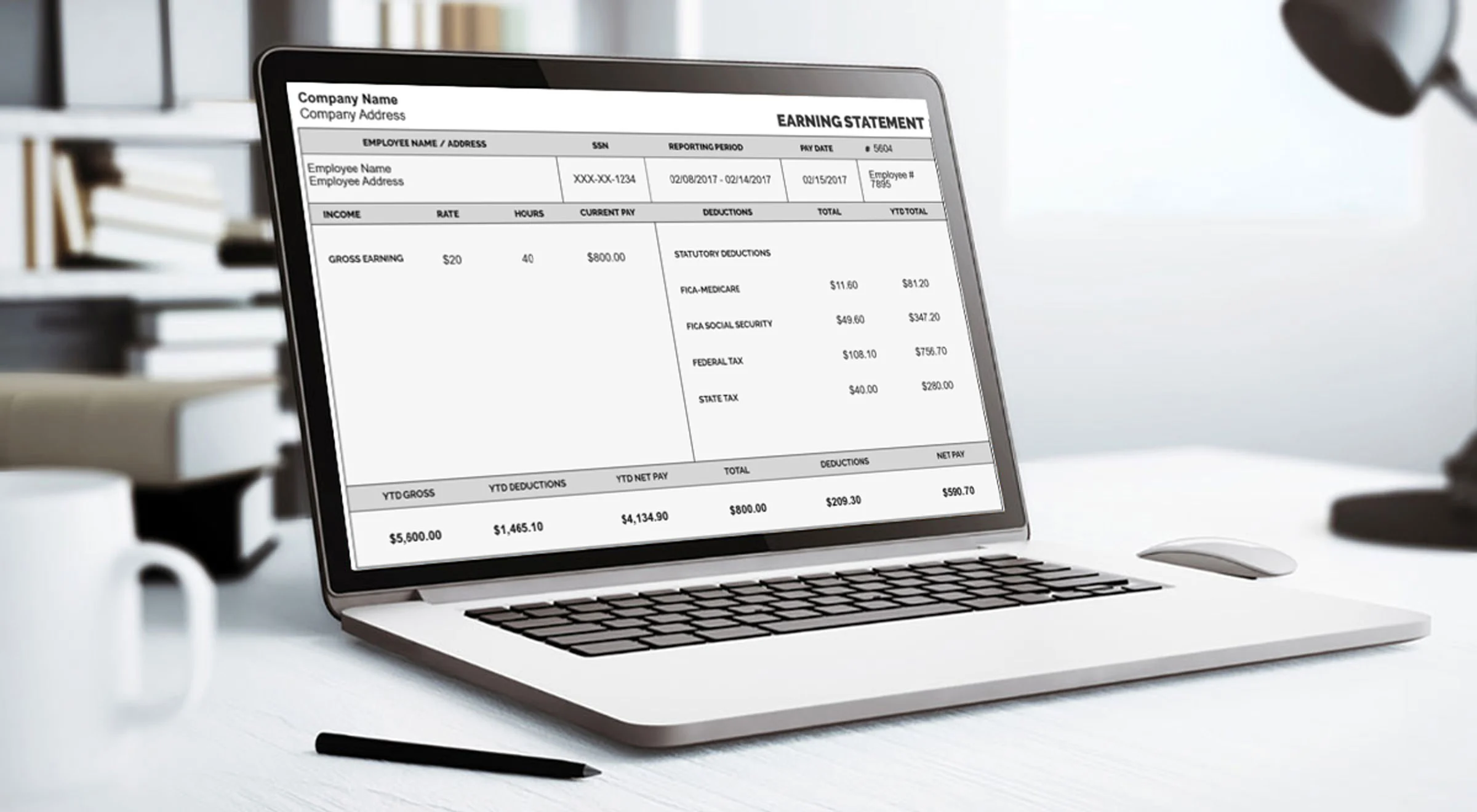
While mileage reimbursement is typically handled through expense tracking systems, it’s equally important to reflect these payments properly in payroll records. For small business owners, using a free paystub maker can help document reimbursements clearly alongside employee earnings, making it easier to maintain accurate records and stay organized.
In this guide, we’ll break down everything you need to know about federal mileage reimbursement, including how it works, who is eligible, current rates, and best practices for creating an effective policy.
What is Mileage Reimbursement?
Mileage reimbursement is the amount of money employers pay out to employees for using their own cars to travel for work. This may include meeting clients, attending off-site meetings or running work errands. Rather than workers paying out of pocket, companies reimburse workers for the miles they drive on behalf of the business.
While most companies follow the IRS mileage reimbursement rules, others create custom ways to define their own policy per operational guidelines. This makes it easier by covering typical vehicle-related expenses (like fuel, maintenance, insurance and depreciation) that you incur with one flat per-mile fee.
Overall, mileage IRS reimbursement provides a way for employers and employees to ensure there is fair compensation for business-related travel without complicating the expense tracking process.
What Expenses Does Mileage Reimbursement Cover?
Mileage IRS reimbursement is designed to cover both fixed and variable costs associated with operating a vehicle. These typically include:
- Oil and routine maintenance
- Fuel (gas)
- Insurance
- Vehicle registration fees
- Depreciation (wear and tear over time)
These costs are bundled as per mileage rate reimbursement to simplify reimbursement for both employers and employees.
Also Read: What is Gross Pay? And How To Calculate It?
How Does Mileage Reimbursement Work?
Proper tracking and clear policies are key to delivering reimbursements that are accurate and fair, as well as tax-compliant.
Mileage Requirement
Only mileage driven for business, such as trips, client sites, meetings, or travel between job sites, counts as per the current mileage reimbursement rate. Non-business travel, like commuting to work, is not reimbursed.
Fixed vs. Variable Costs
Rate for reimbursement mileage is meant to account for the fixed costs (insurance, depreciation, registration) as well as variable costs (fuel, maintenance, tires) involved in operating a vehicle.
Taxable vs. Tax-Free Reimbursements
Reimbursements can be tax-free if supported with proper documentation and compliant policies. Flat allowances or undocumented payments may be considered taxable income, though.
Required Documentation
To be compliant and ensure accurate mileage IRS reimbursement, employees will need to keep detailed logs of all mileage incurred (date, reason for trip, start & end location, and miles driven).
How To Calculate Mileage Reimbursement?
Calculating IRS mileage reimbursement is simple when using the standard per-mile rate. Employers just multiply the total number of business miles driven by the set rate to determine the reimbursement amount. This method is popular because it already includes typical reimburse for gas and mileage, wear and tear.
Per-Mile Method (Most Common)
Use this formula:
Total Miles × Rate Per Mile = Total Reimbursement
Example:
450 miles × $0.70 = $315 reimbursement
Actual Expense Method (Alternative Option)
Employers can also reimburse based on actual expenses incurred during the trip:
- Gas: $200
- Fuel cleaner: $10
- Wiper fluid: $25
- Tolls: $30
- Air for tires: $10
Total = $275 reimbursement
Most businesses prefer the per-mile method because it’s easier to manage, while the actual expense method requires detailed tracking of every cost.
Best Practices for Managing a Mileage Reimbursement Policy
It is important to have clear guidelines and tracking in place to succeed with a mileage reimbursement policy. Since organizations typically are not legally obligated to provide mileage reimbursement, businesses have the flexibility to change their policies. Nevertheless, creating transparent and fair federal mileage reimbursement raises the chances of employees being paid correctly while minimizing the possibility of conflict or compliance risks.
Set Driving Standards
Verify employees meet minimum driving criteria, like possessing a valid driver’s license, having correctly insured and protected cars, and following business safety procedures. To calculate mileage for the organization and employees, make sure to include these requirements in the policy.
Consider Regional Differences
Gas, maintenance, and general living costs can differ depending on location. Employees in California, for example, may have higher travel cost & rate for reimbursement mileage than employees in Utah. Customize your current mileage reimbursement rate to reflect local conditions to prevent overpaying or underpaying your employees.
Choose a Mileage Reimbursement Method
A per-mile rate is the easiest approach, but businesses can reimburse actual expenses as well. Automated expense management solutions help with this process, track mileage submissions, and can reflect in a paystub made with an accurate free paystub template to ensure expedient reimbursement.
Maintain Accurate Records
Documentation is required for compliance and auditing purposes. The mileage deduction can maintain comprehensive mileage logs and other documentation of expenses, complying with state and federal requirements on recordkeeping, methods of organization, accuracy, and accessibility.
By following these best practices, companies can manage federal mileage reimbursement efficiently, provide fair compensation, and maintain compliance while keeping both employees and management aligned.
Also Read: How Many Working Days In 2026
Who Is Eligible for Federal Mileage Reimbursement?
Federal mileage reimbursement typically applies to employees who use their personal vehicles for legitimate business purposes. However, eligibility depends on the type of work, the nature of travel, and whether the employer offers a reimbursement policy. Not all driving activities qualify, so it’s important to understand who is eligible.
Self-Employed Individuals
IRS mileage reimbursement can also be claimed as a business expense by independent contractors and business owners when filing taxes, but the travel must be work-related.
Using Own Vehicles at Work
Workers who use their own cars for job-related assignments, client meetings, site visits, or running errands can get company mileage reimbursement.
Travel Between Work Locations
The mileage reimbursement generally applies to workers who drive between offices, job sites, or temporary workplaces during their workday.
Active-Duty Military (Specific Cases)
Active-Duty armed forces members are eligible, as per the current IRS mileage rate, to receive reimbursement when traveling under certain official orders, such as relocating.
Excludes Daily Commuters
Travel between home and the primary place of work is not eligible for mileage reimbursement.
Eligibility ultimately depends on whether the travel is necessary for business purposes and properly documented according to company policies.
IRS Mileage Reimbursement Rules
Mileage reimbursement guidelines help ensure that both employees and employers handle business travel expenses correctly and in a tax-compliant way.
These mileage rate government guidelines outline who qualifies, how mileage reimbursements should be calculated, and what documentation is required. While businesses have flexibility in choosing their mileage deduction reimbursement method, following proper rules helps avoid tax issues and ensures fair compensation.
For Employees
- Eligibility: Workers who use their personal vehicles to perform business tasks such as traveling to see clients or attending meetings might qualify for reimbursement, depending on company policy.
- Reimbursement Methods: Employers can reimburse expenses based on a standard per-mile rate, fixed and variable rate (FAVR), or even a monthly allowance.
- Mileage Logs: Trips must be logged with date, destination, purpose, and miles driven.
- Tax Consideration: In general, employee expenses, paid out of pocket for work-related mileage, are not deductible on personal returns under present tax laws.
For Employers
- Not Always Mandatory: At the federal level, employers are not usually required to provide mileage reimbursement, but it’s often expected, and some states require it.
- Common Method: The simplest way is based on the per-mile rate, where employees are reimbursed for driving miles submitted in logs.
- Alternative Options: Employers may choose to offer car allowances or FAVR-based reimbursements based on their business needs.
- Recordkeeping & Calculation: Using digital tools such as a mileage reimbursement calculator or a cost per mile calculator, you can directly calculate the reimbursement and simplify reporting, improve accuracy, and ensure compliance.
For Self-Employed Individuals
- Deductible Mileage: Mileage can also be a business expense for tax purposes for self-employed people.
- Two Calculation Methods: Standard mileage rate(simplified, based on per-mile rate). Actual expense method (deductions based on actual vehicle expenses, such as fuel, repairs, and insurance)
- Mixed Use Vehicles: If a vehicle is driven for both business and personal use, only those miles driven on business-related trips can be deducted.
- Annual Claims: Mileage deductions, which need to be documented accurately and redeemed every year while filing
Also Read: How Long Is a Business Day: Definition, Meaning And More
Current Federal Mileage Reimbursement Rate
That amount is an adjustment to the federal mileage reimbursement rate for 2026 and accounts for increases in vehicle and fuel expenses. It is 72.5 cents per mile for driving around for business, up from 70 cents per mile in 2025.
There’s also a difference between rates based on what you’re traveling for. Medical and moving travel (for qualifying individuals) is reimbursed at 20.5 cents per mile, and charitable driving holds steady at 14 cents per mile.
| Purpose | Rate (2026) |
| Business use | 72.5 cents per mile |
| Moving (military only) | 20.5 cents per mile |
| Medical travel | 20.5 cents per mile |
| Charity | 14 cents per mile |
The rate for reimbursement mileage can vary slightly by state, but most states follow a standard benchmark rate. Only a few states require reimbursement by law, while others leave it up to employers.
| State | Rate (Per Mile) | Required by Law |
| Alabama | 65.5 cents | No |
| Alaska | 65.5 cents | No |
| Arizona | 65.5 cents | No |
| Arkansas | 65.5 cents | No |
| California | 65.5 cents | Yes |
| Colorado | 58.5 – 65.5 cents | No |
| Connecticut | 65.5 cents | No |
| Delaware | 65.5 cents | No |
| Florida | 65.5 cents | No |
| Georgia | 65.5 cents (40 cents for state employees) | No |
| Hawaii | 65.5 cents | No |
| Idaho | 65.5 cents | No |
| Illinois | 65.5 cents | No |
| Indiana | 65.5 cents (41 cents for state employees) | No |
| Iowa | 65.5 cents (33 cents for state employees) | No |
| Kansas | 65.5 cents | No |
| Kentucky | 65.5 cents (44 cents for state employees) | No |
| Louisiana | 65.5 cents | No |
| Maine | 65.5 cents (46 cents for state employees) | No |
| Maryland | 65.5 cents | No |
| Massachusetts | 65.5 cents | No |
| Michigan | 65.5 cents | No |
| Minnesota | 65.5 cents | No |
| Mississippi | 65.5 cents | No |
| Missouri | 65.5 cents | No |
| Montana | 65.5 cents | Yes |
| Nebraska | 65.5 cents | No |
| Nevada | 65.5 cents | No |
| New Hampshire | 65.5 cents | No |
| New Jersey | 65.5 cents | No |
| New Mexico | 65.5 cents | No |
| New York | 65.5 cents | No |
| North Carolina | 65.5 cents | No |
| North Dakota | 65.5 cents (then 18 cents after 300 mi) | No |
| Ohio | 65.5 cents (min 40 cents state) | No |
| Oklahoma | 65.5 cents | No |
| Oregon | 65.5 cents | No |
| Pennsylvania | 65.5 cents | No |
| Rhode Island | 65.5 cents | No |
| South Carolina | 65.5 cents | No |
| South Dakota | 65.5 cents (51 cents for state employees) | No |
| Tennessee | 65.5 cents | No |
| Texas | 65.5 cents (54 cents for state employees) | No |
| Utah | 62 cents | No |
| Vermont | 65.5 cents | No |
| Virginia | 65.5 cents | No |
| Washington | 65.5 cents | No |
| West Virginia | 65.5 cents | No |
| Wisconsin | 65.5 cents | No |
| Wyoming | 65.5 cents (45.5 cents for state vehicles) | No |
Conclusion
The key to effective management of mileage reimbursement is having a correct policy, company mileage calculation, and the right systems. Having businesses remain consistent in how to calculate mileage expenses and record reimbursements also helps in reducing errors, avoiding compliance risks, and maintaining operational efficiency.
A tool that can help with this is a free paystub generator online, which can efficiently document mileage payments around regular earnings in a single record to use for easy and accurate account management.
Also Read: How Many Hours is Part-Time? A Guide For Employers And Employees
People May Also Ask
1) How does federal mileage reimbursement work?
Employees are reimbursed, in either a per-mile rate set by the business (and properly tracked) or for actual expenses to drive an approved mileage on behalf of the company.
2) Is it worth it to claim mileage on taxes?
Yes, if you are self-employed and your mileage is properly documented, it can help reduce taxable income.
3) Is 70 cents a mile good for reimbursement?
The figure of 70 cents per mile is reasonable when compared with standard benchmark values that account for average car ownership costs.
4) Is it better to be reimbursed for gas or mileage?
Mileage reimbursement is preferable to gas reimbursement in most cases, as the mileage covers all vehicle costs (not just gasoline).
5) Is reimbursement for mileage taxable?
Mileage reimbursement is not taxable if it meets documentation requirements and follows accountable plan rules; otherwise, it could be considered income.
6) How does mileage reimbursement work?
Business owners track their business miles and submit logs to receive reimbursement according to either a per-mile rate or based on actual costs.
7) How much should I get for mileage reimbursement?
The sum you should get paid depends on your company’s policy, but many companies work off standard rates (in 2026, for example, it was 72.5 cents per mile).
8) Is it better to be reimbursed for gas or mileage?
Mileage reimbursement is usually better than gas reimbursement because it includes fuel, maintenance, and depreciation.
9) What is the federal mileage reimbursement rate today?
As of today (2026), the federal mileage reimbursement rate for business use is 72.5 cents per mile.
10) What are the IRS rules for mileage reimbursement?
You must document your mileage reimbursement according to IRS rules, covering business-purpose travel and implementing an accurate record-keeping system.
11) What is the current IRS mileage rate for 2026?
2026 mileage rates: 72.5 cents per mile for business use, 20.5 cents for medical/moving, and 14 cents for a charity.
12) How does the IRS verify mileage claims?
The IRS independently confirms mileage claims with detailed logs describing date, purpose, locations, and miles driven, as well as corroborative records where appropriate.
13) What is a reasonable mileage reimbursement rate?
A reasonable mileage reimbursement rate is typically close to the standard rate, as it reflects average vehicle operating costs.
14) Is business mileage reimbursement taxable?
Reimbursement for business mileage is not taxable if adequately documented; otherwise, it can be considered income that was subject to taxation.
15) What is the federal mileage rate?
The federal mileage rate is the standard per-mile rate used to determine reimbursement for driving on business.
FAQ's
What is current mileage reimbursement?
+
The “current mileage reimbursement” generally refers to the current standard rate: 72.5 cents for business-related travel carried out in 2026.
Does mileage reimbursement include gas?
+
Mileage reimbursement covers gas, as well as other expenses such as maintenance, insurance, and depreciation.
What is rate for reimbursement mileage?
+
Mileage reimbursement is all the time a current price, defined per mile, and differs depending on present requirements and corporate coverage.
Is business mileage reimbursement taxable?
+
As long as it is properly supported and compliant with reimbursement plans, business mileage reimbursement is tax-free.
What is the federal mileage rate?
+
The federal mileage rate is a set per-mile rate used to reimburse business travel.
What is current mileage reimbursement?
+
Current mileage reimbursement is simply the latest number you use to calculate how much business travel costs you.
How to calculate mileage expenses?
+
Mileage expenses are either calculated by multiplying total business miles driven using a per-mile rate, or adding actual costs related to operating the vehicle.
Does mileage reimbursement include gas?
+
Yes, mileage reimbursement covers gas as well as other operating and ownership costs of the vehicle.