.png)


 Chat with us now!
 Send Email!
If you’ve ever filed a tax form, opened a bank account, or applied for a loan in the United States, chances are you’ve encountered the term TIN, short for Taxpayer Identification Number. Yet despite its widespreadness, many people still ask: what is my TIN? Or where do I find my TIN number?
Whether you’re a U.S. citizen, a business owner, or a tax professional, understanding the TIN is essential, especially when managing payroll, filing taxes, or using tools like a free paystub maker to document employee earnings accurately. This complete guide breaks down everything you need to know, from the different types of TINs and their specific tax ID formats, to how to get a TIN number and where to find it on key IRS documents like the 1099 form.
Let’s dive in.
What is a TIN Number?
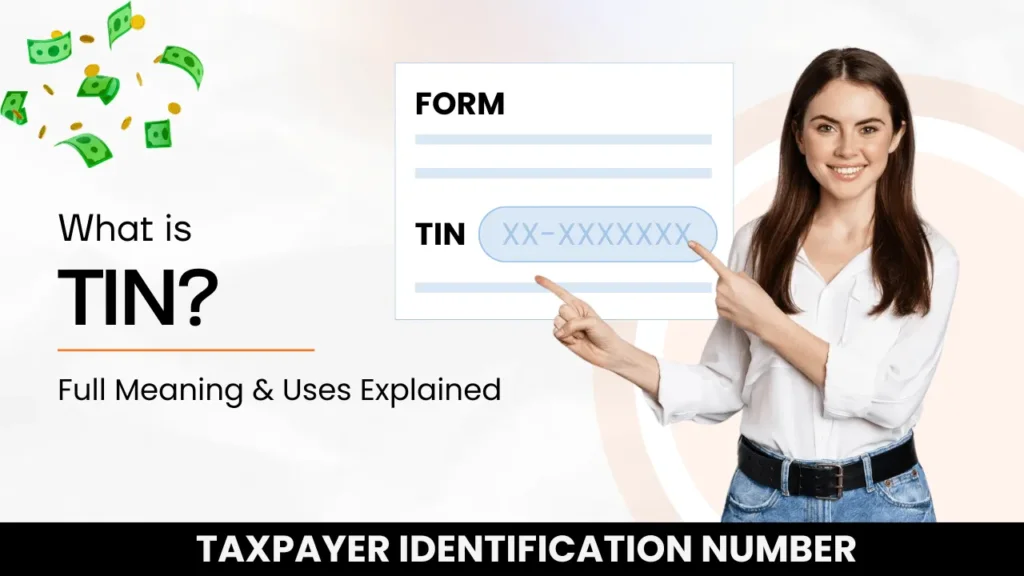
TIN (Taxpayer Identification Number) is a unique numeric identifier assigned by the Internal Revenue Service (IRS) to individuals, businesses, and other entities for the purpose of tracking tax obligations in the United States.
What is TIN used for?
A Tax Identification Number is used across a wide range of financial and legal activities, including filing federal and state tax returns, opening bank accounts, applying for credit, and reporting income on forms such as the W-2 or 1099.
Without a valid taxpayer identification number, many of these transactions simply cannot be completed legally.
What are the Different Types of TINs?
The IRS recognizes several distinct TIN types, each assigned to a specific taxpayer category.
| TIN Type | For | Format / Notes |
| SSN | Individuals (U.S. citizens, residents) | 9 digits, XXX-XX-XXXX |
| EIN | Businesses, nonprofits, estates | 9 digits, XX-XXXXXXX |
| ITIN | Non-residents, foreign nationals | 9 digits starting with 9, 9XX-XX-XXXX |
| ATIN | Adoptive parents | Temporary 9 digits, issued during adoption |
| PTIN | Tax preparers | Professional ID, used on prepared returns |
Understanding which one applies to you is the first step in navigating the tax system correctly, especially when completing employment paperwork, issuing contractor payments, or generating check stubs using a pay stub template that requires accurate taxpayer identification details.
The following are the different types of TINs:
1. Social Security Number (SSN)
The Social Security Number (SSN) is the most widely recognized TIN in the United States. Issued by the Social Security Administration (SSA), it is a 9-digit number formatted as XXXXX-XXXX.
SSNs are assigned to U.S. citizens, permanent residents, and certain work-authorized immigrants. For most individuals, the SSN is their TIN.
2. Employer Identification Number (EIN)
The Employer Identification Number (EIN), also known as a Federal Tax Identification Number, is assigned to businesses, corporations, partnerships, nonprofits, and estates.
It follows the tax id format XX-XXXXXXX (2 digits, a dash, then 7 digits).
Business owners should look to their EIN if someone asks about their TIN. It’s used for filing business tax returns, opening business bank accounts, hiring employees, and paying payroll taxes.
3. Individual Taxpayer Identification Number (ITIN)
The Individual Taxpayer Identification Number (ITIN) is issued by the IRS to individuals who are required to have a U.S. taxpayer identification number but are not eligible for an SSN.
This typically includes non-resident aliens, foreign nationals, and certain dependents or spouses of U.S. citizens. ITIN number always begins with the number 9 and follow the format 9XX-XX-XXXX. They are used solely for federal tax purposes and do not authorize employment or provide eligibility for Social Security benefits.
This typically includes non-resident aliens, foreign nationals, and certain dependents or spouses of U.S. citizens. ITINs always begin with the number 9 and follow the format 9XX-XX-XXXX. They are used solely for federal tax purposes and do not authorize employment or provide eligibility for Social Security benefits.
4. Adoption Taxpayer Identification Number (ATIN)
An ATIN is a temporary, nine-digit number issued by the IRS to individuals in the process of legally adopting a U.S. citizen or resident child.
It allows adoptive parents to file a tax return and claim the child as a dependent while the adoption is still pending and the child does not yet have an SSN.
5. Preparer Tax Identification Number (PTIN)
The PTIN is assigned by the IRS to tax professionals such as CPAs, attorneys, and enrolled agents who are paid to prepare federal tax returns. It must appear on every federal tax return prepared for compensation. This is a professional identifier, not a personal one.
Where To Find TIN Number?
TIN number is one of the most important things while filing taxes. The answer depends on which type of TIN you need and your individual circumstances.
For Your SSN
- Your Social Security card
- IRS correspondence or previous tax returns
- Your state driver’s license may reference it in some states
- Employer records and check stubs (often include your SSN’s last four digits)
For Your EIN
- The IRS EIN confirmation letter (CP 575) was received when the EIN was issued
- Previously filed business tax returns
- Business bank account documentation
- State business registration filings
For Your ITIN
- The IRS ITIN assignment letter (CP565)
- Prior year tax returns filed with the IRS
- Any correspondence from the IRS related to your ITIN
How to get the TIN Number?
If you’re asking how to get the TIN number, the process varies based on the type of TIN you need.
Here’s a step-by-step breakdown:
How to Get an SSN?
Apply through the Social Security Administration (SSA): You’ll need to complete Form SS-5 and provide documentation of your identity, age, and immigration status. Applications can be submitted in person at your local SSA office.
How to Get an EIN?
Apply directly with the IRS: The fastest method is the IRS online EIN application, available Monday through Friday, 7 a.m. to 10 p.m. Eastern Time. The EIN is issued immediately upon successful completion of the application. You can also apply by fax (Form SS-4) or mail.
How to Get an ITIN?
Complete IRS Form W-7: You’ll need to submit proof of foreign status and identity. Applications are submitted to the IRS along with your tax return. Processing typically takes 7 weeks, or up to 11 weeks during peak periods.
How to Get an ATIN File?
Complete IRS Form W-7A: This form is used by adoptive parents who cannot obtain a Social Security Number (SSN) for their child during the adoption process. Submit the form to the IRS along with proof of identity and adoption.
What is the Recipient’s TIN on 1099?
If you’ve received a 1099 form, whether it’s a 1099-NEC, 1099-MISC, 1099-INT, or another variant, you may have noticed a box labeled Recipient’s TIN. This is one of the most important fields on the form and a common source of confusion. The recipient’s TIN on 1099 is the taxpayer identification number of the person or entity receiving the income reported on that form.
The payer is required by the IRS to collect and report your TIN accurately. The IRS cross-references the TIN on a 1099 with your filed tax return. If there’s a mismatch, for example, if your payer has the wrong SSN or EIN on file, the IRS may flag the discrepancy, potentially triggering a backup withholding situation or an audit notice.
If you notice that your TIN is incorrect on a 1099 you’ve received, contact the payer immediately to request a corrected form. Do not simply ignore the error, as it can cause significant complications during tax filing season.
Best Practices to Protect Your TIN
- Never share your SSN or EIN unless necessary and with a trusted entity.
- Dispose of any documents containing your TIN before disposal.
- Monitor your IRS account for unusual activity.
- Consider applying for an IRS Identity Protection PIN if you’ve been a victim of identity theft.
- Be cautious of phishing emails or calls requesting your TIN.
Key Takeaways
Whether you’re a first-time filer wondering what is my TIN?, a freelancer confused about what a recipient’s TIN on a 1099 means, or a business owner figuring out how to get the TIN number for a new venture, the core message is the same: your Tax Identification Number is one of the most important identifiers in your financial life.
Understanding the different types of TINs, their formats, and where to find them is not just useful; it’s essential for staying compliant with the IRS, avoiding unnecessary withholding, and protecting your financial identity. When in doubt, always verify with the IRS directly or consult a qualified tax professional.
People Also Ask
1) What is my TIN Number?
A Taxpayer Identification Number (TIN) is a unique number used by the Internal Revenue Service to identify individuals and businesses for tax purposes.
2) What is TIN?
TIN is your tax identity number in the U.S.
3) Is TIN number 10 digits?
The Taxpayer Identification Number (TIN) is a 9-digit unique identification code assigned to entities registered under the Value Added Tax (VAT) or Central Sales Tax (CST) system.
4) Who needs to verify their TIN?
Businesses need to verify a TIN to accurately report all income and wages earned by their employees or contractors. By verifying a TIN, businesses can be sure that the information is correct before filing taxes.
5) Is TIN the same as my SSN?
No, TIN and SSN are not always the same; SSNs are the most common type of TIN for individuals.
6) How do I check my TIN ID number?
To check your Taxpayer Identification Number (TIN), check old tax returns (such as Form 1040), W-2s, 1099s, or your Social Security card. If you can’t find it, contact the IRS directly or check your online IRS account if you have one set up.
Also Read:
Open Door Policy: Meaning, Examples & Workplace Guide
OTE Meaning & Best Practices: A Complete Guide
How To Get a Walmart W2 Former Employee Form In 2026?
FAQ's
How do I find out my TIN number?
+
For most individuals in the U.S., your Taxpayer Identification Number (TIN) is your Social Security Number (SSN). If you are not eligible for an SSN, it is an Individual Taxpayer Identification Number (ITIN) issued by the IRS.
Where can I see my TIN number?
+
You can find your TIN on official tax documents. For individuals in the United States, your TIN is usually your Social Security Number, which appears on your Social Security card, tax returns, W-2 forms, and other IRS documents.
Is my SSN my tax ID number?
+
Social Security Numbers (SSNs) are a type of Taxpayer Identification Number (TIN), but they are not the same in all cases.
How do I check what my TIN number is?
+
For most individuals in the U.S., your Taxpayer Identification Number (TIN) is your Social Security Number (SSN). If you are not eligible for an SSN, it is an Individual Taxpayer Identification Number (ITIN) issued by the IRS.