.png)


 Chat with us now!
 Send Email!


Gross pay is the total amount an employee earns before any deductions. This includes regular salary or wages as well as additional earnings such as overtime pay, bonuses, commissions, and other compensation.
This is the full amount agreed upon between the employer and employee before subtracting taxes, insurance premiums, retirement contributions, or other withholdings.
Gross pay appears at the top of the paycheck or pay stub and serves as the starting point for calculating net pay (take-home pay). In simple terms, gross salary is your total earnings before deductions.
To ensure accuracy and proper documentation, many businesses use a trusted free paystub maker to calculate and display gross pay clearly on employee pay stubs.
What is Gross Pay?
An employee’s total gross salary consists of various components, which include their wages, salary, bonus, or commission. It is influenced by various factors like an employee’s job title, experience level, and cost of living for the area in which they live.
Gross Pay Meaning
Gross pay is the total amount an employee earns before any deductions are taken from their paycheck. It includes regular wages or salary, overtime pay, bonuses, commissions, tips, and other earnings.
For example, if an employee earns $1,000 during a pay period, that amount represents their gross pay. After taxes, insurance premiums, retirement contributions, and other deductions are subtracted, the remaining amount is called net pay, which is the actual take-home pay received by the employee.
Gross pay is used to calculate an employee’s taxable income, as the amount owed in payroll taxes is often a percentage of the total gross pay the employee earns.
What is Included in Gross Wages?
Gross Pay includes the following components that form an employee’s total earnings before deductions:
- Basic Salary: A set amount, often paid directly to an employee as part of normal pay.
- Overtime Pay: Compensation for the hours worked over and above normal working hours.
- Bonus: Performance-based or incentive bonuses from the employer.
- Commission: Sales or performance-based earnings.
- Tips: Wages paid to workers in the services sector.
- Paid Time Off: Pay for approved leaves, including sick leave and holiday pay.
- Allowances: Certain taxable allowances, such as transport allowance or hazard pay, are applicable as part of compensation.
- Special Allotment: These include employer-provided supplemental allowances as part of salary packages.
A detailed pay stub template helps employees and employers understand earnings, deductions, and gross pay with transparency.
What Are The Key Deductions Of Gross Pay?
Gross is before taxes, which is known as representing your total earnings from all sources before any withholdings, including payroll taxes, benefits, or retirement contributions. Gross pay is what employers report on your pay stub before any amounts are taken out for Social Security, income taxes, or health insurance.
Major deductions from gross pay include:
- Social Security and Medicare: Compulsory payroll taxes in the U.S.
- Health Insurance Premiums: Employee Contribution towards employer-sponsored health plan.
- Retirement Contributions: Deductions for 401(k) or other retirement savings accounts.
- Other Voluntary Deductions: Such as union dues or life insurance premiums.
For example, if an employee’s salary is $3,000 per month and $300 is withheld for their taxes, their gross income remains $3,000 even though their net pay is $2,700. Reporting gross income is important to ensure transparency in budgeting, mortgage or loan applications, and payroll processing.
How to Calculate Gross Pay?
Gross pay is calculated by determining an employee’s total earnings before any deductions, such as taxes, insurance, or retirement contributions, are taken out. For hourly employees, gross pay is calculated by multiplying the hourly wage by the total hours worked, including any overtime pay. For salaried employees, gross pay is typically the annual salary divided by the number of pay periods in a year.
Gross Pay Formula
For Hourly Employees:
Gross Pay = Hourly Rate × Hours Worked
Example:
- Hourly Rate = $25
- Hours Worked = 40
Gross Pay = $25 × 40 = $1,000
So, the employee’s gross pay is $1,000 before any taxes or deductions are taken out.
For Salaried Employees:
Gross Pay = Annual Salary ÷ Number of Pay Periods
Example:
- Annual Salary = $60,000
- Paid Monthly = 12 pay periods per year
Gross Pay = $60,000 ÷ 12 = $5,000
So, the employee’s monthly gross pay is $5,000 before deductions.
What Does Gross Pay Include?
Gross pay includes all earnings an employee receives before taxes and other deductions are taken out, such as:
- Regular wages: Standard pay for hours worked or agreed salary.
- Overtime pay: Extra earnings for working beyond regular hours.
- Bonuses: Performance, holiday, or signing bonuses.
- Commissions: Earnings based on sales or business performance.
- Tips and gratuities: Customer tips received by employees.
- Holiday pay: Compensation for paid holidays.
- Sick pay: Paid leave due to illness.
- Vacation pay: Earnings received during paid time off.
- Shift differentials: Additional pay for night, weekend, or special shifts.
- Other taxable compensation: Allowances, incentives, and certain benefits.
Gross pay represents your total earnings before deductions such as taxes, health insurance, and retirement contributions are applied.
How to find Gross pay?
To find gross pay, add up the total amount an employee earns before any taxes, deductions, or withholdings are taken out.
Formula:
Gross Pay = Hourly Rate × Hours Worked (for hourly employees)
Example:
If an employee earns $20 per hour and works 40 hours in a week:
Gross Pay = $20 × 40 = $800
For salaried employees, gross pay is usually calculated by dividing the annual salary by the number of pay periods in a year.
Example:
Annual Salary = $52,000
Paid Biweekly (26 pay periods)
Gross Pay = $52,000 ÷ 26 = $2,000 per pay period.
How to Find Gross Pay on a Pay Stub?
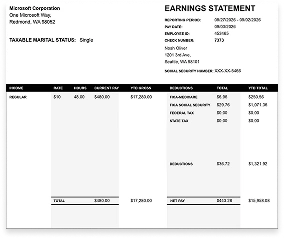
To find gross pay on a pay stub, look for the section labeled Gross Pay, Gross Earnings, or Total Earnings. This amount represents your total earnings before any deductions, such as federal taxes, state taxes, Social Security, Medicare, health insurance, or retirement contributions, are taken out.
If your pay stub shows hours worked and your hourly wage, you can also calculate gross pay by multiplying the hours worked by the pay rate and adding any overtime, bonuses, or commissions earned during the pay period. Gross pay is usually listed above the deductions section and is higher than your net pay.
Importance of Gross Pay Calculation For Employees & Employers
| Employees | Employers |
| Income Evaluation: Gross pay empowers employees to assess their total compensation and understand the monetary value of their services. | Legal Compliance: Accurately determining and documenting gross pay ensures compliance with employment laws, including minimum wage requirements and overtime compensation rules. |
| Financial Planning: By knowing their gross salary, employees can effectively budget, plan expenses, and make informed financial decisions. | Payroll Management: Gross pay serves as a key component in calculating taxes, benefits, and other deductions from employees’ pay, enabling accurate payroll management. |
| Loan Applications: Lenders often consider gross salary when evaluating loan or credit applications, making it essential for employees seeking financial assistance. | Clear Compensation: Communicating gross pay to employees promotes transparency, builds trust, and fosters a positive work environment. |
How is Gross Pay Calculated?
Gross Pay is calculated by adding an employee’s current salary and allowance before making any deductions, including taxes.
1. Employee on Salary Basis
Your gross salary is the amount you earn at your current position in the company. This is shown in your employment contract, which you signed with the employer when you were offered the position.
Formula:
Gross Annual Income = Monthly Salary × 12
Gross Monthly Income = Annual Salary ÷ 12
Take out your recent earnings statement and calculate how much you earn per month. So, there are 12 months in a calendar year; you will multiply your monthly salary by 12.
For example, if you earn $3,000 per month, the formula will be 3,000 X 12 = 36,000.
Your gross monthly income is $36,000.
2. Employee on an Hourly Basis
If you work on an hourly basis and your hours fluctuate throughout the year, the most precise way to calculate your gross income is to review your payment statement at the end of the year.
The formula for calculating the same hours every week: Multiply the earnings you make by the number of hours you work every week.
When You Work Fixed Hours Each Week
Formula:
Weekly Gross Pay = Hourly Rate × Hours Worked Per Week
Monthly Gross Pay = Weekly Gross Pay × 4.33
Annual Gross Pay = Weekly Gross Pay × 52
Note: (Using 4.33 weeks per month gives a more accurate monthly estimate.)
When Hours Fluctuate
If your hours vary each week, the most accurate way to calculate your gross income is:
Formula:
Total Gross Pay = Hourly Rate × Total Hours Worked During the Period
At the end of the year, review your check stubs and total all earnings to determine your exact annual gross income.
For example, if you earn $15 per hour and you work 40 hours per week, the formula would be:
40 X 15 = 600. That means your gross weekly earnings are $600.
Multiply it by four weeks to get your hands on a monthly amount: 600 X 4 = 2,400.
In the end, multiply this by 12 to get your annual gross income: 2,400 X 12 = $28,800 a year.
Gross Salary in Different Sectors
Gross pay in different sectors refers to the total earnings an employee receives before any deductions such as taxes, insurance, or retirement contributions, and it can vary widely depending on the industry.
I) Salaried Employees
For salaried employees, gross pay is often fixed and does not change each month unless bonuses or overtime are included. This structure provides stability, as employees can estimate their total earnings before deductions. Gross pay also plays a role in determining state income tax brackets and overall tax obligations.
II) Hourly Employees
For hourly employees, gross pay can vary greatly depending on the number of hours worked and any overtime pay. Overtime pay is usually calculated at a higher rate (often 1.5x the normal hourly wage), and this can cause fluctuations in gross monthly income. Additionally, pay cuts can have a significant impact on the net pay of hourly employees.
III) Freelancers
For freelancers, gross pay usually refers to the total amount billed to the client before deductions for self-employment tax or other costs. Since they don’t have an employer handling payroll, freelancers need to calculate and manage their deductions independently. Freelancers need to manage their deductions carefully to determine their net pay.
Difference Between Gross vs Net Pay
Gross pay is the total amount an employee earns before any deductions are withheld. Net pay is what’s left after deductions are subtracted, which includes:
- Federal and state income taxes
- Federal Medicare and Social Security taxes
- Retirement savings
- Health insurance premium
- Flexible deposits
The gap between Net vs gross pay is where payroll calculations matter the most, as deductions can change what an employee actually earns and takes home.
| Aspect | Gross Pay | Net Pay |
| Definition | Total earnings before any deductions | Take-home pay after all deductions |
| Meaning | Represents full compensation | Actual amount received by employee |
| Includes | Salary, bonuses, overtime, allowances | Remaining amount after deductions |
| Deductions | None (before deductions) | Federal & state taxes, Social Security, Medicare, retirement, health insurance |
| Purpose | Used for payroll and compensation calculation | Represents disposable income |
| Payroll Role | Starting point of payroll calculation | Final amount credited to employee |
Final Thought
Gross pay is the most common starting point for payroll calculation and reflects an employee’s total earnings before taxes, benefits, or other deductions. On one hand, gross pay helps employees to assess their remuneration and plan financially, while on the other hand, it serves as a guide for employers when processing payrolls accurately and complying with legal requirements.
Clearly defining elements such as salary, overtime pay, bonuses, and allowances can help companies be transparent and build trust with their employees. Calculating gross pay accurately will also ensure correct tax reporting and documentation. Small businesses prefer to use a reliable paystub creator, which can further simplify payroll management by generating accurate pay stubs.
FAQs
1) What do you mean by define gross?
Gross pay is what employees earn before taxes, benefits, and other payroll deductions are withheld from their pay. The amount remaining after accounting for all withholdings is the net salary or take-home pay.
2) How to define gross income?
Gross income is the total amount of money you earn before any taxes, deductions, or other expenses are taken out. It includes wages, salaries, bonuses, business income, rental income, and other sources of earnings.
3) What does gross income mean?
For families and individuals, gross income is the sum of all wages, salaries, benefits, interest payments, rents, and other forms of earnings before any deductions or taxes. It is opposed to net income, which is defined as gross income minus taxes and other deductions (for example, mandatory pension contributions).
4) How to find net income?
Gross pay is calculated, and then all the deductions (taxes, insurance, etc.) are subtracted from that to get net income.
5) What is the difference between gross and net pay?
Gross pay refers to earnings before deductions, whereas net pay is what you take home after deductions.
6) What is the meaning of gross pay?
Gross pay refers to the total income before taxes and other deductions are taken out.
7) What is the gross salary?
Gross salary is the amount that you get it before any deductions.
8) What is net vs gross?
Gross income means earnings before deductions, and net income means after deductions.
9) What Is Gross Payroll
Gross payroll is the total amount an employee earns or an employer pays before any taxes, benefits, and other deductions are withheld.
10) What is the gross pay definition?
Gross pay is the total amount an employee earns before any taxes, benefits, or other payroll deductions are subtracted.
Also Read:
W9 vs W4: How These Tax Forms Differ and Why They Matter
OTE Meaning & Best Practices: A Complete Guide
Types of Payroll Services: A Complete Guide for Business Owners
FAQ's
What is CTC and gross salary?
+
CTC: The total expenditure incurred by a company for an employee. Gross Salary: It is the amount that an employee gets before any deductions.
What is meant by gross pay?
+
Gross pay refers to all earnings before any deductions.
What is the gross salary?
+
Gross Salary- Gross is the total income earned before taxes or other deductions.
How do I calculate my gross income?
+
Gross Annual Income = Monthly Salary × 12 Gross Monthly Income = Annual Salary ÷ 12
What do you mean by gross total income?
+
Gross total income is all the income before it is taxed or deducted.