.png)


 Chat with us now!
 Send Email!
The 2026 Changes in a Nutshell: The 2026 Payroll Revolution is a major overhaul of payroll processing, reporting, and planning in the U.S. and is part of the changes brought about by the OBBB Act 2026 payroll.
Starting in 2026, the Act awards federal income tax deductions for qualified overtime pay and tips, thus enabling employees to bring home more money without employers having to pay more in payroll costs, all this while Social Security and Medicare taxes remain the same.
Payroll systems will have to separate overtime and tip income for both tracking and reporting on W-2 forms, and the IRS withholding regulations are anticipated to be changed correspondingly. The Act also raises the 1099 reporting threshold to $2,000, reducing compliance burdens for businesses working with contractors.
Payroll’s hierarchical history has been a strong and boring chore that everyone ignores until somebody’s direct deposit does not hit on Friday morning. If you’re an HR the OBBB Act 2026 payroll is something that you should know about.
For decades now, the system has been a mess of tax codes, manual entries, and we will fix it in the next cycle excuses. Switching to an automated pay stub generator helps you avoid these errors and the typical ‘we will fix it in the next cycle’ excuses.
As we are already in the driver’s seat of 2026, the payroll game has changed dramatically. You must be hearing about the OBBB Act 2026 payroll. It is the biggest shakeup in the American workplace since the 401(k) plan was introduced, and it is all about how you can change how you’re paid, how you’re being taxed, and how businesses operate.
In this blog, we will be discussing all the things about the OBBB Act and Payroll tax laws. Let’s dive into it.
What is the One Big Beautiful Bill (OBBB)?
The One Big Beautiful Bill (OBBB) Act was passed on 4th July 2025, with a simple motive to modernize the movement of money between employers, employees, and the government.
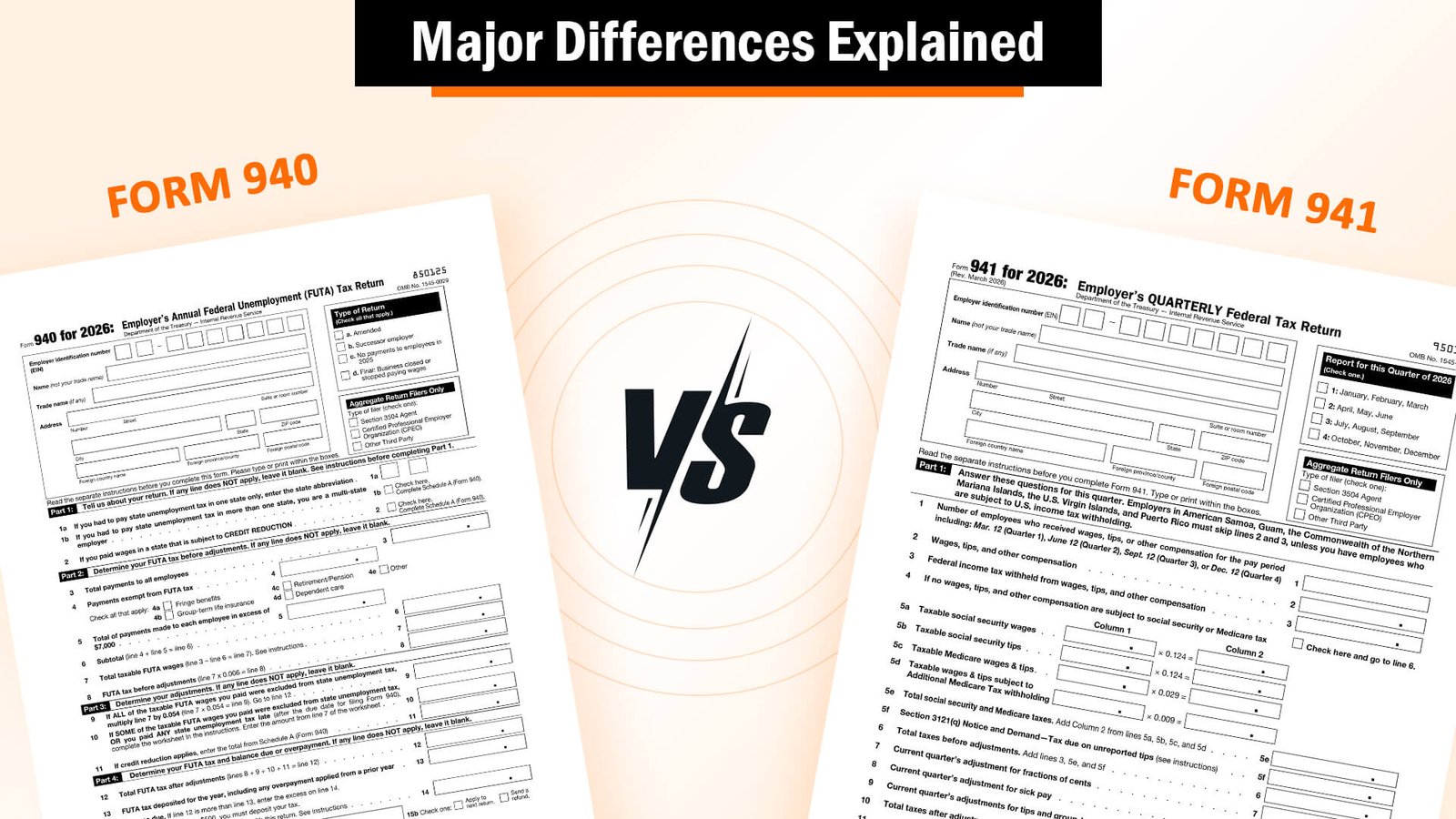
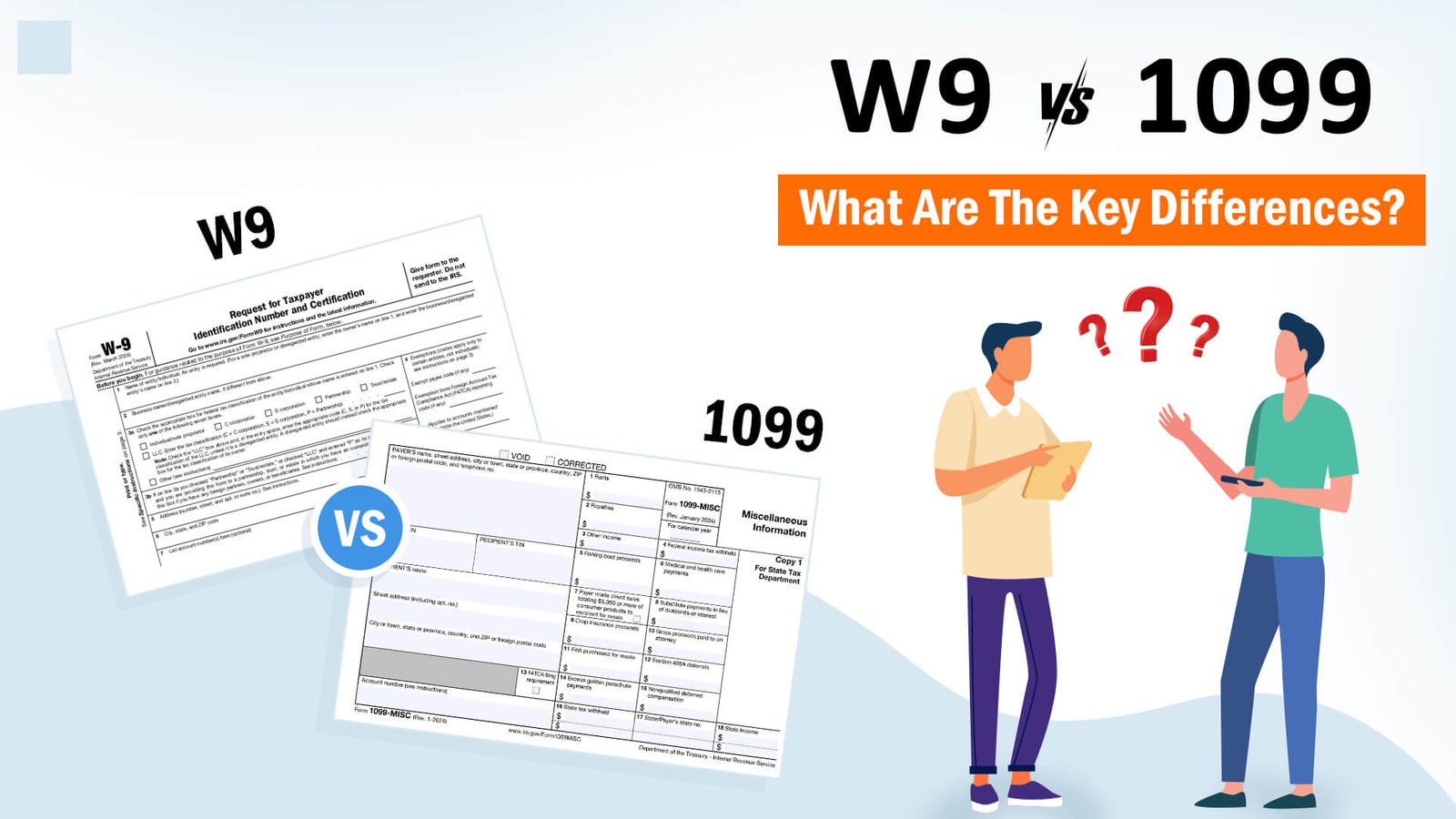
In August, the IRS announced that there are no changes to the standard forms W-2,1099 and 941/945 for 2025. This left many employees wondering How will we know the total verified tips and overtime we can deduct on my tax filing?
To give clarity on this, the IRS announced the Notice 2025-62, providing a full, detailed example for reporting qualified overtime and tips for 2025.
The notice clarifies that employers are not required to provide a separate accounting for cash tips, as it is recommended that they do so.
The OBBB Act 2026 payroll is a hard reset. It is a huge piece of legislation that covers real-time processes, simplifies tax withholdings, and introduces portable benefits in U.S. history.
For example, the legislation reduced the loan authority for the DOE’s Loan Programs Office, while increasing the authority of the loan and financial resources available to the DOD for funding domestic manufacturing and critical minerals.
The combination of tax relief measures, targeted business incentives, and social policy changes is leading to employers needing to revisit their compensation, benefits, and workforce department strategies. This way, they can make the most of the opportunities that arise while also getting ready for the most likely compliance changes.
What are the Key Payroll Provisions Taking Effect in 2026
The One Big Beautiful Bill Act has taken its effect in 2026, focusing on employers and professionals. There are various provisions, but here are the 6 key payroll provisions that you need to know:
1) Trump Child Savings Account
- Effective: 2026-2028
- A new type of savings account for children under the age of 18 years was created under the bill- the contribution limit will be upto $5,000 per tax year.
- Children cannot make a withdrawal up to the age of 18.
- Moreover, to the standard deductions, taxpayers older than age 65 will be able to take an additional $6,000 off of their taxable income.
- Begin to decrease for taxpayers with a Modified Adjusted Gross Income over $75,000 for single and $150,000 for joint.
- Employees require an official Social Security ID for work.
- It is not available for those who are using the Married Filing Separately Status.
2) Real-Time Earned Wage Access
- The biggest news of the OBBB Act 2026 tax changes is the introduction of federal tax deductions for qualified overtime and tips, which will require employers to update how they track and report earnings.
- Earlier, employees worked from the 1st to the 15th, and then they didn’t see the money until the 20th. For example, if your car broke down suddenly, then you are broke.
- The OBBB Act 2026 payroll provisions require that starting in 2026, employers must separately itemize overtime and tip income on W-2 forms to ensure employees receive their eligible tax deductions.
Why does it matter?
It matters because it eliminates the need for payday loans and high-interest credit card debts for daily expenses. It treats your earnings like a bank balance from your boss. For employers, it is a massive retention aid.
3) Tax Rules for Self-Employed Individuals
- Effective date: 2025-2028.
- The No Tax on Overtime rule will allow various employees to claim a dollar-to-dollar deduction for a particular amount of overtime pay covered by the FLSA.
- Earning qualified for deduction is capped at $12,500 for Singles, $25,000 for Married Filing Jointly.
- The deduction is not available for people who are using the Married Filing Separately status.
- It mandates that employers indicate the overtime pay on the taxpayer’s W-2.
4) Form 1099-K Reporting Threshold
- Effective: 2025 and beyond
- If you’re receiving payments from a third-party platform, you will be aware that the rules have changed. From 2026 and beyond, only those individuals are required to send you a Form 1099-K if your total payments are over $20,000 and you have received over 200+ transactions on any one platform in a year.
5) Portable Benefits: End of Job Lock
- The scary part of quitting a job is losing your health insurance and retirement contributions.
- The One Big Beautiful Bill Act brings the Portable Benefit Accounts. Under this law, a small portion of your benefits is strapped to you.
- Think of it like an HSA Health Savings Account, where your employer contributes to a centralized format that follows you from one job to another.
- For example, you’re a gig worker who is driving for Uber in the morning shift, and in the evening shift, you’re doing freelance coding work for both employers, who contribute a pro-rated portion to your bank account.
By the end of 2026, your benefit package will not disappear when you have a two-week notice at your disposal.
6) The Digital Pay ID
- Each employee in 2026 in the U.S. shall be assigned to a Universal Digital Pay ID.
- Think of it as a blockchain version of the payroll history. If you want to apply for a mortgage loan, you have to collect tons of PDFs to prove your income.
- With the new reporting requirements, it is more important than ever to have secure access to your payroll records to verify your qualified overtime and tip deductions.
Note: Ready to modernize your documentation today? Visit StubCreator and use our trusted paystub creator tool to produce compliant, easy-to-read paystubs for your personal or business records in minutes.
Other Major Updates of the OBBB Act 2026 Tax Changes
Payroll & Benefits Changes
For employees, the One Big Beautiful Bill Act provides short-term relief on tips and overtime. For employers, it generates payroll reporting requirements and updates to the W-2 forms and 1099 forms.
Individual Tax Stability
The One Big Beautiful Bill Act (OBBB) locks the current rate format and widens the SALT cap for some employees and provides a limited deduction for non-itemizers making charitable gifts. These changes should give rise to individuals to revisit tax planning.
What is the Qualified Overtime Compensation (QOC) Act?
The qualified overtime compensation act (QOC) is a provision within the OBBB act. It is a temporary U.S. federal tax law that allows qualified employees to deduct a portion of their qualified overtime pay from their federal income tax year 2025 through 2028.
The Section 225 Tax Deduction states that it provides a temporary deduction for federal income tax and qualified overtime compensation. This deduction is available for 2026-2028.
How to Calculate the Qualified Overtime?
There are various ways to calculate the qualified overtime rate:
Standard Overtime Calculation
If an employee has a regular rate of pay of $20/hour and works overtime, then their overtime rate will be $30/hour. The calculation is shown below:
- Total pay for Overtime hour: $30
- Regular rate: $20
- Premium portion: $10
Overtime with Shift Differential
An employee working different overtime shifts, an evening shift of $20/hour with $2/hour evening differential. The calculation is shown below:
- Regular rate: $22/hour
- Overtime rate: $33/hour ($22 * 1.5)
- Premium portion: $11 ($33 – $22)
Overtime with Non-discretionary Bonus
When a non-discretionary bonus affects the rate of pay, the calculation adjusts itself. If an employee’s total earnings result in a regular rate of $44.05/per hour. The calculation is shown below:
- Overtime rate: $66.07/hour
- Premium portion: $22.02 ($66.07 – $44.05)
$22.02 is the exact amount per overtime hour.
What does the Transition Year Mean for Employers?
The IRS shall not impose any penalties for failing to separately report new data points like total reported cash tips and qualified overtime pay as long as all the other information is complete and accurate.
This transition provides businesses with room to breathe which should be known as a transition phase and not a finished phase. Now the things which an employer needs to keep in mind:
- Detect which positions are qualifying as tipped occupation.
- Update your job codes and pay the classification to meet the new reporting requirements.
- Develop a data-capture workflow for 2026 compliance.
- You may need to download a paystub template that is already updated with fields for these new reporting requirements.
Also Read: OTE Meaning & Best Practices
Key Tax Deductions & Limits Under the 2026 OBBBA Act
| Deductions | New OBBBA | Applies to | Limits |
| Qualified Overtime Compensation | Yes | Wage earners | $12,500/$25,000 |
| Tips deduction | Yes | Tipped employees | Up to $25,000 deductible total |
| Senior deduction | Yes | Senior 65+ | Up to $6,000 per person |
| Standard deduction | Permanent | All filers | Indexed annually |
| SALT deduction | Increased cap | Itemizers | Up to $40,000 |
| Charitable deduction | Yes | All filers | Up to $1k/2k |
| QBI deduction | Expanded | Small business owners | Retains QBI benefits |
Key Takeaways
The OBBB Act 2026 payroll changes mark a major turning point in how businesses manage compensation, compliance, and workforce planning. With new rules around overtime classification, taxable benefits, reporting standards, and payroll transparency, the Act pushes employers toward more accurate, technology-driven payroll systems while strengthening employee protections.
For businesses, this is not just a compliance update; it’s an opportunity to modernize payroll operations, reduce errors, and build trust through clear and timely pay practices. By understanding the OBBB Act 2026 payroll requirements early and adapting processes accordingly, employers can stay compliant, avoid penalties, and confidently navigate the future of payroll in 2026 and beyond.
FAQs
1) What is the One Big Beautiful Bill Act?
The One Big Beautiful Bill Act is a legal act signed into law on 4th July, making drastic changes to some major programs to pay for tax cuts for the richest people.
2) What are the tax changes for 2026?
The IRS in October has a federal income tax bracket for 2026. Changes are based on the increasing income range for the two lowest tax brackets by 4% and higher by 2.3%.
3) What will the estate tax exemption be in 2026?
The U.S. estate and tax exemption will increase to $15 million per person.
4) What period is the 2026 tax year?
The 2026 tax year runs from 1st January 2026 and ends on 31st December 2026.
5) Can I claim both the increased Standard Deduction and the new $6,000 Senior Deduction?
Yes, for 2026, the OBBB Act makes the $15,750 for single, $31,500 for joint standard deduction permanent as it adds a specific $6,000 deduction for senior citizens aged 65+.
6) Can I use my HSA to pay my monthly concierge doctor fees in 2026?
Yes, you can use your HSA to pay your monthly doctor fees in 2026. Starting from 1st January 2026, the OBBB Act classifies the DPC arrangement as HSA-compatible.
7) What is the capital gains tax rate in 2026?
The long-term capital gains are taxed at 0%, 15%, 20% rate, depending on your total income for the year.