.png)


 Chat with us now!
 Send Email!
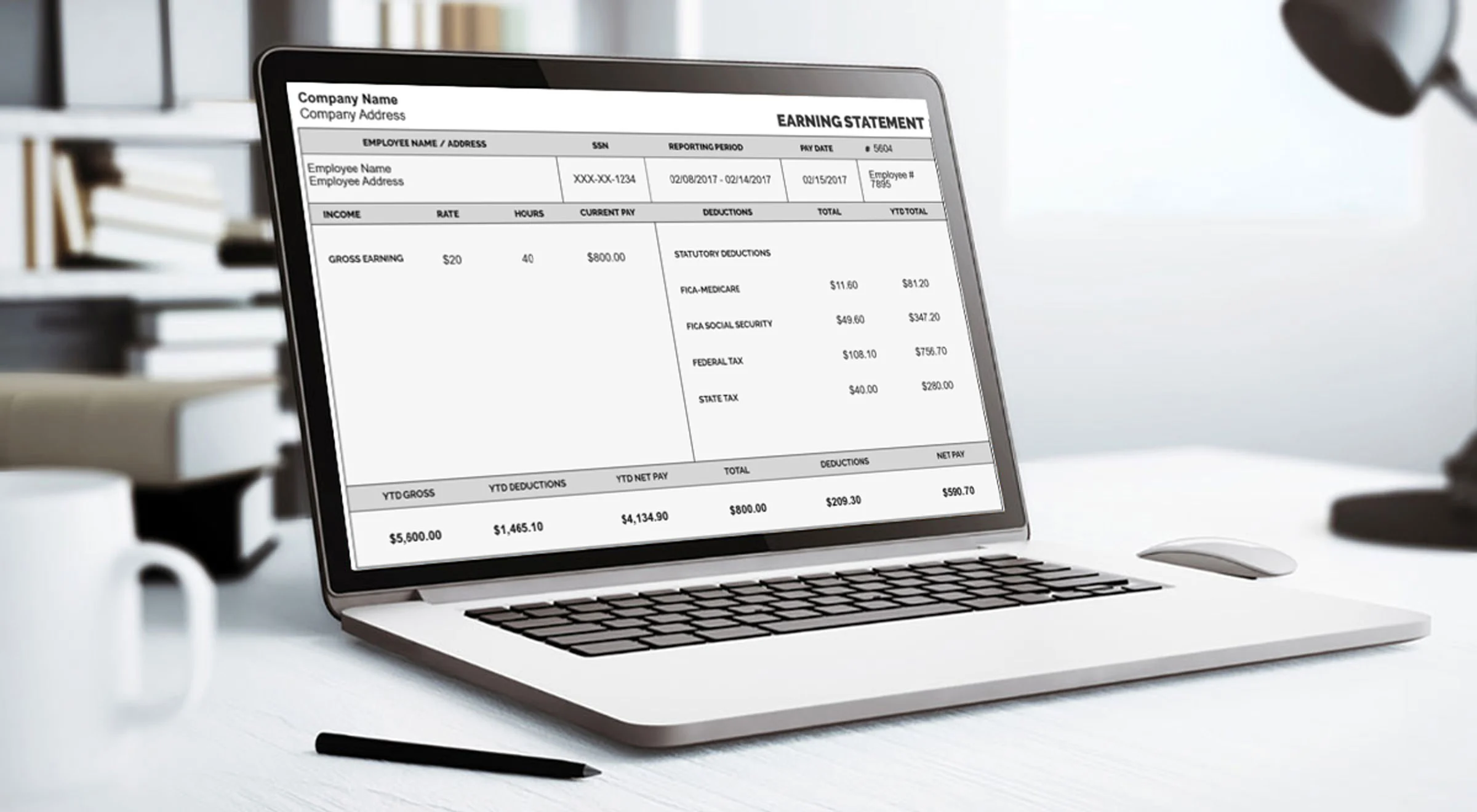
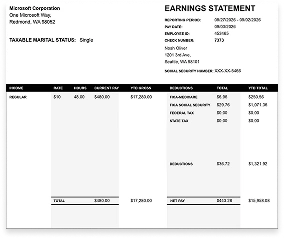
If you have wondered what “paid in arrears,” “billed in arrears,” or “in arrears” in a paycheck, bill, or statement, then this article is for you. You may have wondered whether it means something to worry about.
In this guide, we will discuss the meanings of “arrears,” how it appears in a paycheck, and what you should do if a payment is late. If you want to see exactly how pay periods and pay dates line up on your own paycheck, you can check it instantly with our free pay stub generator.
What Does “Arrears” Mean?
Arrears means a payment made after something is due; either as a normal schedule or because a payment is late.
The tricky part here is that the term “arrears” is used in two different ways, with one being problematic. One of the uses is simply a term in standard payroll and invoicing operations, while the other one means that someone owes money and is behind on their payments.
The Two Meanings of Arrears
-
Arrears as a Payment Schedule
Most commonly, it is considered that “arrears” defines the relation between the payment and the product/service provided, not the fact that it is overdue.
If one is getting paid in arrears, it means that he or she is getting paid after performing the job, not prior to it. If a company is charging in arrears, it sends the invoice after the product/service is delivered, rather than before. This process is completely normal, as most hourly compensation and some business contracts already operate according to it, and neither side is doing something wrong here; it is simply the sequence of events taking place.
-
Arrears as Being Overdue
Another definition of arrears is what many people think of: being late on a regular payment like rent, mortgage, or child support.
In this context, the term ‘in arrears’ means that payments that should have been made by the deadline have not been processed. Two conditions usually have to be met to be called ‘in arrears’ in this context, such as the following:
- Recurring payment, not a one-time purchase
- A one-time payment is simply late, not “in arrears.”
- Requires some form of ongoing agreement, i.e., lease, loan, utility contract, etc.
| Arrears (Schedule) | In Arrears (Overdue) | |
| What it means | Payment made after work/service is completed | Payment that’s late or missed |
| Example | Hourly employee paid 5 days after the pay period ends | Missing two months of rent |
| Is it a problem? | No – it’s a standard payment method | Yes – it can lead to fees, interest, or credit issues |
What Does “Paid in Arrears” Mean in Payroll?
For most hourly employees, “paid in arrears” is the payroll method used for paying; it’s the reason your paycheck arrives a few days after a pay period ends.
Here’s what that actually means: paid in arrears and why employers use it.
Is Being Paid in Arrears Normal?
Certainly, yes.
When an employer pays employees in arrears, it means that the worker receives payment for the hours worked in a previous pay period rather than the projected hours the employee is scheduled to work. i
It allows employers to incorporate overtime, tips, commission, and paid time off into their calculations before issuing paychecks, which aligns with federal wage payment guidelines. It also helps prevent overpayment due to unexpected changes in an employee’s schedule.
On the other hand, paying employees in current means the paycheck is based on what the employee is expected to work during the current pay period. This can be effective for salaried employees with a predictable work schedule, but it can create complications for hourly employees since any change in the employee’s schedule would cause the employer to adjust the future paycheck amount.
Example: How a New Employee’s First Paycheck Works
As an example, if the pay period goes from the 1st to the 15th and you do not receive the paycheck until the 20th, that would represent an example of being paid in arrears since you are being paid for a time you have already worked without receiving the payment.
Hence, the reason an employee’s first paycheck may sometimes appear delayed is that the employee must wait for a full pay period to complete before the first paycheck. If you see that the pay period ends some days prior to the pay date on the paycheck, you should know this is due to the arrears payment system.
What Does “Billed in Arrears” Mean?
The same concept applies outside of payroll, too; plenty of everyday invoicing runs on the same after-the-fact schedule.
Example of an Invoice in Arrears
Billing in arrears is also used beyond payroll.
- A freelancer who sends an invoice to a client for work done can also be said to be billing in arrears because they do not request payment in advance.
- Another instance would be a vendor who is paid in arrears using “net 30” terms. This means that the buyer has 30 days after delivery to make payment.
- Billing in arrears has become a well-established method of doing business as it minimizes the risk of late payments.
For the seller, billing in arrears involves trusting that payment will indeed be made as planned once the invoice is sent. Many businesses carry out credit checks, set payment terms before agreeing on billing arrangements,to ensure they get their money on time.
What Does It Mean to Be “In Arrears” on a Payment?
This is the meaning that actually signals a problem – a recurring payment that’s gone unpaid past its due date.
What Is Arrearage?
Arrearage is the whole amount of money that is owed to the lender when a borrower fails to make repayments on time. When a monthly payment of an amount of $500 is missed, arrearage shall amount to $500.
The next monthly payment would be applied to the older amount first. Thus, the usual payment of the following month does not mean that the borrower has settled the debts, as that payment will first settle all the arrears.
What Happens If You Fall Behind on Payments?
Being in arrears on a recurring payment ; whether it’s rent, a student loan payment, child support, a lease, a credit card payment, or a car payment ; typically means that interest and/or penalties likely start accumulating after the due date passes.
Given that most payments apply to the oldest balances first, it’s possible to continue paying on time and still legally remain “in arrears” until the old balance is paid off.
If a balance should stay in arrears for a longer time period, it can also affect a credit report, lead to penalties being imposed by the lender (due to late fees), and in really extreme cases cause the account to be sent to collections.
Payments that may fall into arrears include mortgages, rent payments, utility payments, child support payments, and business loan payments ; basically anything that is paid repeatedly.
Getting Out of Arrears
If the payment has fallen behind, there are a few options available:
- Catch up the amount- Paying up the whole overdue amount, including accrued fees, can be the best option, although it may seem unrealistic sometimes due to the amount involved.
- Negotiate with your lender/landlord- Most of the lenders/landlords would rather want to put together an arrangement than lose their customer, especially if the arrears are addressed at an early stage.
- Get professional assistance- In the case of massive or complicated arrears, it is advisable to refer to a financial advisor, credit counsellor, or attorney, who can give helpful advice on what course of action to take.
Be it any course of action, it is better to deal with arrears without delay, for overdue payments usually continue to incur interest and fees.
Arrears vs. Current Pay – Key Differences
| Paid in Current | Paid in Arrears | |
| When you’re paid | During the pay period or immediately after it, the calculations will be based on the number of hours that are expected to be worked. | At the end of the pay period, which will depend on the actual number of hours worked |
| Main advantage | Quick access to salaries | No estimation or correction of hours will be required after that |
| Main drawback | The employer will need to predict hours and correct mistakes afterward. | Employees will have to wait for payday for a couple of days |
| Best fit for | Salaried employees with set working hours are the ones who qualify for this. | Where employees get paid hourly, gratuity is included in the payment or they are paid on a commission basis |
Common Mistakes & Things to Double-Check
Here are some common mistakes people make; double-check to avoid these mistakes!
- Do not use the terms “arrears” and “in arrears” interchangeably. There are conditions under which they are considered different from each other.
- If you have no idea if you are behind in paying your bills or just following a regular arrears billing procedure, examine the account terms or talk to the billing company and do not assume that things are bad.
- The truth is that not all employers pay their employees in arrears, and not all pay them with payments in current. By looking at your paycheck stub, you will know which method is used.
- Bear in mind that, when a payment is made for an overdue account, the money goes toward the oldest amount owed rather than the new one.
Final Note
When all is said and done, there is nothing to get worried about concerning arrears, since in most cases, “paid in arrears” or “billed in arrears” means you are compensated for previously completed work.
The type of arrears that needs to be taken into account is the situation when you are said to be in arrears regarding a periodic bill, since in this case the payment is actually delayed, meaning additional fees may be charged. If you are unsure what scenario applies to your case, it is best to check the date of payment and pay period on the pay stub created by the pay stub template or clarify it with the employer or the service provider.