.png)


 Chat with us now!
 Send Email!
Tax-Free Overtime in a Nutshell: Tax-free overtime allows employees to deduct up to $12,500 of qualified overtime pay on their federal income tax return. The deduction phases out if you have modified the adjusted gross income up to $150,000 for a single filer. This guide on the 2026 overtime tax deduction rules is your go-to guide for calculating your tax-free overtime when you generate pay stubs online.
Whether you have worked overtime, extra shifts to cover for an out-of-colleague, 100% of your overtime charges are usually taxable, like your regular earnings. The New tax legislation has been changed, and it could be affecting your net pay.
Now you might be thinking that overtime is taxed differently from regular earnings? Well, the answer is no, as it is subject to the same taxes just like regular earnings, including Federal Income, Social Security, and Medicare taxes.
Whether you’re an hourly employee, a salaried employee, or a freelancer receiving overtime pay, knowing how to calculate tax-free overtime 2026 can help you check your pay stubs for accuracy and arrange your earnings accordingly.
Understanding Tax-Free Overtime
No tax on overtime is a portion that all of your overtime pay is excluded from federal income tax under the 2026 updated payroll rules.
Unlike previous years, where overtime was fully taxable, the new system aims at rewarding employees for working beyond typical hours.
Tax-free does not always mean deduction-free. In most of the cases:
- Federal income tax might be abandoned.
- Social Security and Medicare deductions might apply.
- State taxes depend on local laws.
This legalisation allows a federal income tax deduction specially during Modified Adjusted Gross Income (MAGI) phase-out for overtime aiming to provide financial relief to qualified employees via tax deductions on overtime wages.
Who qualifies for No Tax on Overtime?
Many employees who log overtime hours qualify for the no tax on overtime. Here are the types of employees who qualify for overtime:
- Employees who are working 40 hours per week.
- Classified as non-exempt under labor laws.
- Earnings overtime at 1.5x the regular working hours.
- Falling within government-defined earning thresholds.
Some employers limit the amount of overtime that qualifies as tax-free.
How does No Tax on Overtime work?
Nonexempt only applies to nonexempt employees who work FLSA overtime. The tax deduction will not be available for highly compensated employees. Below is a guide on the working of no tax on overtime:
- Calculate Overtime Hours: Hours you work beyond your regular 40-hour workweek are known as overtime.
- Determine the Overtime Rate: This is 1.5x your normal hourly rate for typical overtime.
- Apply tax-free Rules: Under the 2026 new payroll updates, a part of your overtime pay might be exempt from federal income tax.
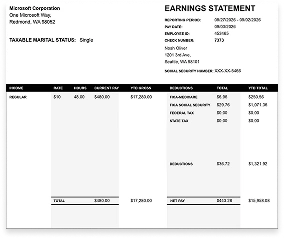
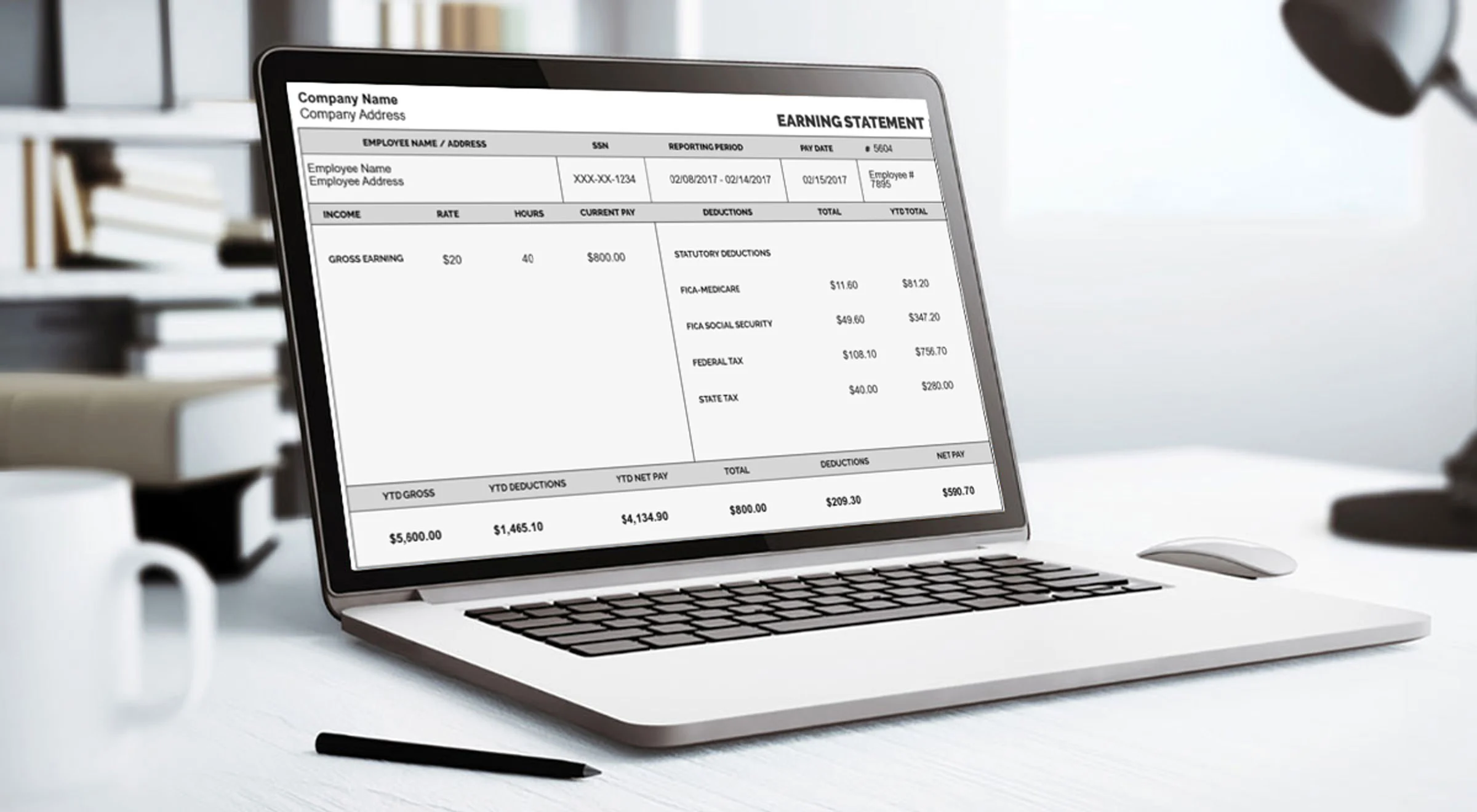
- Split pay on Paystub: Your paystub will include: regular taxable income, tax-free overtime income, remaining taxable overtime. Using high-quality pay stub templates can help you clearly visualize and separate these different income types.
- Other Deductions: Social security, Medicare, some state taxes.
Remember these points:
- Not all overtime might be tax-free.
- Social Security and Medicare applies.
- Your paystub clearly shows which hours are tax-free.
- Helps employees net pay while working hours.
Did the No Tax on Overtime provision pass?
Yes, No tax on overtime provision is in action since 4th July, 2025. It includes a separate provision known as No Tax on Tips which allows certain taxpayers in eligible occupations to eliminate up to $25,000 in voluntary tipped earnings from their federal tax return.
How to report overtime on 1040 Schedule 1A?
How to report overtime on your 1040 schedule 1A is mentioned below:
1) Understand Overtime Earning
Overtime pay is known as wages, like your regular salary. It do not get a special line on your tax return. Whether it’s tax-free under special circumstances, the IRS treats taxable overtime as earned income:
- Taxable overtime = Include in Line 1 of Form 1040
- Tax-free overtime = Not included in wages for federal tax purposes
2) Use W-2 Form as Your Source
Your employer reports all taxable wages on Box 1 of your W-2 form.
- If your overtime wage is taxable, it is already in Box 1.
- If your overtime is tax-free under the 2026 overtime tax deduction rules, it will not appear in Box 1.
3) Reporting on Schedule 1
The schedule 1 is for the additional income and adjustments. Most of the taxable income do not go in here because it is already in W-2 wages. On Schedule 1:
Part 1- Additional Income: Line 3: Business income for self-employed individuals, Line 8: Other income
4) Tax-free Overtime Consideration
- Only the taxable income portion of overtime goes on 1040 Form.
- Tax free portions do not go on your federal return, but might be reported for state or local purposes.
Also Read: OBBB Act 2026 Explained
Difference between tax-free overtime and tax-free tips
The real difference between tax-free overtime and tax-free tips is mentioned below:
| Features | Tax-Free Overtime | Tax-Free Tips |
| Income source | Employer wages | Customer donation |
| Who it benefits | Non-exempt employees | Tipped employees |
| Tax-free section | Capped amount | Set limit on tip |
| Reporting | Via payroll | Reported by employee |
| Type of income | Earned wage | Donated income |
2026 overtime tax deduction rules
The following are tax deduction rules:
1) Overtime Deduction Limits
- Individual filers: Up to $12,500 per year.
- Joint filers: Up to $25,000 per year.
- Eligible pay: Deduction only applies to the premium portion of your overtime.
2) Income Phase-Outs
- Starting Phasing Out: At $150,000 for Single or $300,000 for Joint.
- Fully Eliminated: At $27,500 for Single or $550,000 for Joint.
- Filing Status: You cannot claim this part of deduction if you’re married filing separately.
Qualified overtime compensation formula
Qualified overtime compensation is known as the portion of overtime pay which qualifies for special tax treatment under the payroll reform like the One Big Beautiful Bill Act overtime.
QOC Formula
- QOC = Overtime Hours * Overtime Rate – Regular Rate
Step by Step Breakdown
Step 1: Regular rate: Regular rate = Hourly wage
Step 2: Overtime rate: Overtime rate = Hourly wage * 1.5
Step 3: Qualified Portion per hour: Overtime rate – Regular rate
Box 12 Code TT W-2 meaning
Code TT in Box 12 of your W-2 reports as the amount of qualified overtime compensation paid to you during the year under the OBBB Act.
The TT code shows the overtime pay which might be eligible for special tax treatment under the new payroll rules.
The amount listed under Box 12, the code TT is used to:
- Identify overtime earnings which qualify for tax benefits.
- Helps in determining whether the part of your overtime pay is spared from various federal taxes.
What should you do?
- Keep your W-2 forms for tax filing purposes.
- Do not add this amount manually to your wages.
Key Takeaways
Understanding the way to assess tax free overtime 2026 is a significant step in comprehending your paystubs and making sure you get all the benefits allowed under the new payroll rules. With revised legislation bringing in qualified overtime categories and certain tax exemptions, being aware of how to distinguish regular earnings from eligible overtime pay will definitely help you not only to be clear but also to detect payroll mistakes at an early stage with StubCreator.
FAQs
1) Is overtime tax-free for hourly workers in 2026?
Not fully. For mostly hourly employees in the U.S. overtime pay is subject to taxes but new federal tax break affects how it is treated on your tax return.
2) Can I claim the overtime deduction without itemizing?
Yes, the qualified overtime compensation deduction under the OBBB Act 2026 is above-the-line deduction, which means you do not need to itemize it to claim it.
3) What is tax exemption for 2026?
The U.S. has increased the exemption to $15 million per person on 1st January 2026.
FAQ's
How much tax will I pay if I do overtime?
+
Overtime is taxed at the same rate as regular wages. It is simply added to an employee’s gross earnings for the pay period and taxed at the appropriate income tax rate based on total taxable income.
How do I calculate overtime pay?
+
Multiply the regular rate of pay by 1.5, and multiply the result by the total number of overtime hours worked.