.png)


 Chat with us now!
 Send Email!
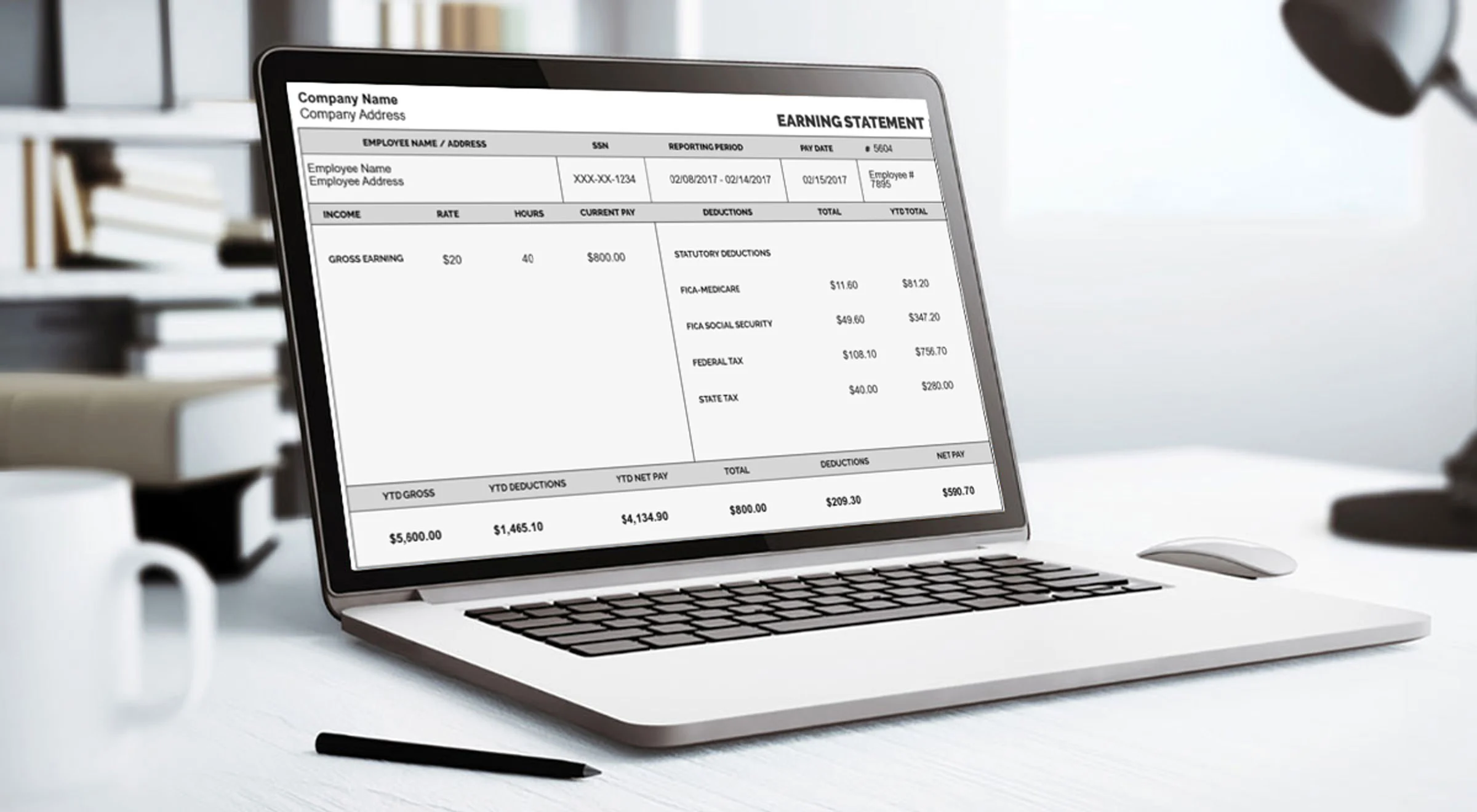

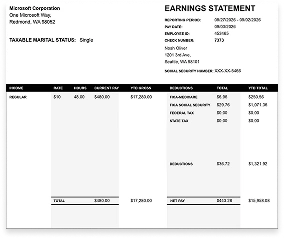
As you review your paystub, it can be confusing to come across abbreviations that are not immediately obvious.
One such term is LTD (Long-Term Disability), often found under the deductions section. protects income if an illness or injury prevents you from working for an extended period – understanding this code helps ensure accurate reading of pay stubs!
LTD stands for Long-Term Disability insurance, which is designed to protect income should an illness or injury prevent you from working for an extended period. As check stubs contain many shorthand terms, understanding what each deduction represents is key to managing finances and benefits confidently.
With this guide, we hope to explain exactly what is LTD on Paystub, along with short-term vs long-term disability and many other things, helping you understand both your paycheck and employee benefits better!
What is LTD deduction on paystub?
LTD( Long-Term Disability) coverage provides employees with a way to deduct part of their income in the event that an illness or injury prevents them from performing their duties for months or even years. This provides financial security when working is no longer an option.
LTD benefits typically begin after short-term disability benefits have come to an end, typically following a waiting or elimination period of several months. Employees must fulfill the medical requirements specified in their policy and submit supporting documentation that the disability qualifies under it.
LTD plans are an integral component of an employee’s overall financial and benefits planning strategies and play an invaluable role in providing extended income protection.
Also Read: How Many Work Days In A Year? (2026)
What is LTD on Paystub?
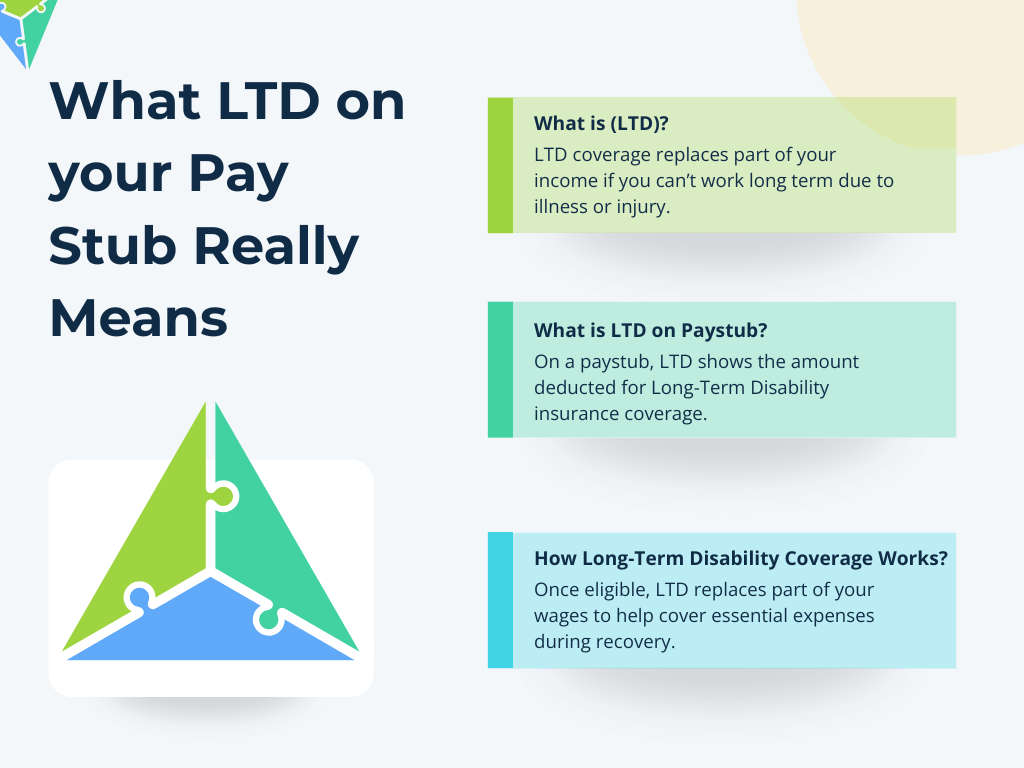
If you are still thinking, “what is LTD in paystub?”, then this section is for you.
When long-term disability is listed on your paystub, “LTD” stands for Long-Term Disability insurance. This Paycheck LTD benefits provide income support if an illness or injury prevents an employee from working for an extended period, typically 3 to 6 months.
LTD paycheck typically replaces 50-70% of regular income, depending on your employer’s group benefits plan.
How long does LTD last?
Prior to commencing LTD benefits, however, there may be an elimination period lasting 90-182 days during which employees can rely on sick leave, savings, and short-term disability benefits if available as backup options.
Depending on how the LTD insurance premiums are funded, LTD premiums may appear differently as LTD paystub depending on their source. If they are split evenly between you and your employer, you should see an item labeled “LTD Insurance,” while if your employer provides all premium payments directly, no deduction may appear at all.
If you have questions about an LTD and STD deduction on a paystub and would like more details on what coverage is provided to you, reviewing your benefits summary or reaching out to HR/payroll can help clarify. They can provide an explanation of coverage amount, waiting period, and any restrictions in order for you to fully comprehend what safeguards exist and their purpose.
Also Read: How to Get Pay Stubs from Direct Deposit
How Long-Term Disability Coverage Works?
Long-Term Disability (LTD) coverage offers financial relief when an employee becomes temporarily or permanently disabled due to serious illness, as it helps replace some lost wages.
Once LTD premium eligibility requirements have been fulfilled, LTD can replace a portion of lost wages so employees can focus on recovering while paying essential expenses such as rent.
It typically works like this:
- Disabilities Arise: An employee becomes medically incapable of performing their duties for an extended period.
- Waiting (elimination) Period Applies: LTD benefits typically begin after an elimination period, typically 90 to 180 days, during which sick leave or short-term disability benefits may be used as substitute income.
- Medical Proof is Required: Employees must present medical documentation proving the severity and duration of the condition.
- Benefits: Once approved, LTD insurance starts paying benefits according to its policy terms.
- Monthly Income Replacement: Most plans offer monthly replacement payments of between 50-70% of an employee’s pre-disability earnings.
- SSDI Offset May Apply: If you also receive Social Security Disability Insurance (SSDI) payments, most LTD policies will reduce your monthly benefit by the amount SSDI pays, so your combined income doesn’t exceed the plan’s replacement cap.
- Ongoing Eligibility: Benefits continue as long as an employee fulfills the medical criteria outlined by their policy and remains unable to work.
- Definition of Disability Matters: Policies differ on what counts as disabled. An own occupation policy pays benefits if you cannot perform your specific job, while an any occupation policy only pays if you are unable to work in any job at all. Check your Summary Plan Description to know which standard applies to your plan.
Difference Between Short-Term vs Long-Term Disability Insurance
Short-Term and Long-Term Disability insurance both provide income protection when an employee is unable to work due to illness or injury. The primary difference between the two lies in how long does LTD last and when coverage begins. While short-term disability is meant for temporary conditions, long-term disability is designed for serious medical issues that prevent employees from working for extended periods.
Here are the major differences between short-term and long-term disability:
| Feature | Short-Term Disability (STD) | Long-Term Disability (LTD) |
|---|---|---|
| Average Benefit Period | Typically 3, 6, or 12 months | Usually 2, 5, or 10 years (can be longer in some policies) |
| Coverage Duration | 3–6 months, sometimes up to 12 months | Several years or up to retirement age |
| Eligibility / Waiting Period | 7–14 days (14 days is most common) | 90–180 days |
| Percentage of Income Replaced | 60%–80% of lost wages | 40%–70% of lost wages |
| Elimination Period | 7–30 days | 90 days or longer (longer periods may reduce premiums) |
| Benefit Amount | Covers a higher percentage for a shorter duration | Covers a lower percentage for longer |
| Cost of Coverage | Tax rates on annual income tend to range between 1%–3% | Average employee premium contributions can range between 1.3% of annual salary |
| Payment Type | Employer or partially employee-paid benefits | Employer-paid policies or employee-paid policies |
| Where Coverage Is Offered | Employer-sponsored plans, supplemental plans, or private coverage | Employer-sponsored plans, supplemental plans, or private coverage |
| Medical Qualification | Any medical condition preventing the employee from doing their job | Any medical condition preventing the employee from doing their job |
| Policy Approval Requirements | Basic medical documentation | More detailed medical review and ongoing proof |
| Part-Time Employee Eligibility | May be eligible depending on hours worked and policy terms | Usually requires 30–35 hours per week to qualify |
| Employer Contribution | Often included in group benefits; may be state-mandated | Sometimes employer-paid; not always mandatory |
| Best For | Temporary illnesses or injuries | Serious, long-term, or permanent disabilities |
Pro Tip: An effective free paystub generator can be invaluable when calculating an LTD & STD deduction on a paystub and withholdings. Well-designed tools make it easier for employees to understand how wages, benefits, withholdings are calculated, and especially LTD deductions and withholdings.
Employer Vs Employee Paid Premiums (LTD)
How you pay your Long-Term Disability (LTD) premiums can have an effect on both your current paycheck and later benefits received.
LTD Paid With After-Tax Dollars
Although paying LTD premiums out of after-tax income may have no immediate tax ramifications on your paycheck, this option offers long-term value, as should any claims arise, they are typically tax-free and provide more reliable income during recovery.
Employer Paying LTD Premiums
If your employer pays the entire cost of LTD insurance premiums, LTD or STD deduction on paystub. While this reduces out-of-pocket expenses today, any LTD benefits received later are typically taxed as regular income and could reduce your take-home amount during disability. In practice, a plan that advertises 60% income replacement can deliver as little as 40–45% in take-home value once taxes are applied, so it is worth factoring this into your financial planning.
In a shared-cost arrangement, both employer and employee contribute towards LTD premiums. When both employer and employee share premiums, the IRS uses a three-year look-back rule, averaging each party’s contributions over the three most recent policy years to calculate what percentage of any future benefits will be taxable. This means even if you recently switched to paying after-tax, earlier pre-tax contributions can still affect the taxability of your benefits.
Employee-Paid LTD Premiums
Employers may find it advantageous to pay their full LTD premiums from after-tax earnings.
Also Read: What is LTD on Paystub? A Complete Guide
Conclusion
Answer for – What is LTD on paycheck, allows you to recognize the financial protection provided if a long-term illness or injury prevents you from working. Learning more about Long-Term Disability insurance works, its premium calculations and possible taxes could allow employees to better evaluate and plan for unexpected circumstances.
If you need to create accurate payroll documents for record-keeping, a reliable free pay stub generator can help you generate professional pay stubs quickly and easily.
LTD in paystub represents financial security during extended absences from work. Reviewing your employer’s LTD policy thoroughly to understand coverage amounts, waiting periods and claim requirements can help avoid confusion when the time comes. Hopefully, this guide helps you to get more knowledge regarding LTD on paystub.
People May Also Ask
1) What is Long-Term Disability (LTD)?
Long-Term Disability (LTD) coverage acts as a safety net in case an illness or injury prevents you from working for an extended period, replacing some of your income as compensation.
2) What Is The Difference Between Limited LTD And Full LTD?
Limited LTD coverage provides restricted or shorter benefit periods, while Full LTD benefits may pay out for several years or even up until retirement.
3) Why do I have LTD on my paycheck?
LTD appears on your paycheck because you are contributing toward long-term disability insurance premiums and participating in an LTD plan.
4) What is LTD imputed on paycheck?
LTD imputed income is defined as the value of employer-paid disability coverage added to your taxable wages for reporting purposes.
5) What is Ltd taken out of my paycheck?
Your LTD deduction represents your insurance premium to fund long-term disability coverage.
6) Why am I paying LTD tax?
Your employer could be paying LTD-related tax, whether or not the premium is deducted pre-tax.
7) What qualifies for long-term disabilities?
Long-term disabilities refer to serious illnesses or injuries that prevent an individual from working for an extended period, including chronic conditions, major injuries and severe mental health disorders.
8) How long is most long-term disability?
Long-term disability benefits usually last multiple years and may continue up to age 65 or retirement, depending on your policy.
9) How can you qualify for long-term disability?
Asserting long-term disability requires fulfilling both the waiting period and providing medical proof that you cannot fulfill your duties in your job.
10) Is it hard to get approved for long-term disability?
Approving disability claims isn’t easy: insurers require extensive medical documentation and proof of disability on an ongoing basis.
Also Read: How Many Hours is Part-Time? A Guide For Employers And Employees
11) Should I have both short and long-term disability insurance?
Long and short-term disability coverage provides continuous income protection from temporary absences to long-term disabilities.
12) What is short-term and long-term disability insurance?
Short-term disability refers to temporary conditions, while long-term disability refers to extended or permanent disabilities.
13) What pays more, short-term disability or long-term disability?
Short-term disability usually pays a greater portion of income over a shorter duration, while long-term disability pays less each month and lasts longer.
14) At what point does short-term disability become long-term?
Short-term disability typically turns into long-term disability after an elimination period spanning 90 to 180 days.
15) What does LTD mean on W-2?
If you are searching “what is LTD on W2,” it indicates any employer-paid disability premiums or benefits that are taxable to employees.
FAQ's
Do I have to pay taxes on LTD?
+
Taxes will need to be withheld from LTD benefits if premiums were employer-paid or deducted prior to paying taxes; benefits purchased with post-tax dollars typically do not incur taxes.
What is box 14 LTD on W-2?
+
Box 14 of a W-2 may display employer-paid LTD premiums or similar amounts paid on behalf of an employer.
Does long-term disability get reported on W-2?
+
Long-term disability benefits and employer-paid premiums should be reported on a W-2 form for taxation purposes.
Can I Increase My Long-Term Disability Coverage?
+
Your LTD coverage could be increased during open enrollment or by purchasing additional coverage.
Who is eligible to receive LTD benefits?
+
Employers enrolled in LTD plans who meet all medical and policy criteria can claim benefits.
What is the difference between Limited LTD and Full LTD?
+
Limited LTD provides more restricted coverage or shorter benefit periods, while Full LTD may pay out benefits over multiple years or until retirement age is reached.
How much does LTD coverage cost?
+
LTD coverage typically costs 1-3% of annual income, depending on your plan and coverage level.
Can I increase my Long-Term Disability coverage?
+
Increase your Long-Term Disability coverage in open enrollment, Or buy supplemental policies. Often, you can increase your Long-Term Disability coverage either during open enrollment or by purchasing additional coverage policies.
What benefits do I receive from the Long-Term Disability Plan?
+
Long-Term Disability Policies typically cover 50-70% of your pre-disability earnings as monthly income replacement.
Is Long-Term Disability Taxable?
+
Long-Term Disability benefits may be subject to taxes if premiums were deducted prior to taxes being withheld from employees' wages, while they're usually tax-free if paid with after-tax dollars.