.png)


 Chat with us now!
 Send Email!
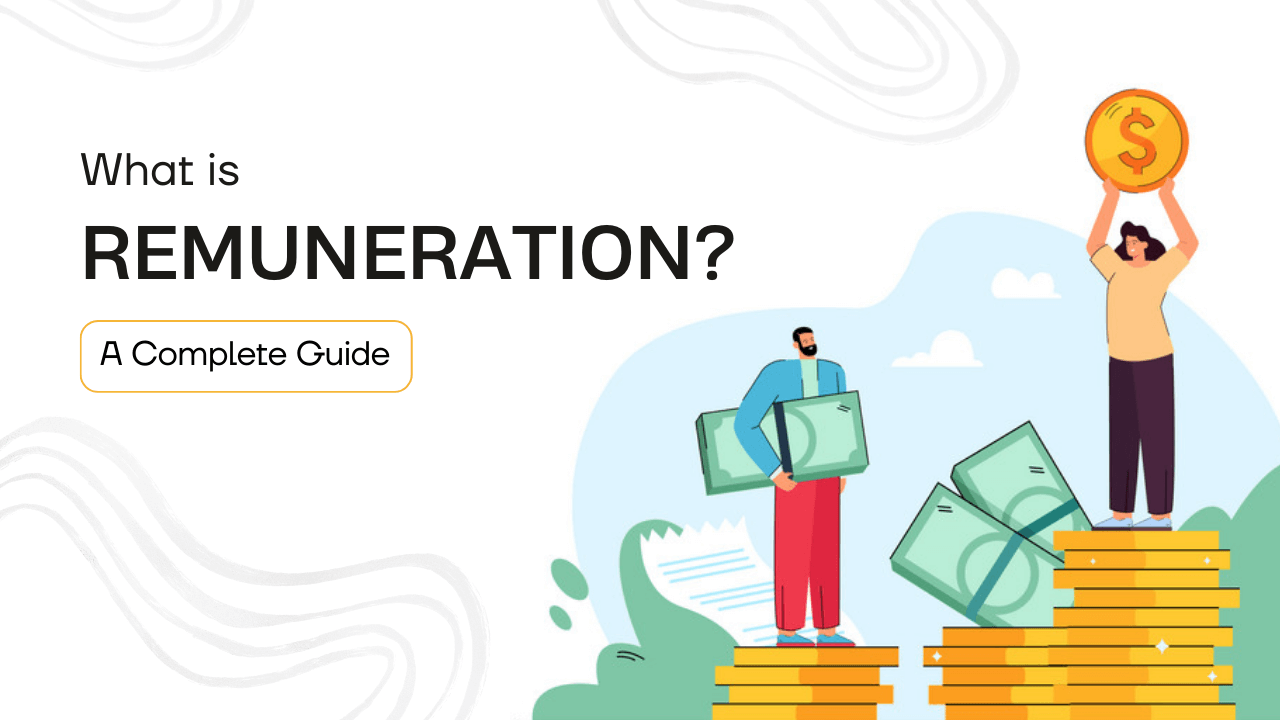
Remuneration is a topic that all HR professionals will be familiar with. Whether you are an employee, employer, or freelancer, understanding remuneration is important. It directly affects job satisfaction, retention, and overall financial well-being. Proper remuneration management requires clear documentation of salaries, bonuses, and deductions, which can be easily organized using a free paystub generator. But do you know what remuneration means? Does it include a bonus, and how is it calculated?
In this blog, we are going to explore all about remuneration and how to calculate it. Let’s get started.
What is Remuneration?
Remuneration is the total compensation that an employee receives from an employer for their work. It includes both mandatory and non-mandatory benefits, like bonus, base salary, overtime pay, health insurance, and retirement contributions. It includes:
- Salary
- Bonuses
- Overtime Pay
- Additional Time Pays Off
- Fuel Allowance
- Other Employee Benefits
Remuneration Formula:
| Remuneration = Base Salary (or Wages) + Bonuses + Benefits + Incentives + Perks + Allowances |
It is the complete reward offered by the employer to compensate employees for their time and effort.
How is Remuneration Calculated?
Remuneration is calculated based on various factors, which are described below.
- Job Roles & Responsibilities: Higher responsibility jobs offer high remuneration.
- Skills & Experience: Experienced employees earn more.
- Industry Standards: Different industries offer different pay scales.
- Location: Remuneration depends on the city.
- Company Size: Huge companies offer better remuneration.
- Market Demand: High-demand skills receive higher compensation.
Example of Remuneration
How are office employees getting remuneration from the company? Here is the calculation:
- Monthly Salary: $4,000
- Annual Bonus: $5,000
- Health Insurance: $3,000 per year
- Paid Leave: Included
Step 1: Convert Monthly Salary to Annual Salary
$4,000 × 12 = $48,000
Step 2: Add Bonus and Benefits
Annual Salary: $48,000
Annual Bonus: $5,000
Health Insurance: $3,000
-> Total Remunerated Amount: $48,000 + $5,000 + $3,000 = $56,000 per year
What is a Remuneration Package?
A remuneration package is a customized set of compensation and benefits that an employer offers to an employee. It is designed to attract and retain the top-tier employees. The remuneration package depends on the employee’s role, experience, skills, and the company’s budget and culture.
Types of Remuneration You Need To Know
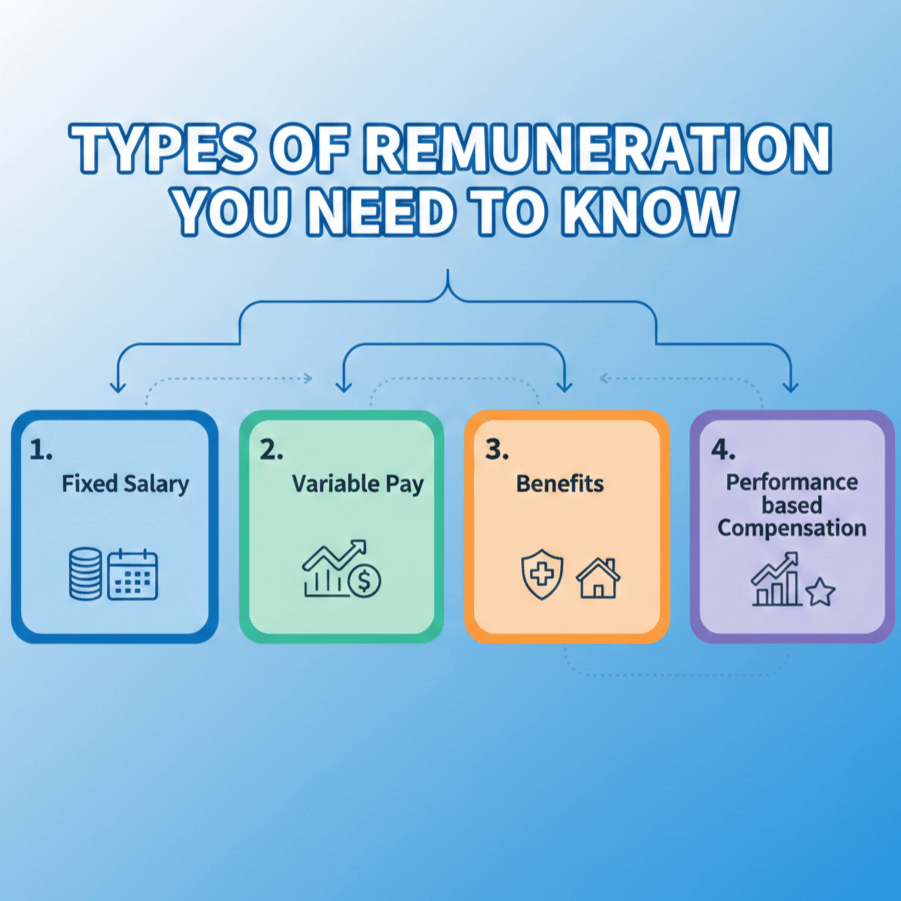
There are 4 types of remuneration, which are:
- Fixed Salary: The most common type of remuneration, a fixed salary is a predetermined amount paid to employees regularly, usually monthly. It is the core of an employee’s compensation package. To document fixed salary payments accurately, businesses can simplify the process by using payroll tools, ensuring employees receive clear and professional pay records.
- Variable Pay: Variable pay includes bonuses, incentives, and commissions that are tied to an employee’s performance or achievement of specific goals. It provides additional awards for exceptional contributions.
- Benefits: These non-monetary components of remuneration include benefits such as health insurance, retirement plans, paid vacations, and other facilities provided to enhance the overall employee experience.
- Performance-based Compensation: Performance-based remuneration aligns an employee’s pay with their performance, encouraging productivity and enhancing results. This may be in the form of a performance-related bonus or a merit-based salary increase.
A professional pay stub template will help companies display all forms of remuneration compensation to their employees in a clear way. You can select the correct template before generating the employees’ pay stubs.
Important Factors That Affect Employee Remuneration
The way remuneration is calculated depends on the type of employment contract between the employer and employee. Different contract types determine how long an employee is paid and how compensation is structured. The three common types include:
1. Fixed Term Contract
Fixed term contract means that the contract is for a fixed period only. After such a period, the relationship comes to an end. To illustrate, if a company employs you for a month, you will be paid for the work that you do during the month only. Once the month expires, you will no longer be the company’s employee, and consequently, you will not be paid anymore.
2. Permanent Contract
A permanent contract means that you have been appointed permanently. For example, if your boss hires you to work at his company on an ongoing basis, and there is no official date to leave. You will continue to receive remuneration until you leave the company or retire.
3. Independent Contractor Agreement
An independent contractor runs their own business. You are in charge of all the facets of your business. Your employer merely gives you a door to making money. Independent contractors are essentially subcontractors. Besides, as a retainer, they might get their remuneration from the organization itself as well.
Compensation Components That Can Be Added to Remuneration
There are various types of financial compensation:
- Salary: This is the most common form of payment. It can be paid on a weekly basis or on a monthly basis, as long as it is regular. Salary is usually determined based on experience, education, and/or qualifications.
- Commission: An employer pays an employee a commission when he sells products or services to customers. For example, if your boss sells insurance, he or she may pay you a percentage of the sales price as a commission.
- Bonus: An additional amount of money paid to employees as part of their salary. Bonuses are generally given at the end of each financial year. They may also be given as rewards for meeting certain performance targets.
- Lump Sum Payment: A lump sum payment is essentially a bonus; except in monthly payments, it is paid in advance. This may be because they want to give their employees some extra cash right away as a welcome gift.
- Profit Sharing: Companies use profit sharing to encourage their employees to do better work. If the company earns more than expected, the profits from that excess are shared among the employees.
- Dividends: Dividend payments occur when a company has earned enough money to cover its expenses. These dividends are distributed to shareholders, who may sometimes also include company employees.
- Pension Plan: A retirement plan where employees contribute some portion of their income towards their own retirement.
- Vacation Pay: Employees can get paid for time off work.
The Bottom Line
Remuneration is the total reward for working that an employee gets. It includes salary, bonuses, benefits, and non-financial perks, all of which contribute significantly to job satisfaction.
A well-structured remuneration package benefits both employers and employees. It enhances the drive, raises the output, and creates the desire for loyalty in the long run. On the other hand, inadequate compensation can lead to dissatisfaction, low morale, and higher employee turnover.
People May Also Ask
1) What is the meaning of remuneration?
Remuneration is the total compensation, which includes salary, commissions, and benefits which is paid to an employee for services rendered.
2) What is an example of remuneration?
An example of remuneration includes: $70,000 annual salary + 10% commission, hourly wages of $25/hr.
3) What is the remuneration of a salary?
Remuneration is any type of payment that an employee receives for performing services. Employees may think of it as their salary or hourly wage, but this often ignores the bigger picture, i.e., group health insurance, bonuses, company car, etc.
4) Is remuneration the same as pay?
No, remuneration is not the same as pay. It is a broader statement representing the total compensation package, while pay refers to salary.
5) What is the simple definition of remuneration?
A payment made to somebody for the work they have done.
6) What are examples of remuneration?
Remuneration example: if an employee earns a monthly salary of $3,000 and receives a $500 performance bonus, their total remuneration for that month would be $3,500.
7) What is the meaning of remuneration paid?
Remuneration is the total compensation an employee receives. This includes employee salaries, hourly wages, bonuses, overtime pay, and other employee benefits, such as group health insurance or a company car.
8) What is remuneration in simple words?
Remuneration is the total value of all wages, cash, and benefits an employee receives in return for his work, not just his basic salary.
9) What does ruminating mean?
Remunerating means paying someone for work or services. It refers to providing compensation such as salary, wages, bonuses, or other benefits.
10) What is an example of remuneration?
An example of remuneration is an employee receiving a monthly salary of $3,000 for their work.
Also Check:
How Many Work Days In A Year 2026
Hobby Lobby Employee Login: Step-by-Step Guide
How to Access Your MyHTSpace Pay Stub?
List of Federal Holidays in 2026
Difference Between Hourly Pay & Take Home Pay
FAQ's
What does ruminating mean?
+
Renumerating means to pay or compensate for someone’s work or expenses.
What's the difference between remuneration and remuneration?
+
Remuneration is defined as the money and benefits that one gets after performing a service. Remuneration refers to the act of recalculating.
What is the difference between income and remuneration?
+
Income is the total money received from all sources (salary, investment, rent, profits). Remuneration is compensation given specifically for services rendered, which includes salaries, bonuses, and benefits. While all remuneration is generally income, income includes a wide range of earnings.
What is the legal definition of remuneration?
+
In law, remuneration refers to the total monetary and non-monetary compensation given to an individual, such as an employee, director, or contractor, in return for services provided. This includes salary, remuneration, bonus, commission, and taxable benefits like perks, company cars, and accommodation.
What does it mean to be remunerated?
+
Remunerated means to receive remuneration. Receiving payment, compensation, or reward for services rendered, or as reimbursement for expenses.
What is a word for remunerated?
+
Another word for remunerated is compensated.
Is it remunerated or remunerated?
+
Remuneration means payment for goods, services, or losses. The root of the word relates to money, not number. Renumerate is a common misspelling. At least one dictionary lists the latter as an actual word meaning to recalculate, but in every example we can find, recalculation is simply a misspelling of recalculation.